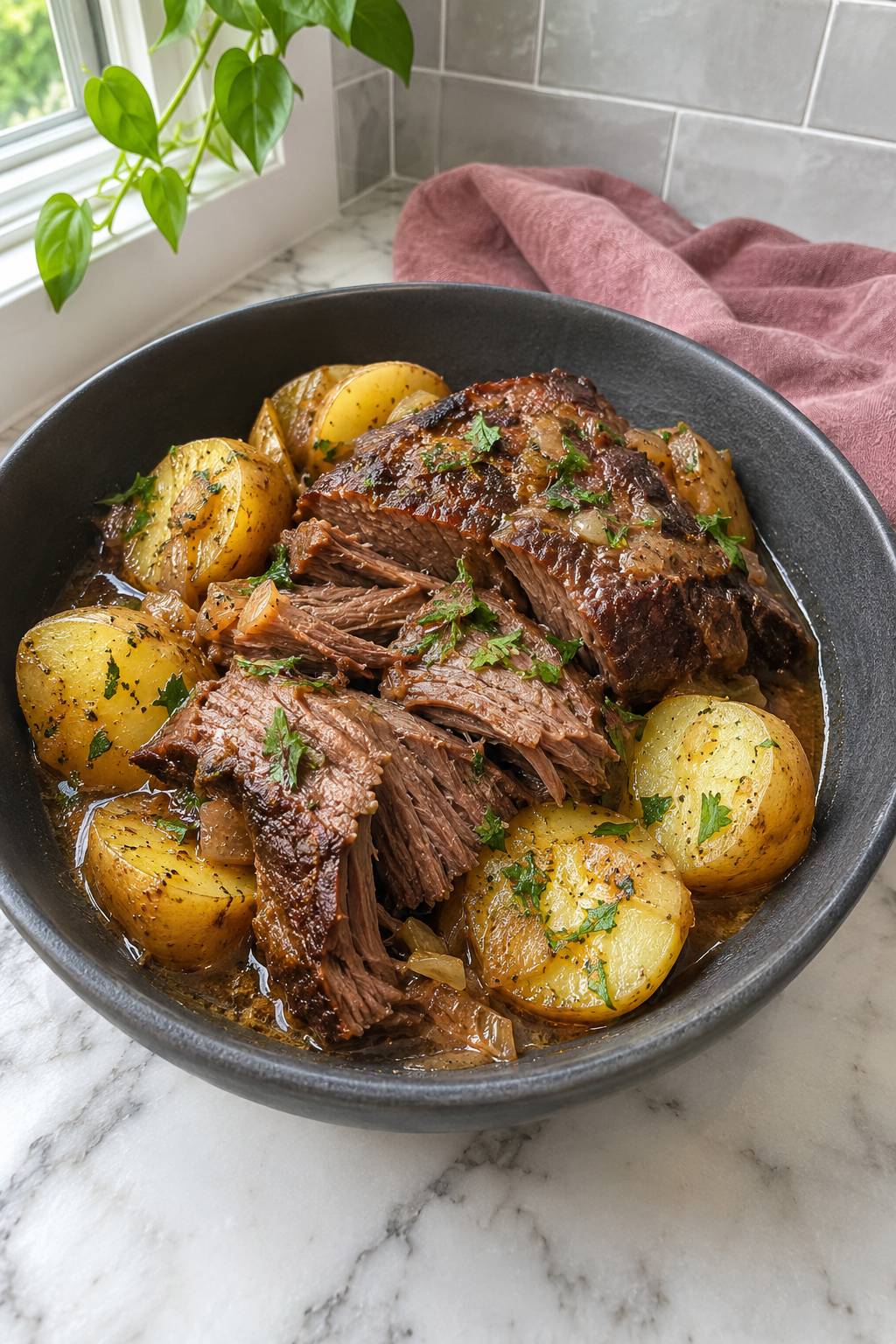
This Instant Pot pot roast gives you fork-tender chuck roast in large, juicy pieces, with golden potatoes that hold their shape on the platter. The softened yellow onion stays in the cooking liquid, giving the light gravy some texture as it coats the beef and potatoes. Chopped fresh parsley adds a fresh finish to the rich roast.
Build the Gravy’s Flavor During the Sear
Cutting the boneless chuck roast into roughly equal pieces gives you broad surfaces for browning and helps the pieces cook evenly. Pat those surfaces dry before seasoning with fine sea salt and ground black pepper. Searing in batches gives you room to turn the beef and makes it easier to set each broad side flat against the pot.
The browned bits stuck to the bottom are part of the gravy’s flavor. When you pour in the low-sodium beef broth, scrape the bottom thoroughly so those bits dissolve into the liquid. Softened yellow onion brings sweetness, minced garlic and dried thyme add savory depth, and apple cider vinegar gives the rich cooking liquid a tangy edge.
Use a Fork to Judge the Chuck Roast
Chuck roast suits this dish because it can become tender enough to pull apart while still holding together in large pieces. To check the texture, slide a fork into the beef and give it a twist. The twist tells you more than whether you can pierce the meat. When the fork turns easily, the beef is ready to move to the platter.
If the fork meets firm resistance, the beef needs more pressure cooking. Use the additional cook and natural release settings on the recipe card before checking again. Keep the potatoes out of the pot until you’re satisfied with the beef’s texture so you can judge each on its own.
Help the Yukon Gold Potatoes Hold Their Shape
Baby Yukon Golds give you golden, creamy centers that hold up under a spoonful of gravy. Choose potatoes of similar size so the halves cook evenly. Cooking them in the beef’s savory liquid gives them flavor, and releasing the pressure promptly helps keep the halves intact. A slotted spoon lets you lift them gently onto the platter while leaving the cooking liquid in the pot for the gravy.
Aim for a Gravy That Lightly Coats a Spoon
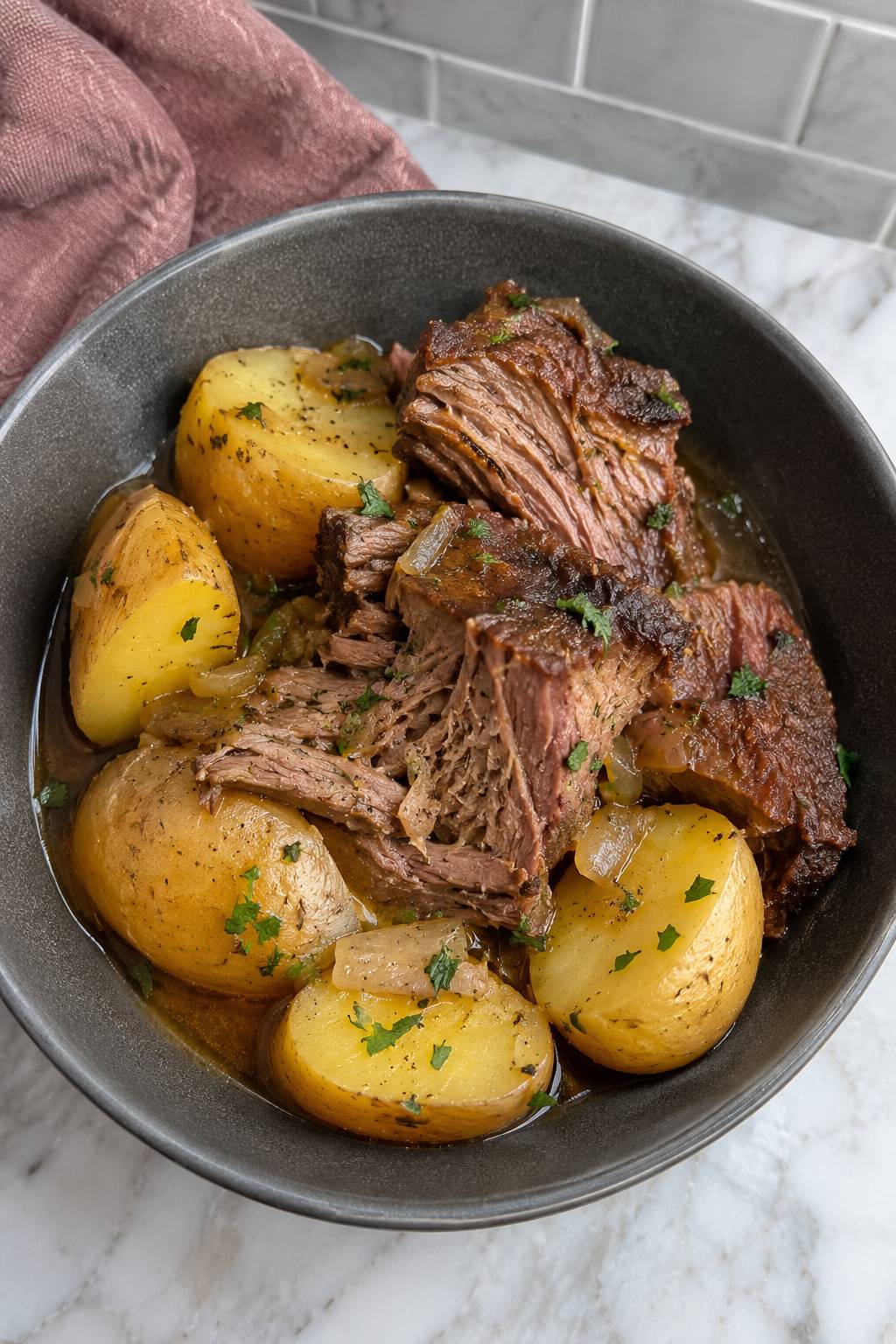
Skim any excess fat from the cooking liquid so the gravy has a lighter finish. Stir the cornstarch into cold water until smooth before whisking it into the simmering liquid. Once the gravy lightly coats a spoon, it’s thick enough to cling to the rough edges of the pulled beef and the cut faces of the potatoes while still pouring easily.
Frequently Asked Questions
Why does the beef get a natural release?
The natural release lets pressure begin to drop gradually after the beef cooks. The recipe card tells you when to vent the remaining pressure. Once you can open the lid, check the roast with a fork before transferring it to the platter.
Can I cook the potatoes with the roast?
For this recipe, cook the potatoes in the liquid after you lift out the tender beef. The halved baby potatoes need less pressure cooking than the chuck roast. Giving them their own cycle and a quick release helps you serve them in intact halves.
Why is my gravy lumpy?
Cornstarch can clump if it goes straight into hot cooking liquid. Mix it thoroughly with cold water to make a smooth slurry, then whisk that into the simmering liquid. Keep stirring as the gravy thickens so it coats the spoon evenly.
Instant Pot Pot Roast with Potatoes
6
servings20
minutes1
hour23
minutes590
kcal2
hours15
minutesBrowned chuck roast cooks until fork-tender with onions, garlic, and thyme. Serve it in large pieces with golden potatoes, a light onion gravy, and fresh parsley.
Ingredients
3 lb boneless beef chuck roast
1 1/2 tsp fine sea salt
1 tsp ground black pepper
2 tbsp olive oil
1 1/2 cups diced yellow onion
1 tbsp minced garlic
2 cups low-sodium beef broth
1 tbsp apple cider vinegar
1 tsp dried thyme
1 1/2 lb baby Yukon Gold potatoes, halved
1 1/2 tbsp cornstarch
2 tbsp cold water
2 tbsp chopped fresh parsley
Directions
- Cut the chuck roast into 3 roughly equal pieces. Pat them dry and season all over with the salt and pepper.
- Set the Instant Pot to Sauté on High. Once hot, add the olive oil. Working in 2 batches, sear the beef for 3 minutes on each of the 2 broad sides, about 12 minutes total. Transfer the beef to a plate.
- Set Sauté to Normal. Add the onion and cook for 4 minutes, stirring occasionally, until softened. Add the garlic and cook for 1 minute, stirring. Pour in the beef broth and scrape up all the browned bits from the bottom. Stir in the vinegar and thyme, then return the beef and any juices from the plate to the pot. Cancel Sauté.
- Lock the lid, set the valve to Sealing, and pressure cook on High for 60 minutes. Let the pressure release naturally for 15 minutes, then vent the remaining pressure. Check that a fork twists easily in the beef, then transfer it to a platter and loosely cover it.
- Add the potatoes to the cooking liquid. Lock the lid, set the valve to Sealing, and pressure cook on High for 4 minutes. Carefully quick-release the pressure as soon as the cycle ends. Lift the potatoes out with a slotted spoon and arrange them around the beef.
- Skim any excess fat from the cooking liquid. Set the pot to Sauté and bring the liquid to a simmer. Stir the cornstarch and cold water together, then whisk the mixture into the pot. Simmer for 2 minutes, stirring, until the gravy lightly coats a spoon. Pull the beef into large pieces, spoon the onion gravy over the beef and potatoes, and scatter the parsley on top.
Notes
- If a fork meets firm resistance after the first pressure cycle, cook the beef on High for another 10 minutes and allow a 10-minute natural release before venting. Transfer the tender beef to the platter before adding the potatoes.
- Use baby potatoes of similar size so the halves cook evenly. Quick-releasing the pressure after 4 minutes helps keep them intact.
- The total time includes an estimated 17 minutes for the two pressure cycles to come to pressure, plus the 15-minute natural release.