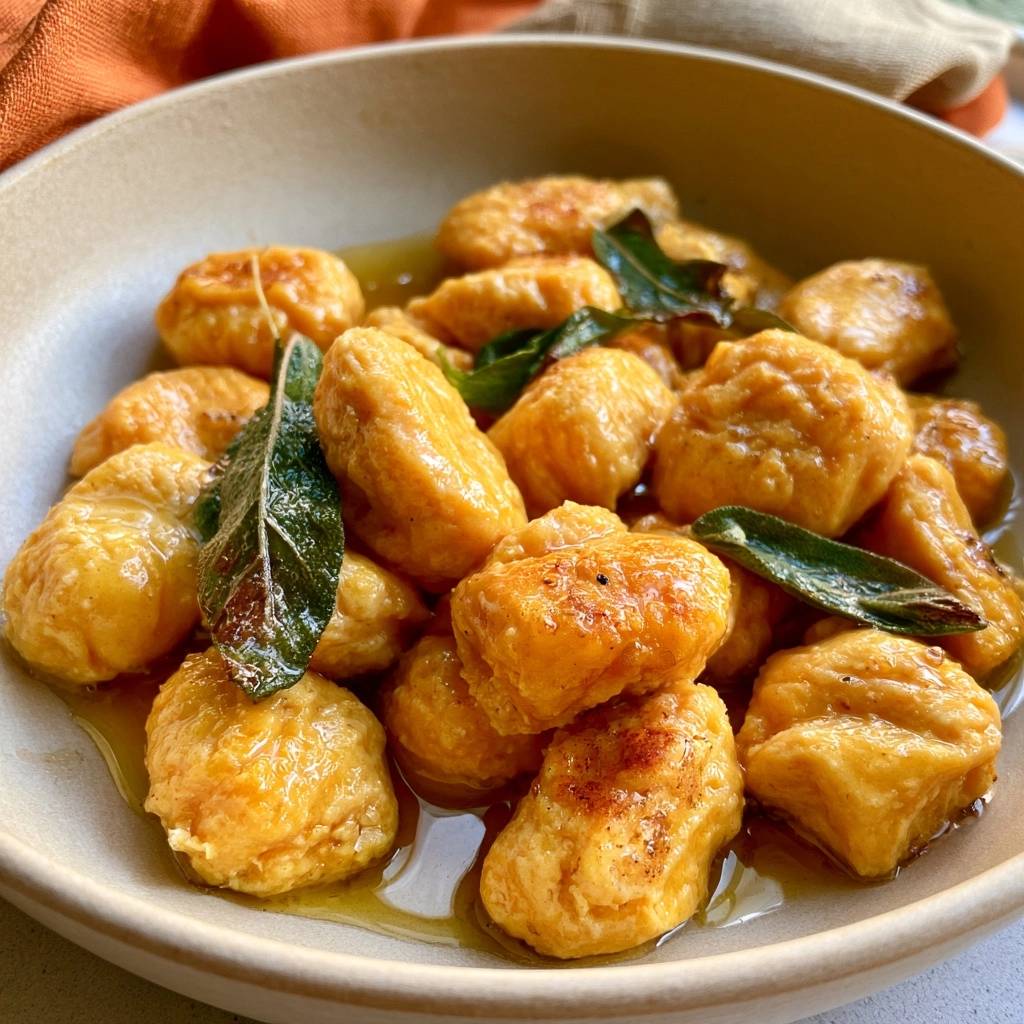
Pumpkin ricotta gnudi bring the soft, tender texture of dumplings to a cozy Italian main course. Pumpkin puree gives the ricotta mixture its autumn color, while Parmesan, black pepper, and nutmeg keep the flavor savory.
After a gentle simmer, the gnudi get a golden skillet sear and a coating of sage brown butter. The contrast between the tender centers, crisped surfaces, and fragrant butter makes each part of the cooking process count.
Drain the ricotta for a soft but workable dough
Whole-milk ricotta is the base of these gnudi. Draining it in a towel-lined fine-mesh strainer helps remove excess moisture before it meets the pumpkin puree. This matters because a wet mixture can be difficult to shape and may need more flour to hold together.
Once drained, combine the ricotta with pumpkin, egg yolk, finely grated Parmesan, salt, pepper, and nutmeg. Fold in the flour just until it disappears. The dough should remain soft; mixing in extra flour by instinct can make the finished dumplings heavier. Keep the reserved flour nearby for your hands and the parchment-lined baking sheet, where it helps the shaped gnudi release more easily.
Handle the delicate dumplings gently
With floured hands, shape the mixture into evenly sized dumplings. Try to keep their size consistent so they cook at a similar pace, and use a light touch rather than compressing the soft dough. Refrigerating them on the prepared baking sheet gives them time to firm up before they meet the water.
A gentle simmer is the goal for poaching. A vigorous boil can jostle the gnudi and make them more likely to break apart. Cook them in batches so they have room in the pot, then lift them with a slotted spoon once they float and feel set. Let them drain before searing, and handle them carefully: they are tender even after poaching.
Brown the butter, then sear for a golden finish
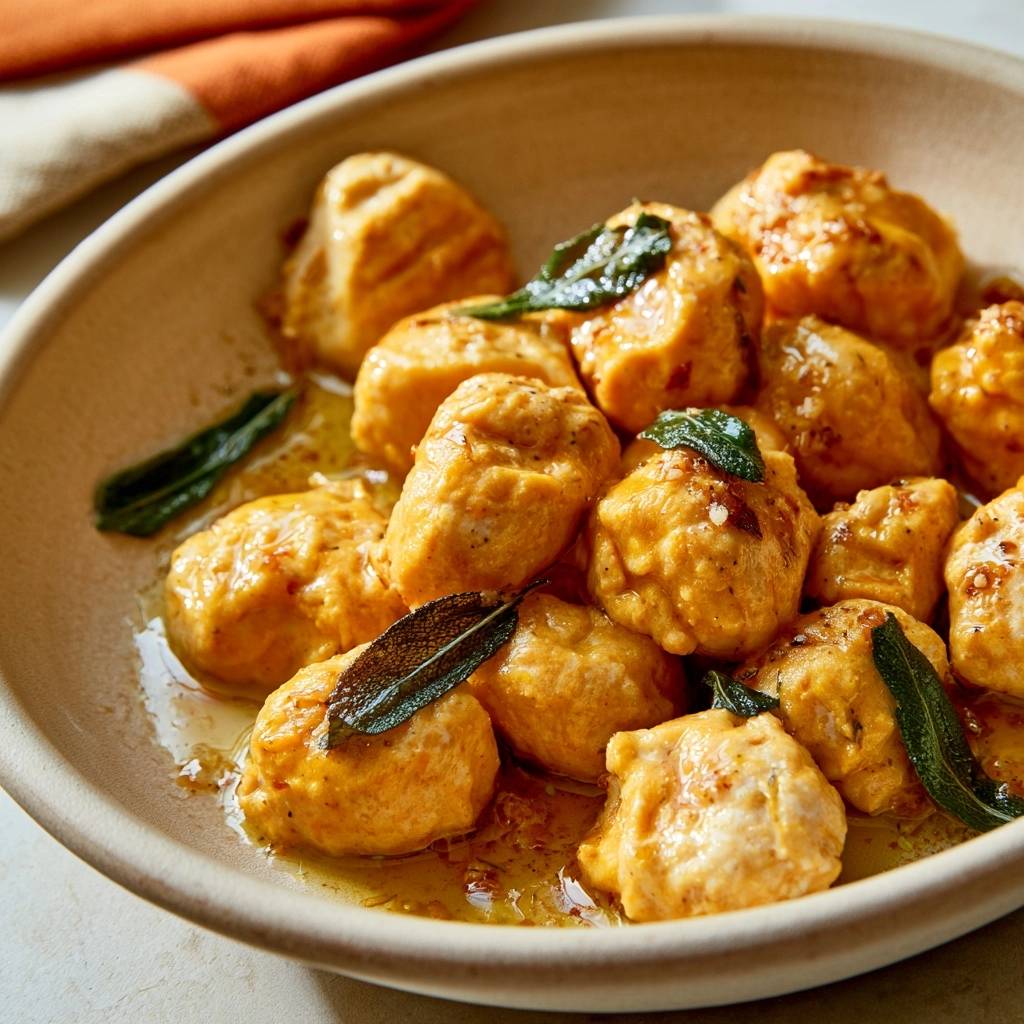
Brown butter gives the sauce a nutty aroma that pairs naturally with the pumpkin and Parmesan. Swirl the skillet as the butter cooks and watch the milk solids closely; their color and the butter’s aroma are useful cues. Add the fresh sage leaves, then move the butter and sage to a heatproof bowl so they do not keep cooking in the hot skillet.
Wipe the skillet before adding olive oil for the sear. Work in batches and give the drained gnudi room to brown without crowding. Turning them gently helps preserve their shape while their surfaces develop color. Return the browned gnudi to the skillet, add the sage brown butter, and toss gently to coat.
Keep the flavor simple and savory
Each ingredient has a clear role: pumpkin brings color and a mellow flavor, ricotta keeps the centers tender, and egg yolk helps bind the mixture. Parmesan adds savory depth, while nutmeg and black pepper give the dough a warm, balanced finish.
The sage brown butter is the final layer, not a reason to rush the earlier steps. If the gnudi are drained well and moved gently, they can take on a golden exterior while staying soft inside. Serve them warm with the sage leaves and the butter coating the dumplings.
Frequently Asked Questions
Why does the ricotta need to drain?
Draining removes excess moisture before the ricotta is mixed with pumpkin puree and flour. A less wet dough is easier to shape while staying soft, so you can avoid adding flour simply to make it manageable.
How can you keep the gnudi from falling apart?
Keep the dough soft but handle it with floured hands, and let the shaped gnudi chill before cooking. Poach them at a gentle simmer rather than a rolling boil, then lift and drain them carefully with a slotted spoon.
How do you know when the brown butter is ready?
Swirl the skillet and look for the milk solids to turn golden brown. The butter should smell nutty. Once the sage has cooked, transfer both to a heatproof bowl to stop them from continuing to cook in the hot pan.
Pumpkin Ricotta Gnudi with Brown Butter and Sage
4
servings20
minutes19
minutes610
kcal1
hour15
minutesThese pumpkin and ricotta dumplings are simmered until tender, then browned in a skillet and finished with sage brown butter. Parmesan and a pinch of nutmeg bring savory flavor to the soft gnudi.
Ingredients
- Gnudi
15 oz whole-milk ricotta
3/4 cup pumpkin puree
1 large egg yolk
1/2 cup finely grated Parmesan
1 1/2 cups all-purpose flour, plus 1/4 cup for dusting
1/2 tsp kosher salt
1/4 tsp ground black pepper
1/8 tsp ground nutmeg
1 tbsp kosher salt, for the poaching water
- Brown butter and sage
6 tbsp unsalted butter
12 fresh sage leaves
1 tbsp olive oil
Directions
- Set a fine-mesh strainer over a bowl and line it with a clean kitchen towel or paper towels. Add the ricotta and let it drain in the refrigerator for 20 minutes.
- In a bowl, mix the drained ricotta, pumpkin puree, egg yolk, Parmesan, 1/2 tsp salt, pepper, and nutmeg. Fold in 1 1/2 cups flour just until combined. With floured hands, shape the soft mixture into about 20 dumplings, each about 1 1/4 inches wide. Arrange them on a parchment-lined baking sheet dusted with flour and refrigerate for 20 minutes.
- Bring a large pot of water to a gentle simmer and stir in 1 tbsp kosher salt. Simmer the gnudi in two batches for about 3 minutes per batch, until they float and feel set. Lift them out with a slotted spoon and let them drain.
- While the gnudi simmer, melt the butter in a large skillet over medium heat. Cook for 3 minutes, swirling the pan, until the butter smells nutty and its milk solids turn golden brown. Add the sage leaves and cook for 1 minute, then transfer the butter and sage to a heatproof bowl.
- Wipe the skillet clean and add the olive oil over medium heat. Sear the drained gnudi in two batches for 2 minutes per side, until golden brown. Return all the gnudi to the skillet, pour in the brown butter, and gently toss for 1 minute to coat. Serve warm with the sage leaves.
Notes
- The dough should be soft. Use the reserved flour on your hands and baking sheet, and handle the gnudi gently after simmering.