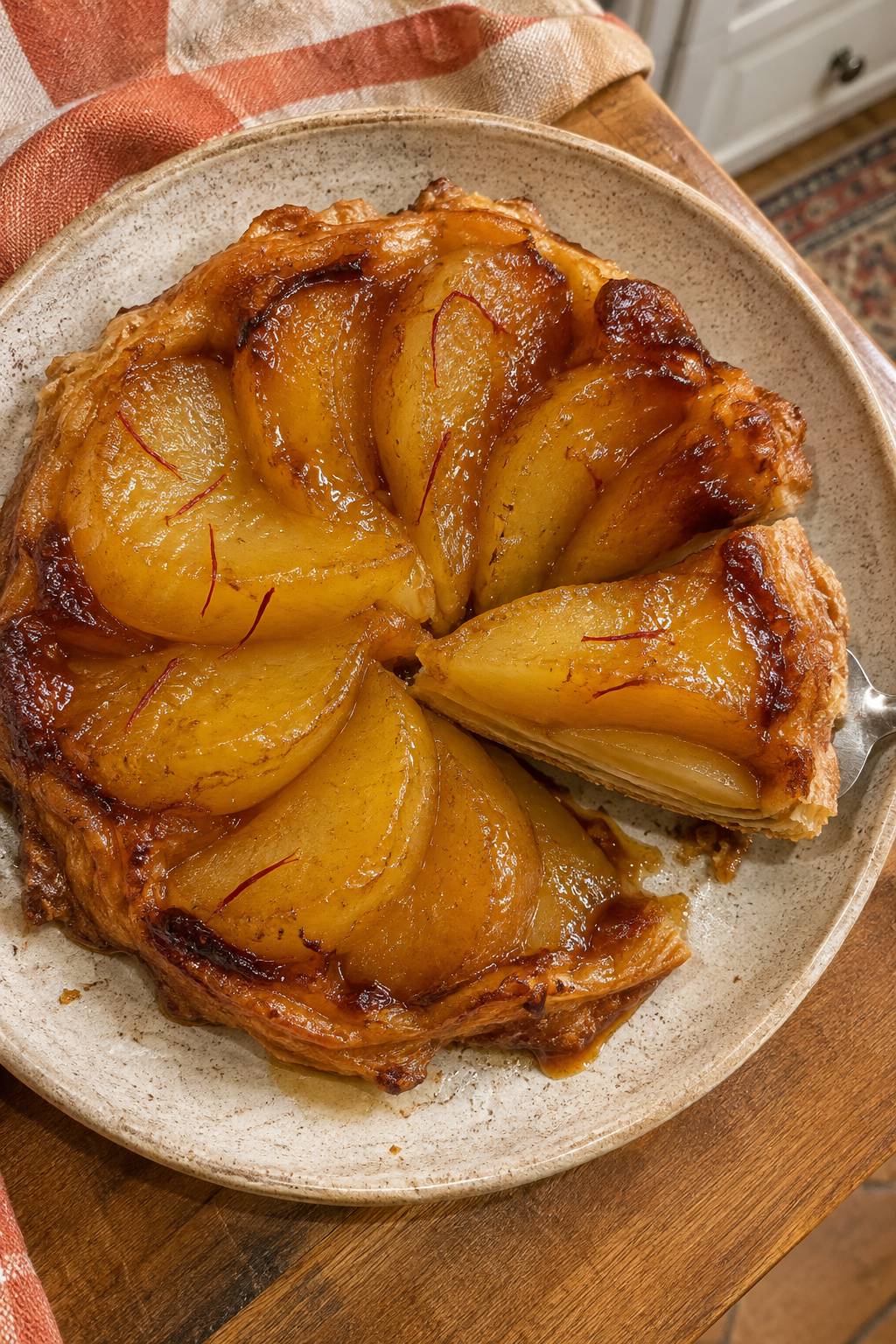
Tarte tatin is one of those desserts that looks far more impressive than it is. Here, pears take the place of apples, and saffron gives the caramel a warm, honeyed glow. Once the tart is inverted, the golden fans of pear sit on top under a crisp, buttery crust.
Why Firm Pears and Fresh Lemon Matter
Firm Bosc pears are the right choice here. They hold their shape through a long stretch in hot caramel, so each slice stays tender and intact instead of dissolving into a loose, applesauce-like filling. Softer pears tend to break down before the syrup has a chance to thicken.
Lemon juice and zest do more than add brightness. They season the fruit before it reaches the pan and help balance the sweetness of the caramel, so the finished slice tastes rich rather than cloying. Toss the pears well so every slice picks up a little of that tang.
Reading the Caramel
Dry sugar is the most unforgiving part of this tart. It starts out grainy and pale, melts into a clear liquid, and then deepens slowly through gold to amber. Once it reaches deep amber, it can slide into bitterness within seconds, so keep your eyes on the pan rather than the clock. Swirl the skillet gently instead of stirring, which helps the color stay even.
When the butter goes in, the mixture will bubble up dramatically. Keep your face and hands back from the pan, then swirl until the butter melts fully. You should end up with a smooth, glossy base that coats the pears beautifully.
Saffron, Pastry, and Pan Safety
Saffron is powerful, so a little goes a long way. Steeping the threads in hot water gives them time to release their color and flavor into the liquid. Pour everything over the pears, threads included, so the golden tint spreads evenly through the fruit.
Puff pastry needs to stay cool and pliable. When the dough warms up, the butter layers soften and lose the structure that lifts them into flaky sheets in the oven. If the sheet begins to tear or feel sticky, work quickly and handle it as little as possible.
A cast-iron skillet holds heat beautifully, which is exactly what caramel needs. Its handle, however, gets very hot in the oven. Wrap it in heavy-duty foil before the tart goes in, and always reach for oven mitts when you invert it. The skillet and platter are both heavy, so move slowly and steadily.
Inverting the Tart Without Stress
The rest period matters more than it seems. Letting the tart sit in the skillet allows the caramel to thicken and cling to the pears, which keeps them in place when you flip. Set your platter firmly over the skillet, then invert both together in one confident motion.
If a pear sticks to the bottom, lift it out and tuck it back into the pattern. Spoon any caramel left in the pan over each slice so every bite gets glossy pear and a bit of that rich syrup.
Frequently Asked Questions
Why does my caramel taste bitter?
Dry sugar can go from deep amber to burnt in seconds, and burnt sugar tastes sharp rather than rich. Watch the color closely, remove the skillet from the heat as soon as the sugar reaches deep amber, and keep the heat moderate so it doesn’t race ahead of you.
Why is my pastry not flaky?
Flaky layers depend on butter staying solid inside the dough. If the pastry gets warm before it reaches the oven, the butter softens and blends into the dough, which makes the crust bake up tight instead of airy. Keep the sheet cool, roll gently, and avoid overworking it.
How do I invert the tart without losing the pears?
Let the tart rest in the skillet so the caramel thickens and grips the fruit. Then set the platter upside down over the pan, hold both firmly, and flip in one confident motion. Rearrange any pears that stick, and use oven mitts throughout.
Saffron Pear Tarte Tatin with Flaky Pastry
8
servings25
minutes48
minutes310
kcal1
hour33
minutesA classic upside-down tart of fanned pears cooked in a dark caramel infused with saffron, topped with puff pastry, baked until golden, then inverted so the glossy pears show on top. Serve it warm, with the caramel spooned over each slice.
Ingredients
- Saffron pears
5 firm Bosc pears (about 2 1/2 lb), peeled, halved and cored
Juice of 1/2 lemon (about 1 tbsp)
1 tsp finely grated lemon zest
1/4 tsp saffron threads
2 tbsp hot water
1/8 tsp fine salt
- Caramel
2/3 cup granulated sugar
4 tbsp unsalted butter, cut into 4 pieces
- Pastry and glaze
1 sheet frozen all-butter puff pastry (from a 14.1-oz box), thawed
1 tsp all-purpose flour, for dusting
1 large egg yolk
1 tsp water
Directions
- Prep
- Set the puff pastry on the counter to thaw for 30 minutes, until pliable but still cool.
- Place the saffron threads in a small bowl, pour in the 2 tbsp hot water, and let steep while you prepare the pears. Saffron releases its color and flavor best in hot liquid.
- Cut each pear half lengthwise into 3 slices about 1/2 inch thick. Toss the slices in a bowl with the lemon juice, lemon zest, salt and the saffron water, including the threads.
- Position a rack in the lower third of the oven and preheat to 400°F. Set a rimmed baking sheet on the rack below to catch any caramel that drips.
- Caramel
- Sprinkle the sugar in an even layer in a 10-inch oven-safe skillet, preferably cast iron. Cook over medium heat without stirring, swirling the pan gently, until the sugar melts and turns deep amber, about 8 minutes. Watch closely, since the caramel can go from amber to burnt within seconds.
- Remove the skillet from the heat and add the butter pieces, swirling the pan until the butter melts into the caramel. Stand back, as the mixture may bubble.
- Arrange the pear slices in the caramel in a tight circle, rounded sides down and overlapping slightly, then fill the center with the remaining slices. Pour any saffron juices from the bowl over the pears.
- Return the skillet to medium-low heat and cook the pears for 15 minutes, spooning the bubbling caramel over them, until the pears are tender and the juices have thickened into a glossy amber syrup. Remove from the heat.
- Assemble and bake
- On a lightly floured surface, roll the puff pastry into an 11-inch round. Lay it over the pears and tuck the edges down around the inside of the skillet. Cut 3 or 4 small slits in the top for steam to escape.
- Stir together the egg yolk and 1 tsp water, then brush the pastry with the egg wash.
- Bake for 25 minutes, until the pastry is deep golden brown and puffed.
- Finish
- Let the tart rest in the skillet for 10 minutes so the caramel thickens slightly and clings to the pears. Wearing oven mitts, set a serving platter upside down over the skillet, then carefully invert both together. Lift off the skillet and rearrange any pears that stick to the pan.
- Serve warm or at room temperature, spooning any caramel left in the pan over each slice.
Notes
- Watch the dry sugar closely. Once it turns deep amber, it darkens quickly, so remove it from the heat as soon as it reaches that color to avoid a bitter taste.
- Keep the puff pastry cool and pliable while rolling. Warm dough softens the butter layers, which reduces the steam lift that gives the crust its flaky layers.
- Cast-iron handles get very hot. Wrap the handle in heavy-duty foil before the tart goes into the oven, and use oven mitts when you invert it.