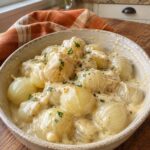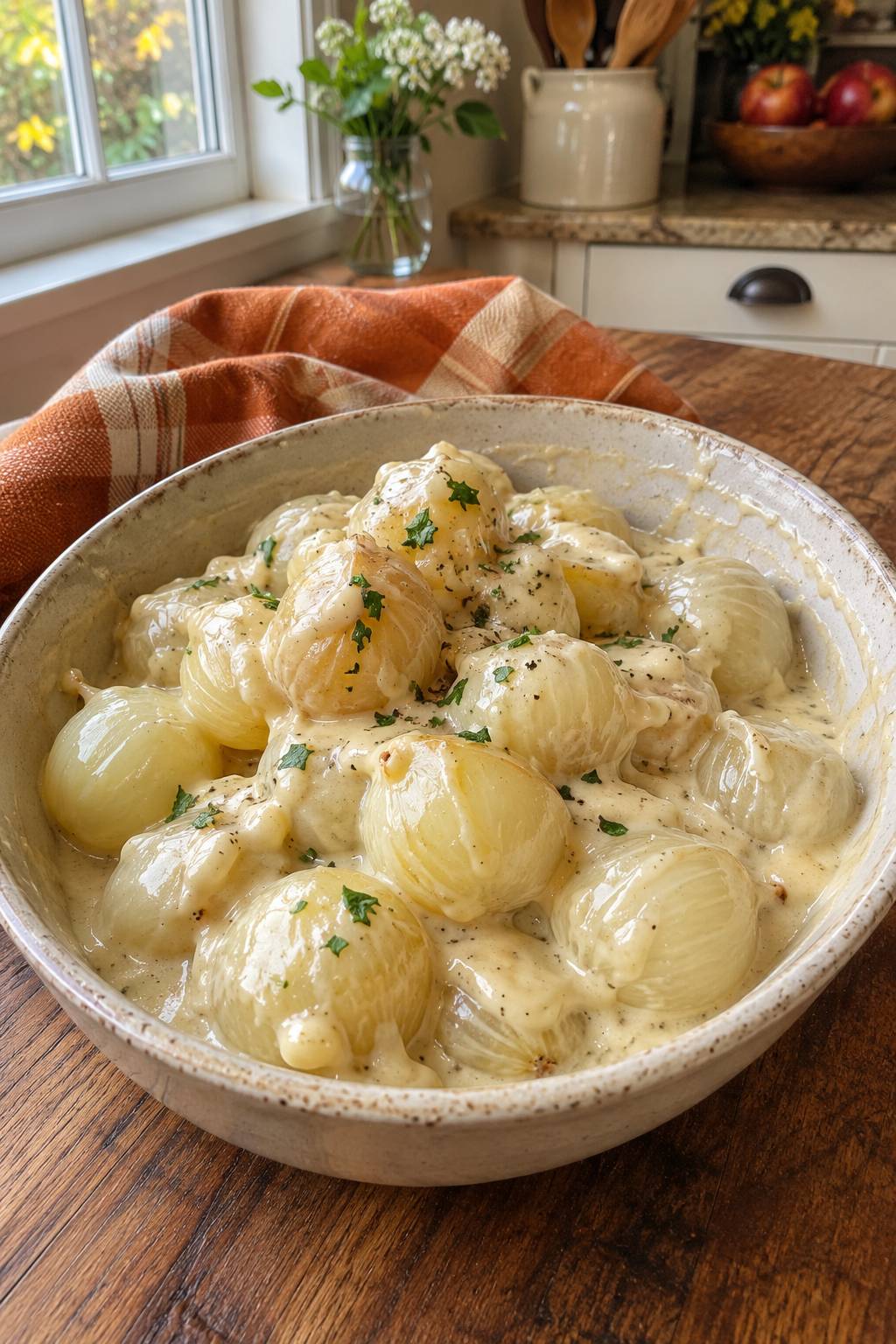
Creamed pearl onions are a classic American holiday side, with tender whole onions tucked into a smooth cream sauce. The onions pick up lightly golden spots in the skillet, and fresh flat-leaf parsley and freshly ground black pepper give each bite a little contrast. What makes the dish especially satisfying is the difference in texture between the soft onions and the sauce that clings to them.
Frozen peeled white pearl onions make this an approachable side when you have a holiday meal or a Dutch oven braise going. The peeling is already done, and you can put the onions in the skillet straight from the freezer. That leaves you free to focus on what you can see and feel as you cook, from the tenderness of the onions to the way the sauce coats a spoon.
Tender Centers and Lightly Golden Spots
Tenderness and browning are separate cues. The covered simmer in water takes care of the centers. Pierce an onion with the tip of a paring knife to check whether it’s tender. The color comes later, after the skillet is uncovered and the remaining water has evaporated. Look for pooled water in the pan before adding the butter, since moisture left in the skillet can keep the onions from browning.
You’re looking for patches of light gold on the rounded surfaces. Gentle stirring is enough to turn the onions so they can pick up color in different spots. They’re already tender by this point, so a light touch helps keep them whole when you lift them out of the skillet.
A Cream Sauce That Coats the Spoon
All-purpose flour gives the sauce enough body to cling to the onions. Whisking it into the melted butter gives you an even base, and adding the whole milk gradually makes it easier to keep that base smooth. The heavy cream follows the milk and adds richness. As you whisk in the milk, pay attention to any thick patches at the bottom of the skillet and work them into the liquid before adding more.
Look for a gentle simmer and a smooth coating on the back of a spoon. The sauce should still move easily around the skillet when you stir it. It thickens as it sits, so the spoon gives you a better guide to when it’s ready than waiting for the sauce to look as thick as you’d like it in the serving bowl.
Seasoning the Finished Dish
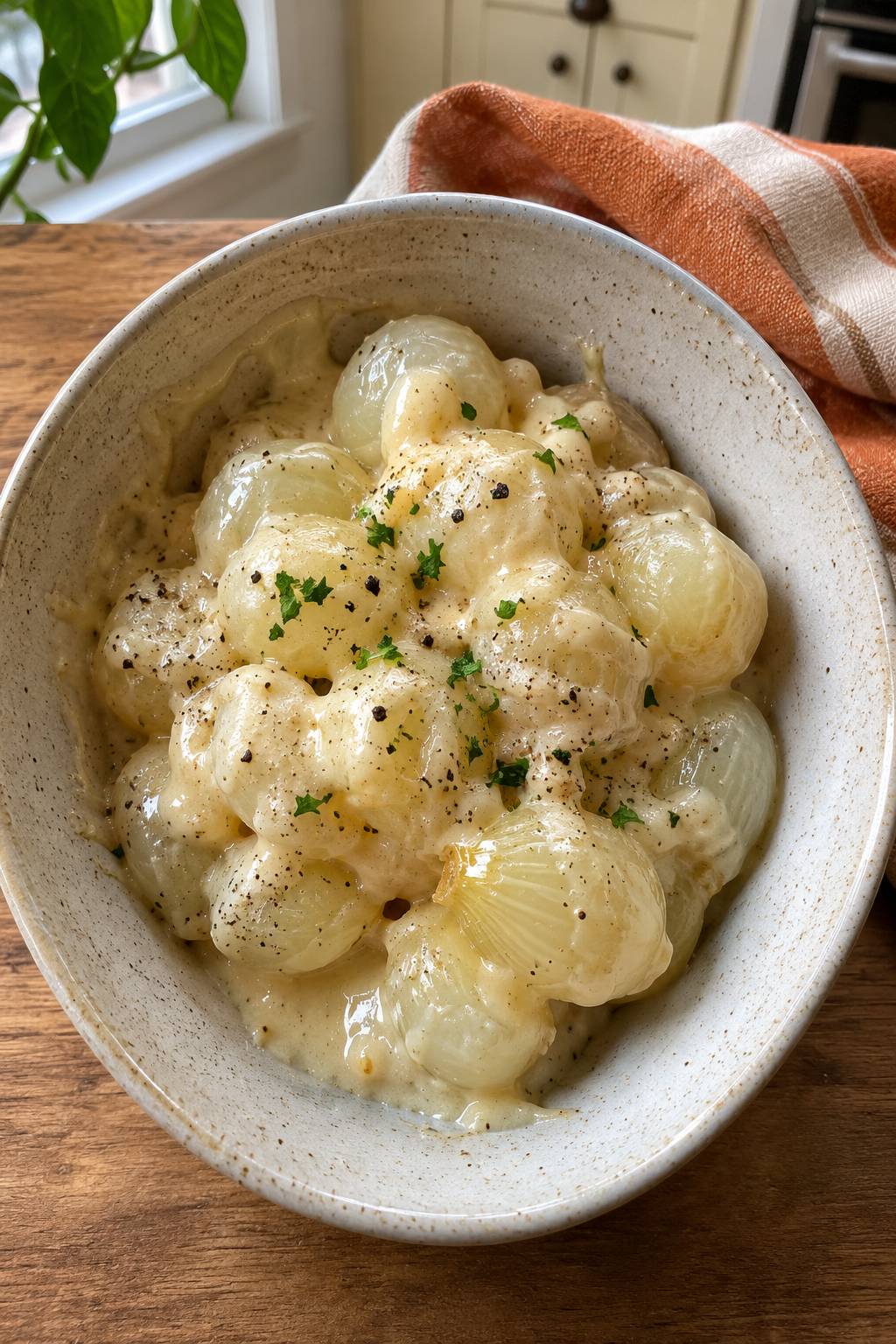
Unsalted butter gives you control over the seasoning, which matters in a mild sauce where the salt and pepper come through clearly. Taste after the onions and any juices from the plate are back in the skillet so you can judge the sauce and onions together. Add more kosher salt if they need it. Sprinkle the finely chopped parsley over the serving bowl, where its fresh flavor and green flecks are easy to appreciate.
Frequently Asked Questions
Do I need to thaw the pearl onions?
Use the peeled pearl onions straight from the freezer. The covered simmer is part of how they become tender, so you can judge their progress with a paring knife. Check the center of an onion, where you’ll feel whether it still offers resistance.
Why are my pearl onions staying pale?
Check for water lingering in the skillet. Let it evaporate so the onions can brown in the butter. Once you see some light golden spots, they’re ready to come out of the skillet. The color will vary across the onions.
How do I keep the onions whole when I add them to the sauce?
The onions are already tender when they go back into the skillet, so use a gentle folding motion to coat them. Bring the sauce up and around the onions with your spoon and give them a gentle simmer to heat them through.
Creamed Pearl Onions
6
servings5
minutes22
minutes175
kcal27
minutesTender whole pearl onions are lightly browned in butter, then folded into a cream sauce and finished with fresh parsley and black pepper.
Ingredients
1 lb frozen peeled white pearl onions
1/4 cup water
3 tbsp unsalted butter, divided
2 tbsp all-purpose flour
3/4 cup whole milk
1/2 cup heavy cream
1/2 tsp kosher salt, plus more to taste
1/4 tsp freshly ground black pepper
1 tbsp finely chopped fresh flat-leaf parsley
Directions
- Put the frozen pearl onions and water in a 10-inch skillet. Cover and bring to a simmer over medium-high heat, about 2 minutes. Reduce the heat to medium and cook, covered, for 8 minutes, until the onions are tender when pierced with a paring knife.
- Uncover and let the remaining water evaporate. Add 1 tbsp of the butter and cook, stirring gently once or twice, until the onions are lightly golden in spots, about 5 minutes total for this step. Transfer the onions to a plate.
- Melt the remaining 2 tbsp butter in the same skillet over medium heat. Whisk in the flour and cook, whisking constantly, for 1 minute. Gradually whisk in the milk, then the cream. Add the salt and pepper and cook, whisking often, until the sauce comes to a gentle simmer and coats the back of a spoon, about 4 minutes.
- Return the onions and any juices to the skillet. Stir gently to coat and simmer over low heat for 2 minutes, until heated through. Taste and add more salt if needed. Transfer to a serving bowl and sprinkle with parsley.
Notes
- The sauce thickens as it sits. If you make the onions ahead, reheat them gently on the stovetop and stir in milk 1 tbsp at a time until the sauce coats the onions again.