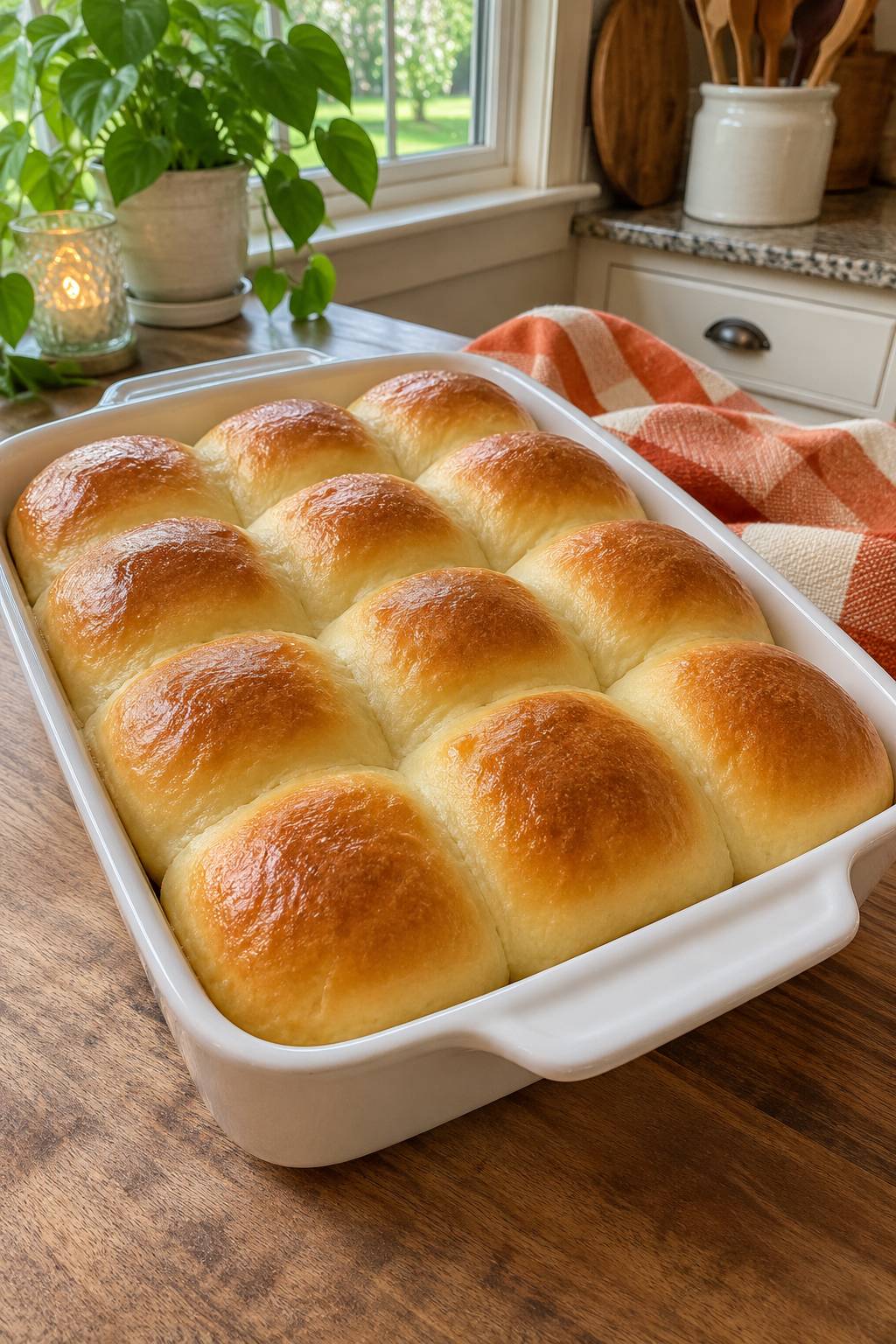
Potato dinner rolls have a fluffy, tender crumb and soft sides where they bake against one another. The tops turn deep golden brown in the oven and take on a buttery shine when you brush them with melted butter. They’re right at home next to a Dutch oven pot roast or a bowl of stew, especially when there’s gravy or broth left to soak up.
The most helpful clues are in the dough itself. It should stretch after kneading, feel slightly tacky when you handle it, and look distinctly puffy in the baking dish. Paying attention to those changes makes it easier to judge when the dough needs more flour and when the shaped rolls are ready for the oven.
Use a Smooth, Well-Drained Russet Mash
Cook the peeled russet until you can press a fork through the chunks and mash them easily. If you still feel a firm spot in the middle of a chunk, keep cooking. Drain the potato well so you can judge the dough by its feel without carrying extra cooking water into the mixer.
Mash the potato until smooth, paying attention to any pieces that escape the fork. A smooth mash is easier to distribute throughout the dough. Use it when it feels just warm. The recipe also calls for warmed whole milk and softened unsalted butter in the dough, with melted butter reserved for brushing the baked rolls.
Judge the Dough After It Starts to Stretch
Spoon and level the all-purpose flour so it stays loose in the measuring cup. Once the dough comes together, let the dough hook work it until you can see it becoming smoother and stretchier. Dough can look sticky at first, so give it a chance to develop before you decide whether it needs the remaining flour.
Watch the sides of the bowl as the hook turns. If the dough keeps leaving a heavy smear against them, add flour gradually as directed on the card. As soon as the dough feels soft and only slightly tacky, you’ve reached the texture you want. A light grab against your fingertip is welcome.
Look for Puffy Rolls That Just Begin to Touch
When you shape each roll, draw its edges underneath and pinch them together. That gives you a smooth top and a seam you can tuck against the greased dish. Cup your hand loosely over the dough as you round it. Gentle pressure helps you smooth the ball without flattening it.
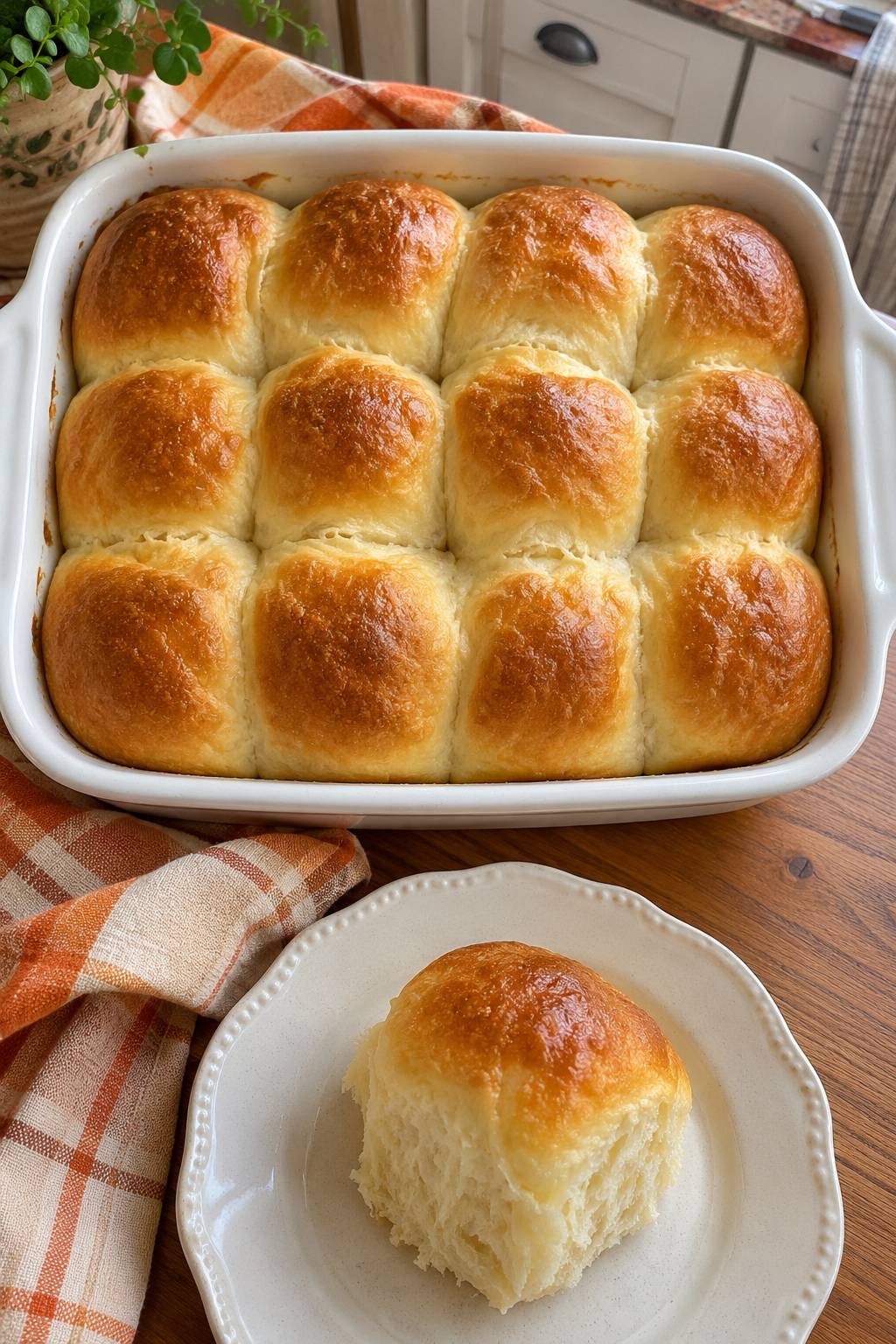
The gaps in the dish give you a simple way to read the final rise. As the rolls puff up, the spaces narrow and neighboring rolls begin to touch. In the oven, look for deep golden tops across the dish and use the recipe card’s doneness check on a center roll.
Frequently Asked Questions
Can I leave the peel on the russet potato?
Peel the russet before cooking it for these rolls. The recipe uses a smooth mash that blends into the dough. Peeling also keeps pieces of skin out of the finished crumb, so you get the same soft texture throughout.
How can I tell when the dough has finished its first rise?
Look for the covered dough to double in size. Take a moment to notice how much space the dough ball takes up in the bowl at the start. That gives you a visual reference when you check on it.
When should I brush the rolls with butter?
Brush the tops with melted unsalted butter as soon as the rolls come out of the oven. Leave the rolls together in the dish to cool as directed on the card, then pull them apart at the soft seams where they baked together.
Potato Dinner Rolls
12
rolls25
minutes40
minutes200
kcal3
hours25
minutesThese fluffy yeast rolls get their tender crumb from mashed russet potato. They bake together in a 9×13-inch dish and get a brush of melted butter while still warm.
Ingredients
- Dough
8 oz peeled russet potato, cut into 1-inch chunks
3 1/4 to 3 1/2 cups all-purpose flour, spooned and leveled
2 tbsp granulated sugar
2 1/4 tsp instant yeast
1 1/4 tsp fine salt
1/2 cup whole milk, warmed to 105°F to 110°F
1 large egg
3 tbsp unsalted butter, softened
- Pan and topping
1 tsp unsalted butter, softened, for greasing
2 tbsp unsalted butter, melted, for brushing
Directions
- Prepare the potato
- Put the potato chunks in a small saucepan and cover them with cold water by 1 inch. Bring to a boil, then reduce to a steady simmer and cook until the chunks mash easily with a fork, about 18 minutes total from the time you turn on the heat. Drain well, mash until smooth, and measure 3/4 cup. Let the measured potato cool until just warm, about 10 minutes.
- Make the dough
- In the bowl of a stand mixer, stir together 3 1/4 cups flour, the sugar, yeast, and salt. Add the milk, egg, mashed potato, and 3 tbsp softened butter. Mix with the dough hook on low until no dry flour remains, then knead on medium-low for 6 to 8 minutes, until smooth and stretchy. If the dough still smears heavily against the sides of the bowl after a few minutes of kneading, add the remaining flour 1 tbsp at a time as needed. The finished dough should feel soft and slightly tacky.
- Let the dough rise
- Gather the dough into a ball, return it to the bowl, and cover. Let it rise in a warm spot until doubled in size, about 75 minutes.
- Shape the rolls
- Grease a 9×13-inch ceramic baking dish with 1 tsp softened butter. Turn the dough onto a clean counter and divide it into 12 equal pieces. Pull the edges of each piece underneath, pinch the seam, and roll it gently under a cupped hand to form a smooth ball. Set the rolls seam side down in the dish in four rows of three.
- Let the rolls rise
- Cover the dish and let the rolls rise until puffy and beginning to touch, about 45 minutes. Toward the end of the rise, preheat the oven to 375°F with a rack in the center.
- Bake and finish
- Uncover and bake for 22 to 25 minutes, until the tops are deep golden brown and a center roll registers at least 190°F in the middle. Brush the hot rolls with the melted butter and let them cool in the dish for 10 minutes before pulling them apart.
Notes
- Store fully cooled rolls in an airtight bag at room temperature for up to 2 days. To warm them for dinner, wrap them in foil and heat at 300°F for 8 to 10 minutes.