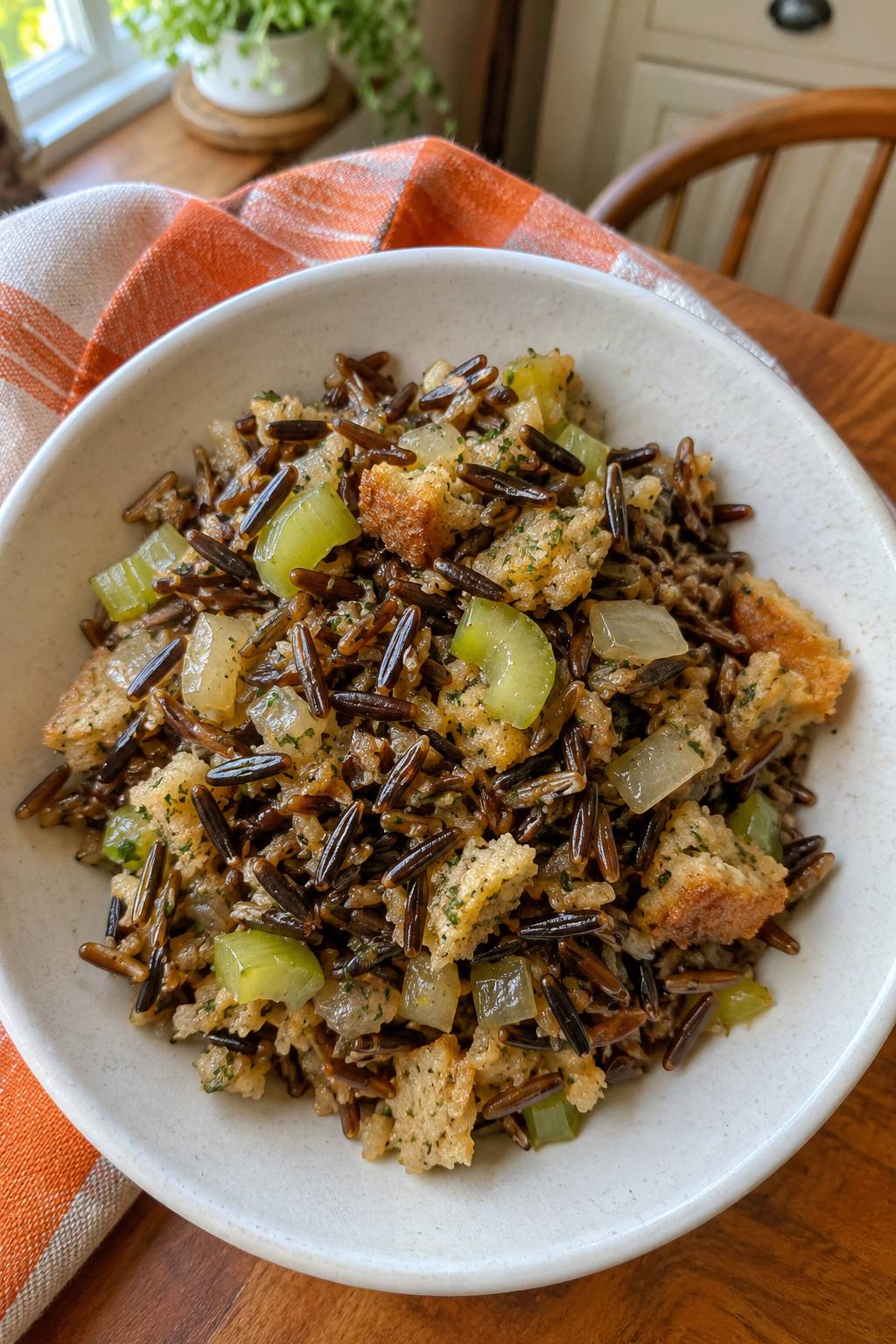
Wild rice stuffing gives you a little of everything you want in a holiday side. The dark, nutty grains have a pleasant chew, the bread underneath turns tender, and the cubes on top bake up golden and crisp. Yellow onion softens and sweetens in butter, celery keeps a slight bite, and fresh sage and thyme give the whole dish its familiar stuffing flavor. It’s the kind of cozy side that fits right in on a table set for a family holiday dinner.
Look for split grains and a tender bite
Plain wild rice gives this stuffing its dark grains and distinct chew. As it simmers, many of the grains split open. That’s a good visual cue, but tasting a grain tells you more about whether the rice is ready. You want it tender enough to eat comfortably, with a little chew left. If it still feels firm, keep simmering and check the texture again.
Drain away any water left in the saucepan. The bread will get its moisture from the vegetable broth, and draining the rice keeps extra cooking water from collecting in the bowl.
Toast the bread until it feels dry
Rustic white bread gives the stuffing a mild base that lets the wild rice and herbs come through. Dryness matters as much as color here. Bread that’s lightly golden but still soft can be harder to toss once it’s moistened. Spread the cubes in a single layer so they toast evenly, and stir them as they toast to expose the sides that were against the pan.
When you add the broth, drizzle it across the bowl so it reaches bread in several places. Toss gently and look for evenly moistened cubes that still hold their shape.
Keep a little bite in the celery
Watch the onion and celery as they soften in the butter. The onion should look translucent, while the celery should be tender enough to bite through easily and still offer a little resistance. That slight bite gives the tender bread something to play against. Stir the sage and thyme into the buttery vegetables so the chopped leaves are easy to distribute when you toss everything together. Flat-leaf parsley goes into the stuffing and over the finished dish, where it adds a fresh finish.
Leave the bread loose for a crisp top
Spoon the mixture into the baking dish and leave it loosely piled. Pressing it flat packs the bread and rice together and leaves fewer exposed edges to crisp. The foil-covered bake keeps the surface from browning while the center gets tender. Once the foil comes off, watch the bread cubes poking up from the surface. Their golden color and crisp edges are the cues that the stuffing is ready to come out of the oven.
Frequently Asked Questions
Does every wild rice grain need to split open?
Some grains will still look intact when the rice is ready. If many have opened, taste a grain to see how it feels. The rice should be tender with a pleasant chew. A firm bite means it needs more simmering.
How can I tell whether I’ve distributed the broth evenly?
After a gentle toss, look at the cubes from the bottom of the bowl as well as those on top. They should all look lightly moistened and hold their shape. If you spot dry patches, gently fold those cubes through the rest of the mixture.
Should I spoon the stuffing into a serving bowl right away?
Let the stuffing rest in the baking dish first. When you transfer it, scoop down into the tender center so the serving bowl gets some of the crisp top along with the rice and softer bread. Scatter the remaining parsley over it just before serving.
Wild Rice Stuffing
8
servings20
minutes1
hour44
minutes200
kcal1
hour45
minutesNutty wild rice, toasted bread cubes, celery, and sweet onion are tossed with butter, sage, and thyme. The stuffing bakes up tender in the center with golden bread cubes on top.
Ingredients
1 cup uncooked wild rice, rinsed and drained
3 cups water
3/4 tsp fine sea salt, divided
4 cups rustic white bread cut into 1/2-inch cubes (about 7 oz)
4 tbsp unsalted butter, divided
1 1/2 cups diced yellow onion
1 1/2 cups sliced celery
2 tsp finely chopped fresh sage
1 tsp fresh thyme leaves
1/2 tsp ground black pepper
1 cup low-sodium vegetable broth
1/4 cup chopped fresh flat-leaf parsley, divided
Directions
- Preheat the oven to 375°F. Grease a 9-inch square baking dish with 1 tsp of the butter.
- Bring the wild rice, water, and 1/2 tsp of the salt to a boil in a medium saucepan. Cover, reduce the heat to low, and simmer for 45 minutes, until the rice is tender and many of the grains have split. Drain off any remaining water.
- While the rice simmers, spread the bread cubes in a single layer on a rimmed baking sheet. Toast for 15 minutes, stirring halfway through, until dry and lightly golden. Transfer the cubes to a large bowl.
- While the rice is still simmering, melt the remaining butter in a large skillet over medium heat. Add the onion, celery, and remaining 1/4 tsp salt. Cook for 8 minutes, stirring occasionally, until the onion is translucent and the celery is tender with a slight bite. Stir in the sage, thyme, and pepper and cook for 1 minute.
- Add the drained rice, sautéed vegetables, and 3 tbsp of the parsley to the bowl with the bread. Drizzle the broth evenly over the mixture and toss gently until the bread is moistened. Spoon into the prepared baking dish without packing it down.
- Cover the dish with foil and bake for 25 minutes. Uncover and bake for 10 minutes more, until the exposed bread cubes are golden and crisp. Let rest for 5 minutes, then spoon into a serving bowl and scatter the remaining 1 tbsp parsley over the top.
Notes
- Use plain wild rice for the dark, chewy grains. If the rice is still firm after 45 minutes, keep simmering and check it every 5 minutes until tender, then drain.