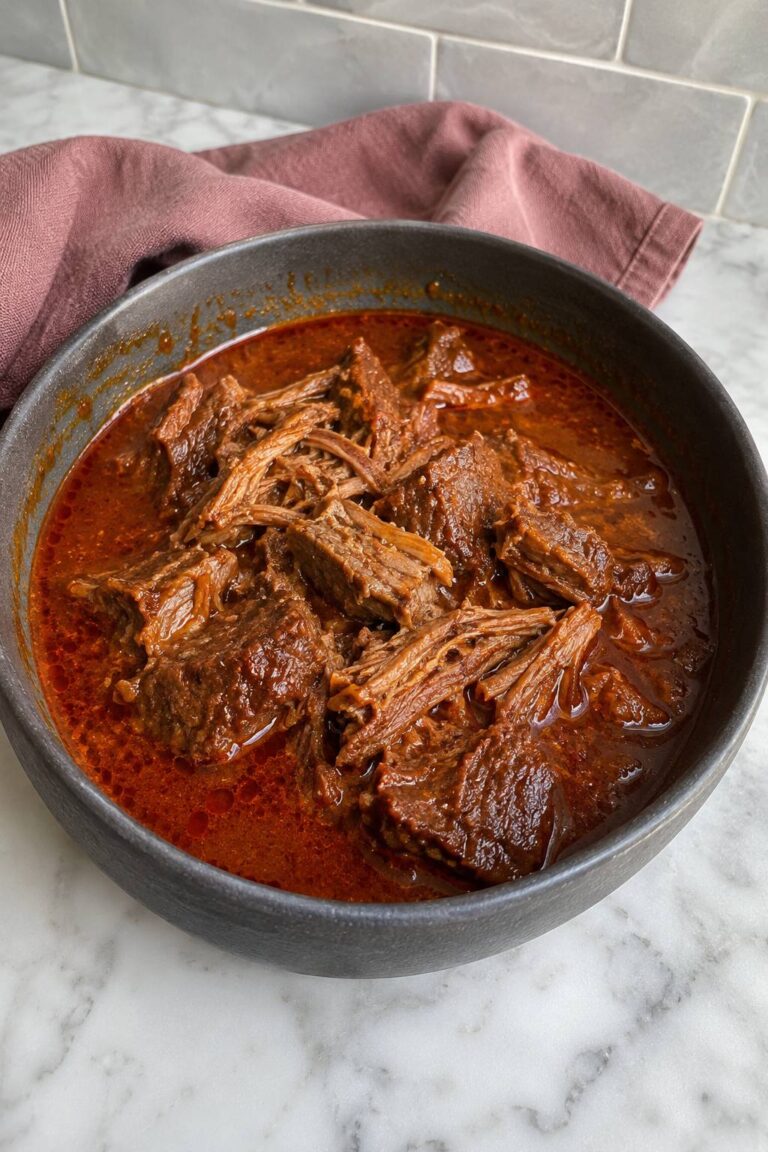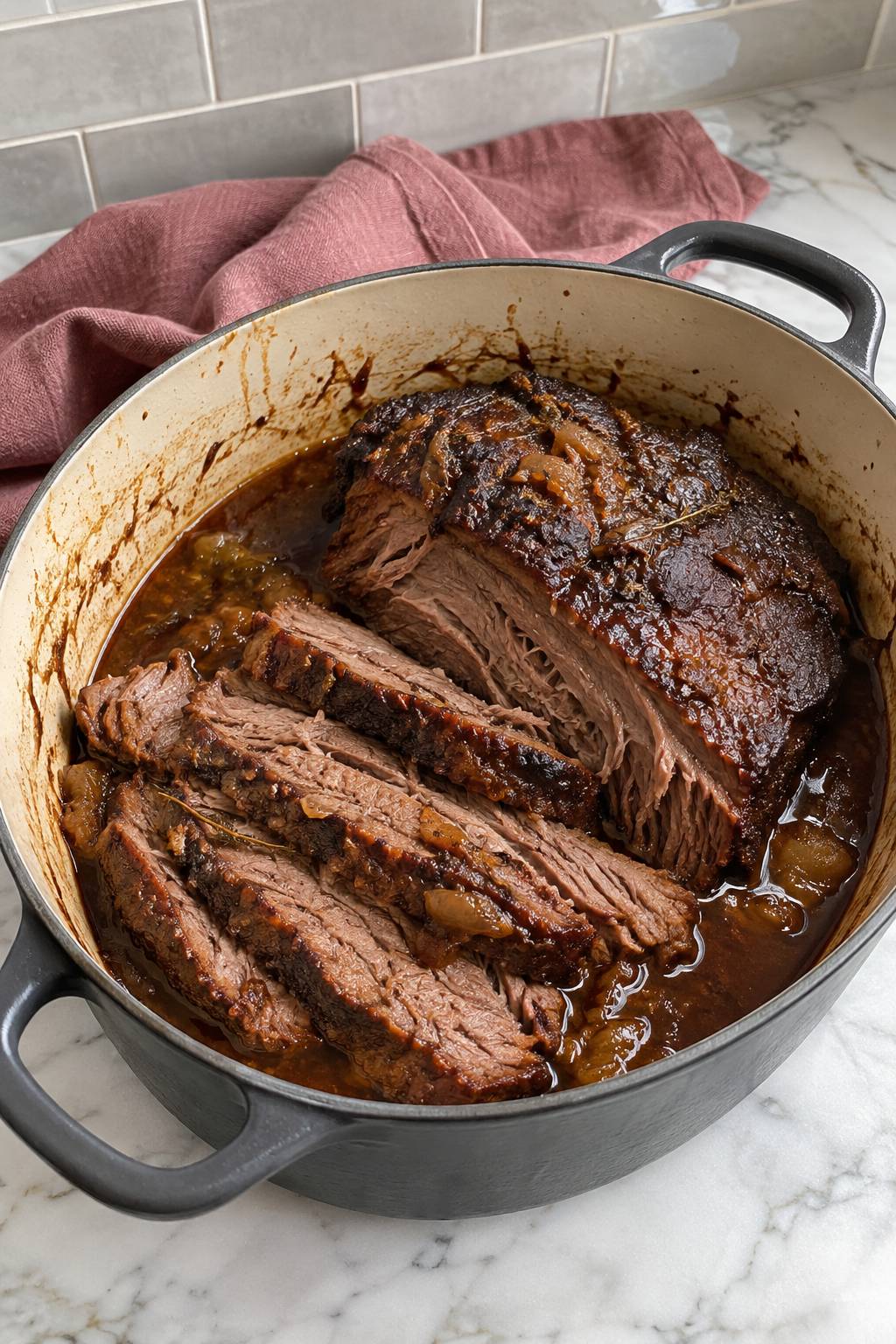
This Dutch oven beef brisket is seared first, then slowly braised with onions, beef broth, herbs, and a touch of balsamic vinegar. A brief uncovered finish deepens the color on top while the onions become a savory sauce.
The recipe keeps the brisket’s surface above the braising liquid, so you get both a browned exterior and moist, tender meat. Pay attention to how the brisket feels near the end of cooking, since its thickness and connective tissue can affect when it is ready.
Build flavor in the pot
Patting the brisket dry helps it brown well during searing. Season it all over with kosher salt, black pepper, and smoked paprika, then brown it in olive oil. Those browned bits left in the Dutch oven add flavor to the onion sauce, so scrape them up when you add the broth and balsamic vinegar.
Yellow onions soften and begin to brown before the garlic and tomato paste go in. Cooking the tomato paste briefly helps it blend into the broth, while packed brown sugar balances the savory sauce with a little sweetness. Thyme and bay leaf round out the braising liquid without overpowering the beef.
Keep the brisket partly above the liquid
Nestle the brisket into the onions with the fat side up. The liquid should come partway up the meat, leaving the top exposed. This setup lets the covered braise tenderize the brisket while the upper surface stays out of the liquid; the uncovered finish then helps deepen its color.
Keep the lid fitted tightly during braising, and check the bottom of the pot if it starts to look dry. Add water as directed on the recipe card and replace the lid promptly. Near the end, use a fork or thin skewer in the thickest part: it should slide in with little resistance. If the meat still feels firm, keep braising it covered and check again.
Rest, slice, and finish the sauce
After roasting uncovered, transfer the brisket to a cutting board and loosely cover it with foil while it rests. Leave the sauce off the heat during this time. Before cooking the sauce further, remove the thyme stems and bay leaf, then skim excess fat from the surface.
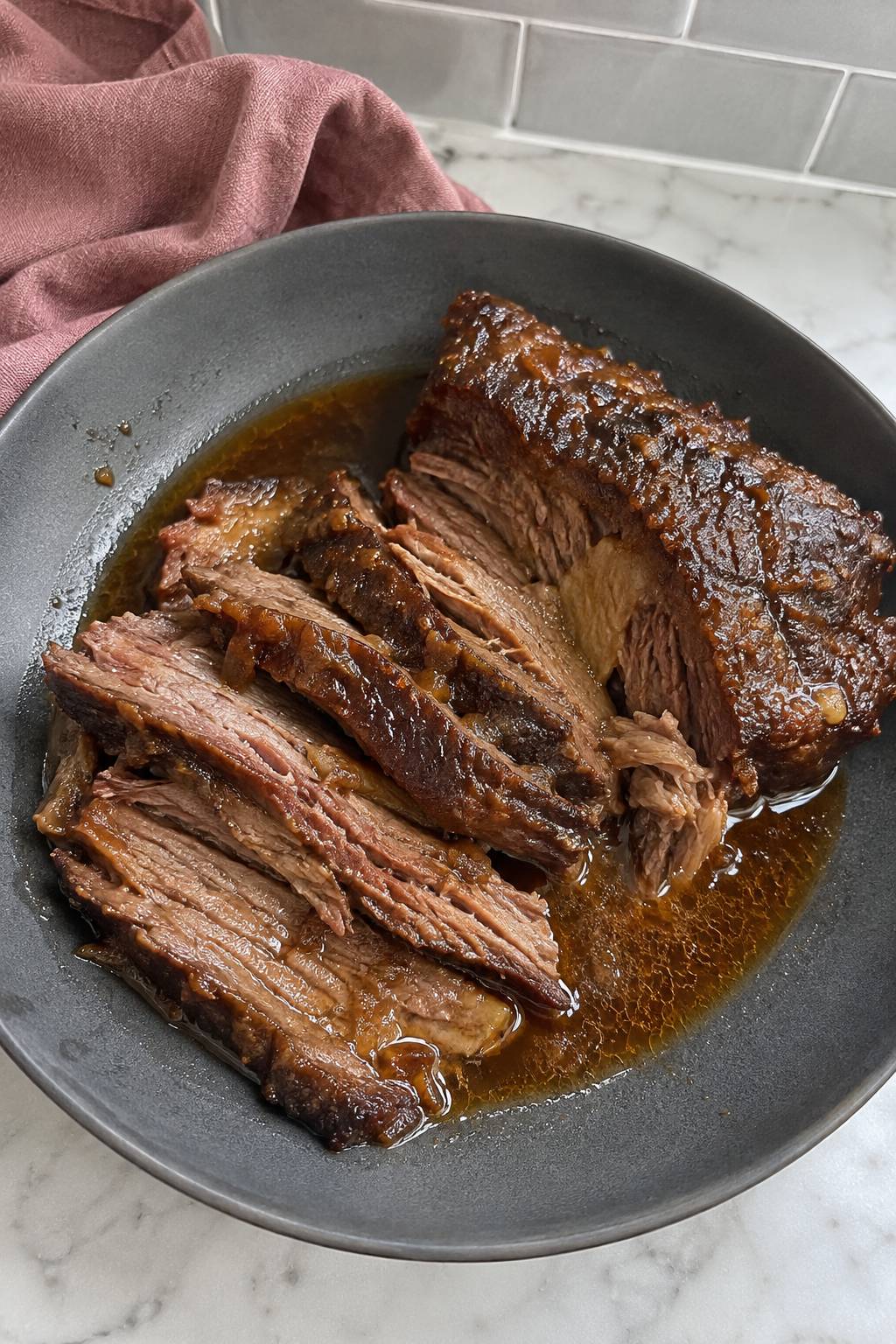
Look for the direction of the meat fibers before cooking so you can cut across them after the brisket rests. Slicing across the grain shortens those fibers and makes the meat easier to chew. Return the slices to the pot and spoon the onion sauce over them so each piece picks up its savory flavor.
Frequently Asked Questions
How can I tell when the brisket is tender?
Check the thickest part with a fork or thin skewer near the end of braising. It should slide in with little resistance. If the brisket still feels firm, cover the pot again and continue cooking, checking tenderness as directed on the recipe card.
Why is the brisket only partly covered by liquid?
The broth and other braising ingredients should come partway up the meat, leaving its surface exposed. Keeping the pot covered helps the brisket braise, and the short uncovered finish deepens the color of the top.
Which way should I slice the brisket?
Find the direction of the meat fibers and cut across them after the brisket has rested. Cutting across the grain shortens the fibers, making the slices easier to chew. Spoon the onion sauce over the slices before serving.
Dutch Oven Beef Brisket
8
servings20
minutes4
hours20
minutes550
kcal5
hoursBeef brisket is seared, then slowly braised in a Dutch oven with onions, beef broth and herbs. A short uncovered finish gives it a deeply browned surface above the savory onion sauce.
Ingredients
4 lb beef brisket flat, with fat cap trimmed to about 1/4 inch
2 tsp kosher salt
1 tsp ground black pepper
2 tsp smoked paprika
2 tbsp olive oil
2 large yellow onions, thickly sliced
4 garlic cloves, minced
2 tbsp tomato paste
2 cups low-sodium beef broth
2 tbsp balsamic vinegar
1 tbsp packed brown sugar
4 fresh thyme sprigs
1 bay leaf
Directions
- Preheat the oven to 325°F. Pat the brisket dry and season all over with the salt, pepper and smoked paprika. Use a 6- to 7-quart Dutch oven with a tight-fitting lid that can accommodate the brisket.
- Heat the olive oil in the Dutch oven over medium-high heat. Sear the brisket for 10 minutes total, turning halfway through, until well browned. Transfer to a plate.
- Reduce the heat to medium. Add the onions and cook for 10 minutes, stirring frequently, until softened and beginning to brown. Add the garlic and tomato paste and cook, stirring, for 2 minutes.
- Pour in the broth and balsamic vinegar, scraping up the browned bits from the bottom. Stir in the brown sugar, thyme and bay leaf. Bring to a simmer and cook for 3 minutes.
- Return the brisket and accumulated juices to the pot, fat side up, nestling it into the onions. The liquid should reach roughly one-third to halfway up the meat; the surface should remain exposed. Cover tightly and braise in the oven for 3 hours 30 minutes. Begin checking tenderness near the end: a fork or thin skewer should slide into the thickest part with little resistance. If still firm, continue covered in additional 20-minute intervals until tender.
- Remove the lid, spoon a little sauce over the brisket and roast uncovered for 20 minutes to deepen the color of the surface. Check that some liquid remains in the bottom of the pot.
- Transfer the brisket to a cutting board, loosely cover with foil and rest for 20 minutes. Leave the sauce off the heat during the rest.
- Remove the thyme stems and bay leaf, then skim excess fat from the sauce. Bring the sauce to a simmer over medium heat and cook for 5 minutes, stirring occasionally. Slice the rested brisket across the grain into thick slices. Return the slices to the Dutch oven and spoon the onion sauce over them to serve.
Notes
- Brisket tenderness varies with thickness and connective tissue. The base cooking time includes 3 hours 30 minutes of covered braising; additional covered cooking may be needed.
- Identify the direction of the meat fibers before cooking so you can slice across them after resting. Cutting across the grain shortens the fibers and makes each slice easier to chew.
- If the pot begins to look dry during braising, add 1/4 cup water and replace the lid promptly.
- Refrigerate leftovers with their sauce in a covered container for up to 4 days. Reheat covered at 300°F until heated through.