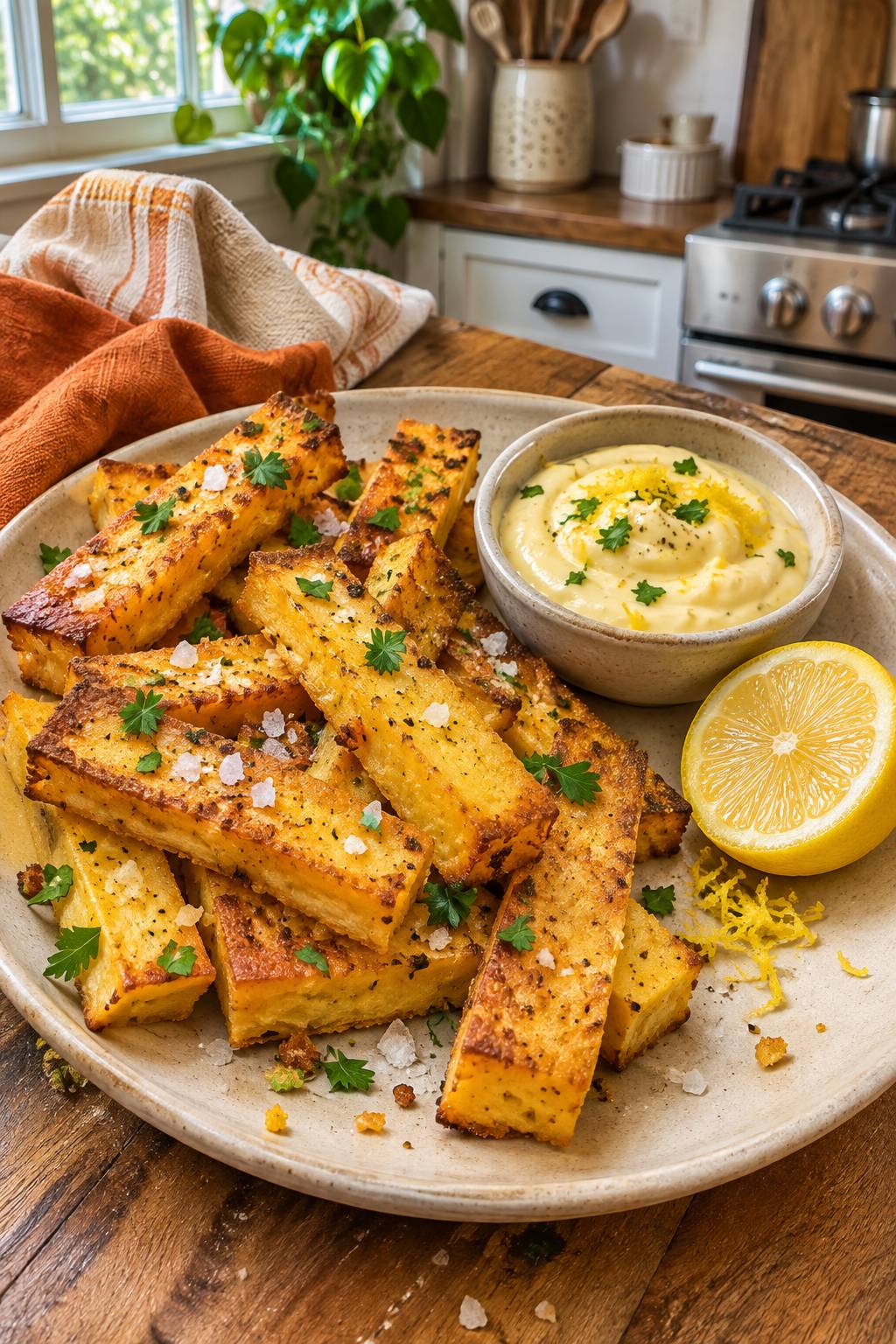
Golden chickpea panisse is one of those recipes that surprises people. Chickpea flour and water cook together into a thick, smooth porridge, which then chills until firm, gets cut into sticks, and bakes until the edges turn deep golden and crisp. Inside, the texture stays creamy and soft, so every bite offers both crunch and comfort.
Why Chickpea Flour Makes Such a Good Base
Chickpea flour has a nutty, earthy flavor that gives panisse its character, and it thickens beautifully when cooked. Whisk it into cold water first, along with the salt and pepper, and keep whisking until no lumps remain. Starting with cold water gives the flour time to disperse evenly, so the finished mixture is smooth rather than grainy.
Once the pan goes on the heat, keep whisking constantly. Chickpea flour thickens quickly and scorches on the bottom of the pan if it sits unstirred, so steady attention matters more than speed. You are looking for a mixture that holds a ripple and pulls away from the bottom of the pan. If it starts to stick, lower the heat rather than stepping away. Stir in the garlic, lemon zest, olive oil, and parsley at the very end so their flavors stay bright.
Patience Is the Secret to Clean Sticks
Panisse needs to rest before it is cut. Let the mixture cool uncovered so it loses some of its heat, then cover it and chill it until completely firm. A cold, set base lifts cleanly with a spatula and holds its shape once it reaches the hot oven. Cutting too soon is the most common mistake, and it leads to torn edges and sticks that fall apart.
Spreading the mixture takes a light touch. Scrape it into the prepared pan, then use an oiled spatula to press it into an even layer. Uneven thickness means some sticks will brown faster than others, so take a moment to smooth the surface. Oiling the spatula keeps the warm mixture from clinging to it.
Baking for Deep Golden Color
Oil does more than prevent sticking here. A light brush on the baking sheet and on the tops of the sticks helps them brown and gives the surface its crisp, golden finish. Arrange the sticks with some space between them so hot air can reach their sides. Crowding them is a common mistake that leads to softer edges instead of crisp ones.
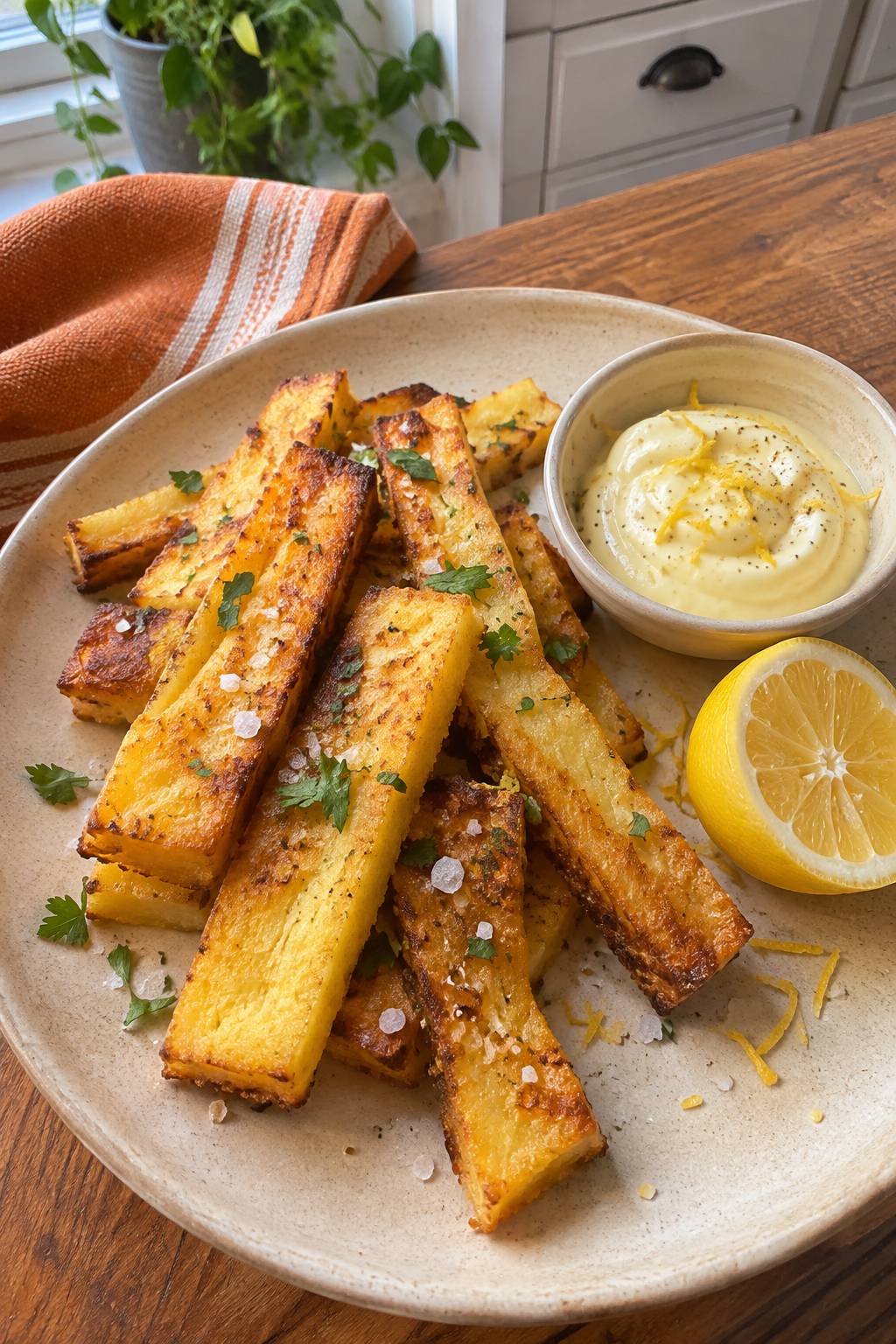
Flip the sticks gently with a thin, wide spatula partway through baking. Their surfaces brown evenly, so turning them gives both sides the same golden color. Watch the edges as well as the tops, since they show you when the panisse is truly crisp. When the sticks come out, sprinkle them with flaky sea salt right away, while the surface is still warm enough for the salt to cling.
Making a Bright, Easy Lemon Aioli
The aioli is a simple mayonnaise-based sauce brightened with grated garlic, fresh lemon juice, lemon zest, extra-virgin olive oil, and kosher salt. Grating the garlic gives it a smooth texture that blends into the mayonnaise without leaving sharp bits in each bite. Taste it before serving and adjust the lemon and salt until the flavor feels lively but balanced.
Keep the aioli covered in the refrigerator until you are ready to serve, and bring the panisse to the table warm. The cool, creamy sauce is a lovely contrast to the crisp, hot sticks. Set out the lemon half alongside so everyone can squeeze a little extra brightness over each bite.
Frequently Asked Questions
Why is my chickpea mixture lumpy?
Lumps usually form when the flour goes into the water too quickly or is not whisked enough. Whisk the flour, salt, and pepper into the cold water until smooth before turning on the heat. Then keep whisking as it cooks, and the mixture should thicken into a silky porridge.
How do I know the panisse is ready to cut?
It should feel firm all the way through and hold its shape when you gently press the surface. A fully chilled base lifts cleanly with a spatula and cuts into neat sticks. If it still feels soft or clings to the cutting board, give it more time in the refrigerator before slicing.
Should the lemon aioli be served warm or cold?
Serve the aioli cold, straight from the refrigerator, while the panisse is still warm. The contrast is the point: crisp, hot sticks alongside a cool, bright sauce. Keep the aioli covered until serving, and offer the lemon half so guests can add more fresh citrus.
Golden Chickpea Panisse with Lemon Aioli
4
servings15
minutes28
minutes420
kcal1
hour48
minutesChickpea flour is cooked with water into a thick porridge, chilled until firm, cut into sticks and baked until golden. They are served with a bright lemon aioli.
Ingredients
- For the panisse
1 cup chickpea flour (about 4 oz)
3 cups cold water
1 tsp kosher salt
1/2 tsp freshly ground black pepper
1 garlic clove, minced
1 tsp finely grated lemon zest
4 tbsp extra-virgin olive oil, divided
1/4 tsp flaky sea salt, for finishing
1 tbsp chopped fresh flat-leaf parsley, stirred into the panisse
1 tbsp chopped fresh flat-leaf parsley, for garnish
- For the lemon aioli
1/2 cup mayonnaise
1 small garlic clove, finely grated
1 tbsp fresh lemon juice (about 1/2 lemon)
1 tsp finely grated lemon zest
1 tsp extra-virgin olive oil
1/4 tsp kosher salt
1 lemon half, for serving
Directions
- Panisse
- Lightly grease a 9×9-inch baking pan with 1 tbsp of the olive oil and set it aside.
- In a medium saucepan, whisk the chickpea flour, 1 tsp kosher salt and the pepper into the cold water until no lumps remain.
- Cook over medium heat, whisking constantly, for about 8 minutes, until the mixture is thick enough to hold a ripple and pulls away from the bottom of the pan. Lower the heat if it starts to stick. During the last minute, stir in the minced garlic, lemon zest, 1 tbsp of the olive oil and the chopped parsley for stirring.
- Scrape the mixture into the prepared pan. Use an oiled spatula to spread it evenly to about 1/2 inch thick.
- Let it cool uncovered for 10 minutes, then cover and refrigerate for at least 1 hour, until firm.
- Lemon aioli
- While the panisse chills, whisk the mayonnaise, grated garlic, lemon juice, lemon zest, 1 tsp olive oil and 1/4 tsp kosher salt in a small bowl. Cover and refrigerate until serving.
- Panisse
- Set an oven rack in the center position and preheat the oven to 425°F. Brush a rimmed baking sheet with 1 tbsp of the olive oil.
- Turn the chilled panisse out onto a cutting board and cut it into about 24 sticks, roughly 3 inches long and 1 inch wide. Arrange them on the oiled baking sheet about 1 inch apart and brush the tops with the remaining 1 tbsp olive oil.
- Bake for 10 minutes. Flip the sticks with a thin spatula and bake for 10 minutes more, until deep golden and crisp at the edges.
- Transfer the panisse to a serving platter. Sprinkle with the flaky sea salt and garnish with the 1 tbsp chopped parsley reserved for garnish. Serve warm with the lemon aioli and the lemon half.
Notes
- Whisk constantly while the chickpea mixture cooks. Chickpea flour thickens quickly and scorches on the bottom of the pan if left unstirred.
- Chill the panisse fully before cutting. It sets firm enough to lift and cut cleanly, and cold sticks hold their shape in the hot oven.
- The aioli can be made up to 2 days ahead and kept covered in the refrigerator. Mayonnaise-based sauces should not sit at room temperature for long.
- Flip the sticks gently with a thin, wide spatula. Their surfaces brown evenly while they bake, so turning them halfway gives the same golden color on both sides.