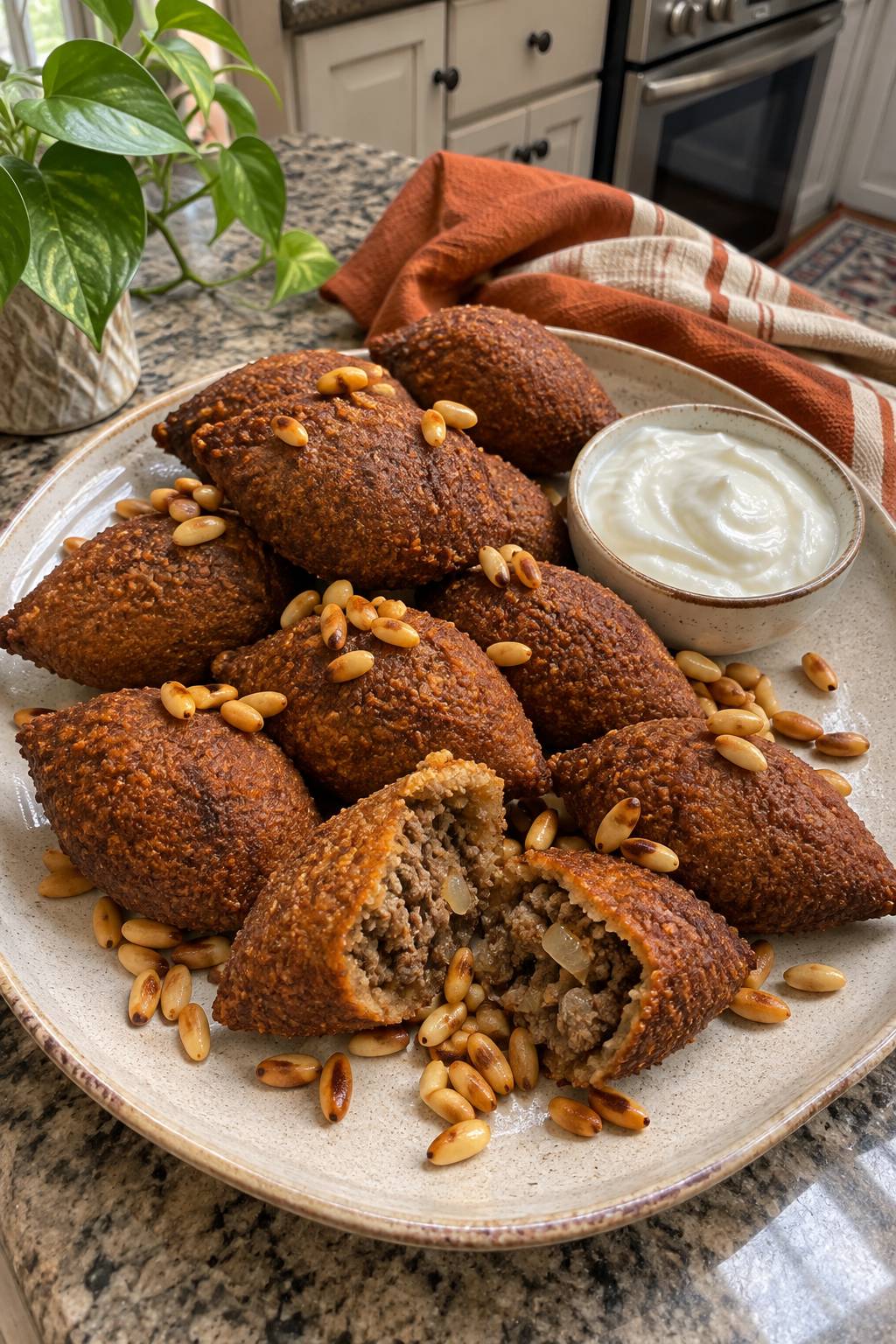
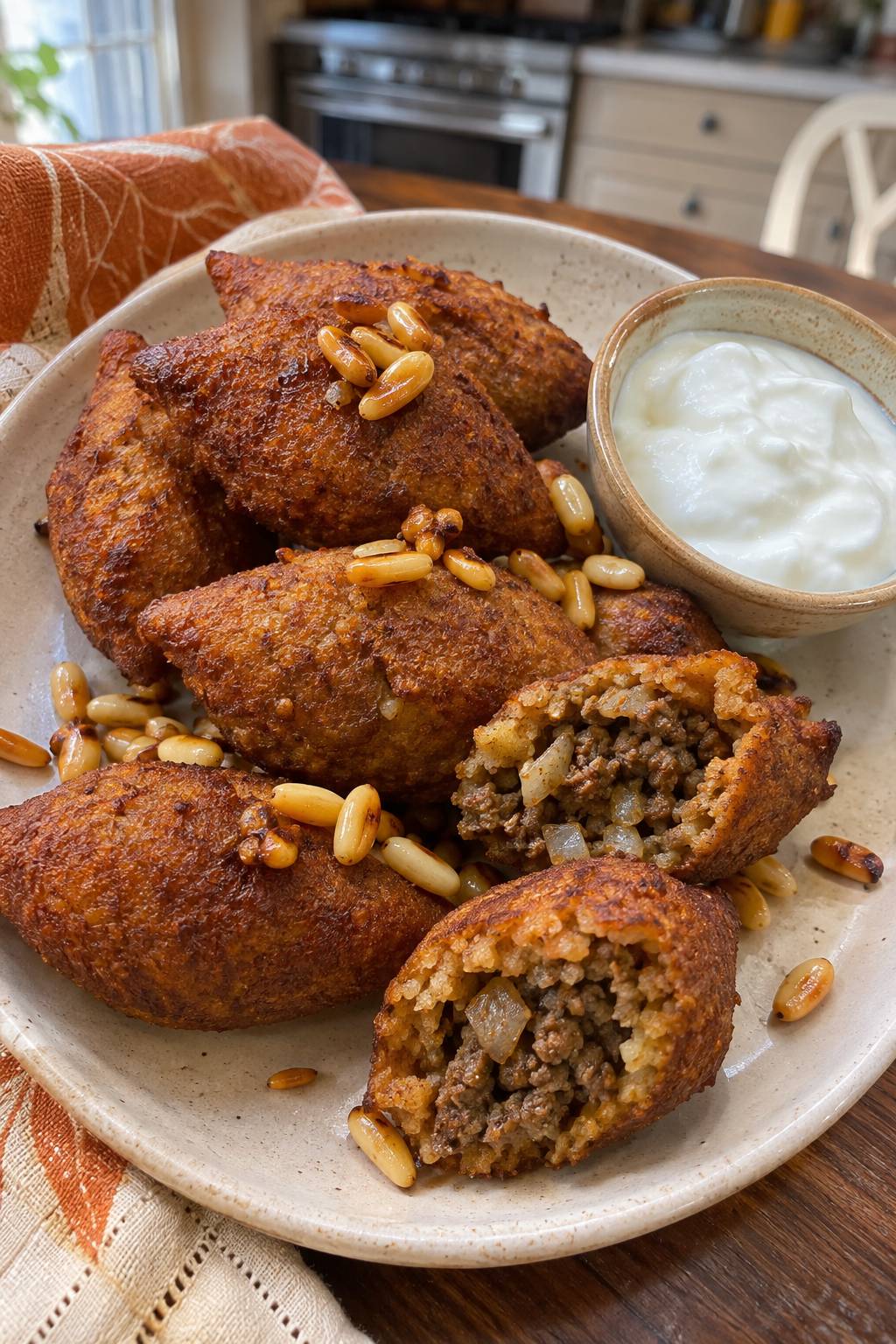
Kibbeh is one of those dishes that rewards a little patience. Here, the shell is a mixture of fine bulgur and lean ground beef, wrapped around a savory filling of onion, beef, and toasted pine nuts, then shaped into torpedo-shaped pieces and fried until deeply browned. The contrast is the whole point: a crackly, golden exterior gives way to a tender shell and a warmly spiced center.
This companion guide walks through the ideas behind each stage so you can make these with confidence. You will find notes on why the bulgur needs to be squeezed dry, how to shape the shells without cracks, and how to keep the hot oil steady. Think of it as a partner to the recipe card, not a replacement for it.
Choosing the Right Beef and Bulgur
Fine bulgur is the backbone of the shell. Because it is cracked very small, it softens quickly and blends into the meat, giving you a smooth, pliable dough instead of a gritty one. Coarser bulgur stays chewy and tends to crumble when you shape it, so check the package before you start.
The beef matters just as much. The shell uses lean ground beef, which keeps the mixture from feeling heavy, while the filling uses a slightly fattier grind so it stays juicy once cooked. Keep the meat cold until you need it. Cold beef is much easier to knead by hand and holds its shape better as you work.
Shaping Shells Without Cracks
Wet hands are your best tool here. The shell mixture is sticky, and a little cold water on your palms lets you spread it thin without tearing. Squeezing the soaked bulgur dry matters too, because excess water loosens the dough and makes it hard to hold together. Aim for a mixture that is smooth and holds its shape when pressed.
When you fold the shell around the filling, seal the seams firmly and taper the ends so the kibbeh forms a neat torpedo. Cracks usually come from thin spots or from filling placed too close to the edge. If the shaped pieces feel soft or sticky, let them firm up in the refrigerator before they meet the hot oil.
Frying for Crisp, Not Greasy Results
Oil temperature is where most kibbeh goes wrong. If you crowd the pot, the oil cools down, and the shells soak up fat instead of crisping. Work in small batches and let the oil return to temperature between each one. A thermometer takes the guesswork out of frying and is your best way to confirm the beef in the center is fully cooked.
Drain the finished pieces on a wire rack set over paper towels rather than directly on the towels. The rack lets steam escape, so the bottoms stay crisp. Serve them while still warm, because the shell loses its crunch as it cools.
Frequently Asked Questions
Why do I need to squeeze the bulgur dry?
Excess water makes the shell mixture soft and sticky, so it tears when you shape it and may not hold its torpedo form in hot oil. Squeezing the soaked bulgur in a clean towel gives the mixture a firmer base, which helps the kibbeh keep its shape while frying.
How do I know the kibbeh is cooked through?
Check the thickest part of each piece with an instant-read thermometer, as the recipe card describes. The beef inside the shell is raw until it reaches a safe internal temperature, so the thermometer is more reliable than color. Keep the oil steady during frying so the outside browns without the center lagging behind.
What is the best way to serve kibbeh?
Serve them warm on a platter with the cool yogurt sauce alongside, so each bite contrasts the crisp shell with something fresh. Scatter the reserved toasted pine nuts over the top for crunch and richness. The mint and lemon in the sauce brighten the spiced beef.
Crispy Beef Kibbeh with Toasted Pine Nuts
6
servings42
minutes33
minutes600
kcal2
hours20
minutesFried kibbeh are torpedo-shaped bulgur and ground beef shells filled with a cooked onion and beef mixture, then deep-fried until deeply browned. They are served with a cool yogurt sauce and more toasted pine nuts.
Ingredients
- Kibbeh shell
1 cup fine bulgur wheat
1 1/2 cups cold water, for soaking
1 lb lean ground beef (90% lean)
1/2 small yellow onion, finely grated
1 tsp kosher salt
1 tsp ground allspice
1/2 tsp ground cinnamon
1/2 tsp black pepper
- Filling
1 tbsp olive oil
1 medium yellow onion, finely chopped (about 1 cup)
1 lb ground beef (80% lean)
1/2 tsp kosher salt
1/2 tsp ground allspice
1/4 tsp black pepper
1/2 cup pine nuts, divided
- Frying and sauce
2 quarts vegetable or canola oil, for frying
1 cup plain whole-milk Greek yogurt
1 tbsp fresh lemon juice
1/2 tsp kosher salt
1 tbsp chopped fresh mint
Directions
- Shell
- Place the bulgur in a medium bowl, cover with the cold water, and let soak for 20 minutes until softened and most of the water is absorbed. Drain well, then squeeze the bulgur in a clean kitchen towel to remove as much water as possible.
- Filling
- While the bulgur soaks, heat a large skillet over medium heat. Add 1/2 cup pine nuts and stir for about 3 minutes until golden. Transfer half of the pine nuts (1/4 cup) to a plate for topping and set the other 1/4 cup aside for the filling.
- Add the olive oil to the same skillet and heat over medium heat. Add the chopped onion and cook for 8 minutes, stirring occasionally, until soft and golden at the edges.
- Add the 1 lb ground beef, breaking it up with a spoon. Season with 1/2 tsp salt, 1/2 tsp allspice, and 1/4 tsp black pepper. Cook for 7 minutes, stirring often, until the beef is no longer pink. Stir in the 1/4 cup toasted pine nuts.
- Spread the filling on a plate and let it cool for 15 minutes so it is easy to handle.
- Shell
- In a large bowl, combine the squeezed bulgur, 1 lb lean ground beef, grated onion, 1 tsp salt, 1 tsp allspice, 1/2 tsp cinnamon, and 1/2 tsp black pepper. Knead by hand for 3 to 5 minutes, dipping your hands in cold water as needed, until the mixture is smooth and holds together when pressed.
- Shaping
- Divide the shell mixture into 12 equal portions, about 2 1/2 ounces each. Wet your hands, flatten one portion into a 4-inch oval, and place 3 tablespoons of filling in the center. Fold the shell over the filling, pinch the seams closed, and shape into a torpedo about 3 1/2 inches long with tapered ends. Set on a parchment-lined baking sheet and repeat with the remaining portions.
- Refrigerate the shaped kibbeh for 30 minutes to firm up before frying.
- Sauce
- While the kibbeh chill, whisk the Greek yogurt, lemon juice, 1/2 tsp salt, and chopped mint in a small bowl. Refrigerate until ready to serve.
- Frying
- Pour the oil into a heavy 4-quart Dutch oven and heat to 360°F over medium-high heat. Fry 4 kibbeh at a time for about 5 minutes, turning occasionally with a slotted spoon, until deep golden brown and an instant-read thermometer inserted into the thickest part reads 160°F. Adjust the heat to keep the oil between 350°F and 360°F.
- Drain each batch on a wire rack set over paper towels. Repeat with the remaining kibbeh in 2 more batches, letting the oil return to 360°F before adding each new batch.
- Serving
- Arrange the kibbeh on a platter. Spoon the yogurt sauce into a small bowl alongside, and scatter the reserved 1/4 cup toasted pine nuts over the kibbeh and around the platter. Serve warm.
Notes
- Chilling the shaped kibbeh firms the bulgur and beef so the shells hold their shape in the hot oil.
- Fry only 4 kibbeh at a time. Crowding the pot drops the oil temperature, which makes the shells absorb more oil and turn greasy.
- The shell contains raw beef, so keep the mixture chilled while you shape it and check that each kibbeh reaches 160°F in the center.
- The filling can be made up to 1 day ahead. Cover and refrigerate it, then bring it to room temperature before shaping.
- Leftover kibbeh can be refrigerated in an airtight container for up to 3 days. Reheat on a baking sheet at 375°F for about 10 minutes to crisp the shells again.