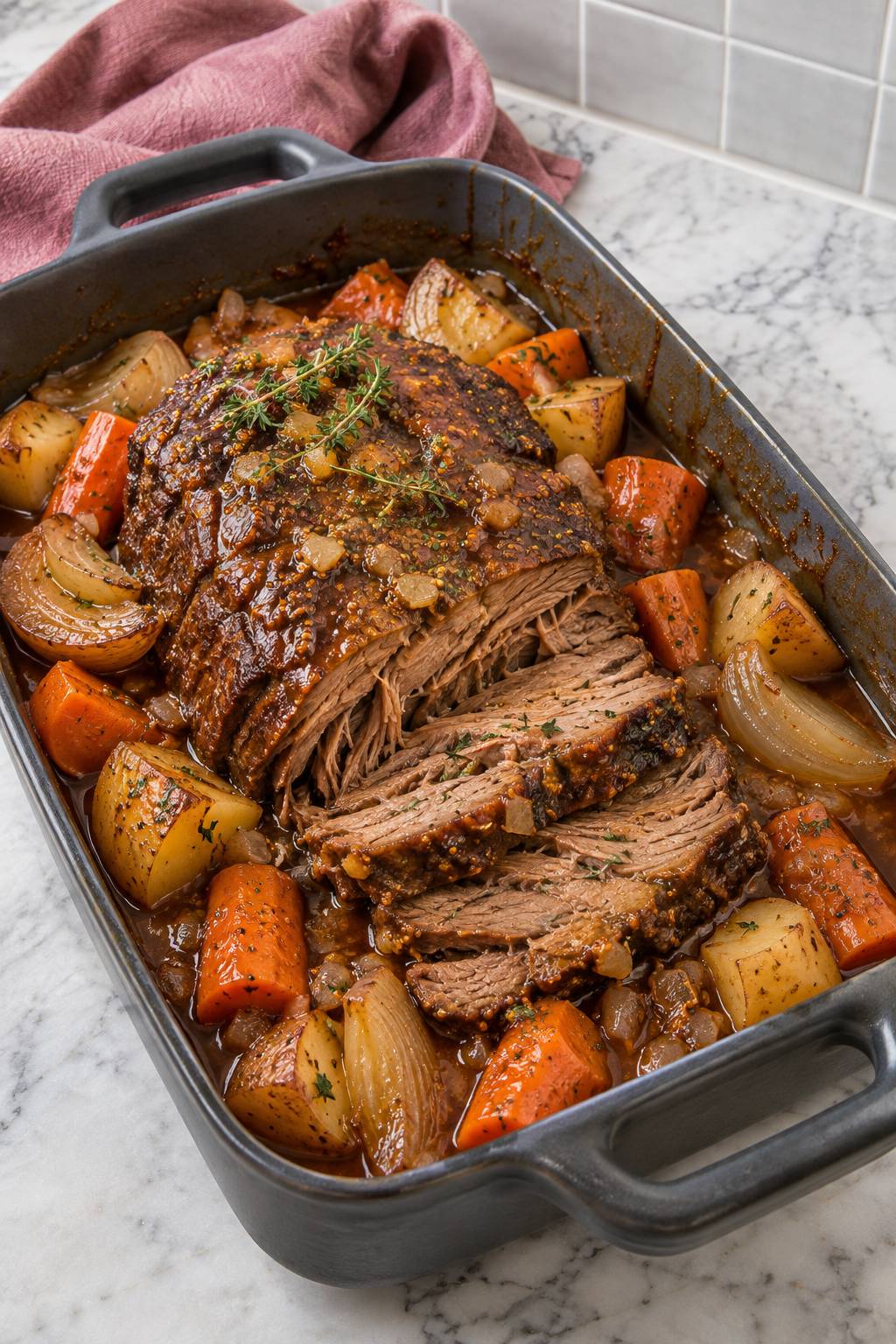
Maple Dijon Pot Roast brings together slow-braised beef chuck and tender potatoes, carrots, and onion wedges in a savory, gently sweet gravy. Searing the beef first builds a deeply browned exterior, while Dijon and whole-grain mustard give the braising liquid a tangy, rounded flavor.
Pure maple syrup adds a distinct maple note without making the gravy taste like a dessert. As the roast cooks, the broth, mustard, vinegar, and juices from the beef come together into a sauce that coats the vegetables and thick slices of meat.
Build flavor with a good sear
Patting the chuck roast dry helps it brown in the hot olive oil. Turn it to brown the broad sides and edges, then move it to a plate while you cook the onions. Keep the onions intact as you turn them gently; their wedges will soften in the braising liquid while still holding some shape.
Once the garlic goes in, take care not to let it scorch. The broth mixture loosens the browned bits on the pot bottom, where much of the seared flavor remains. Scrape those bits into the liquid as you bring it to a simmer, then return the beef and its collected juices to the pot.
Let the roast become fork-tender
Chuck roast is suited to a covered braise because its texture changes as it cooks slowly in liquid. Keep the Dutch oven tightly covered so the roast can cook in a moist environment. Turn the beef halfway through the braise, then add the potatoes and carrots around it, partly nestled in the liquid.
Use the fork test rather than appearance alone to judge tenderness: the fork should twist easily in the beef. A thicker or differently shaped roast may need more cooking. If the vegetables become tender before the beef, take them out while the roast continues cooking, covered, so they do not soften too much. If the liquid looks shallow when the vegetables go in, add the recipe-card amount of water to keep the bottom of the pot covered.
Finish the gravy for serving
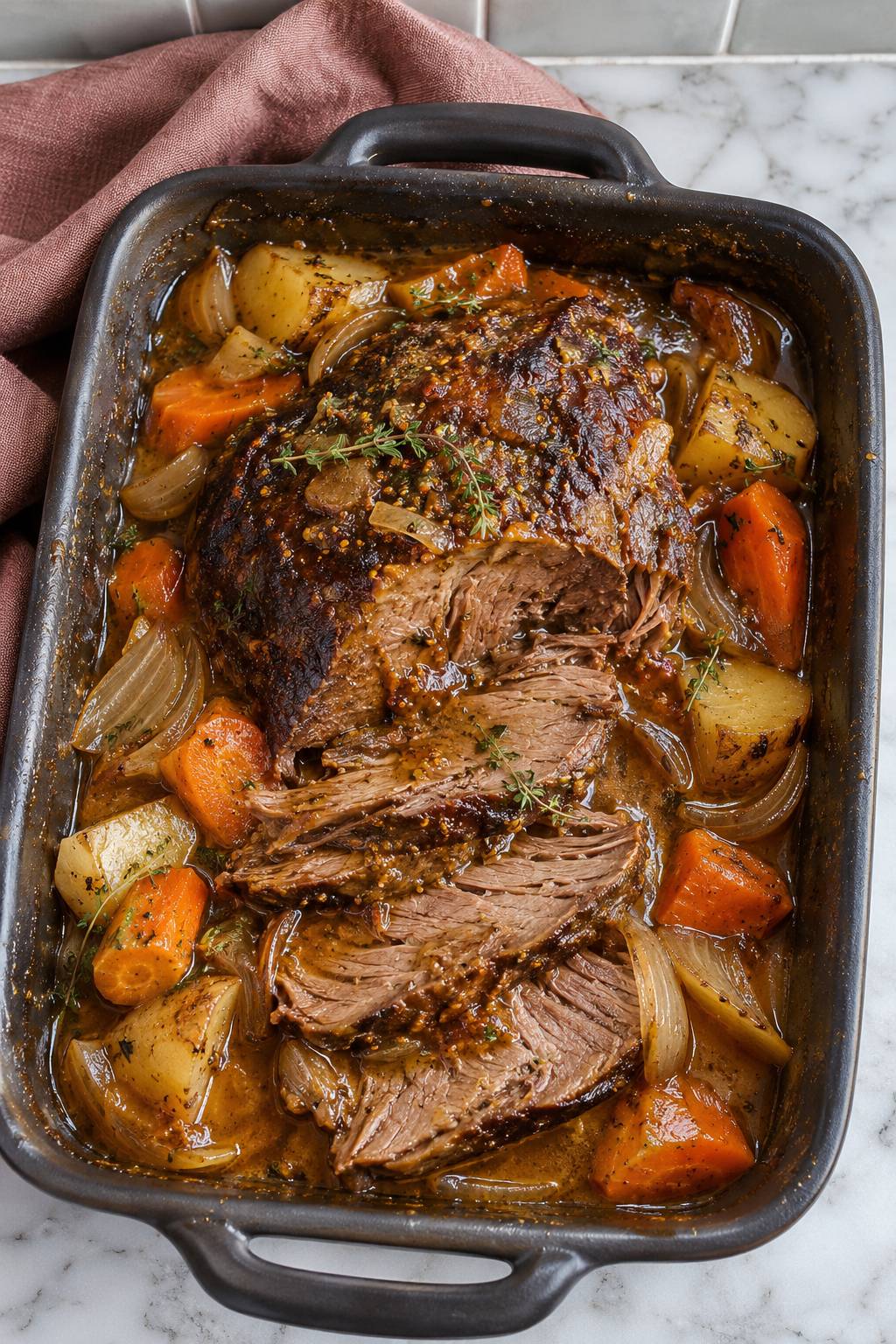
After the beef and vegetables leave the pot to rest, remove the thyme stems and bay leaf from the liquid. Skim excess fat from the surface, then bring the liquid to a simmer. Stir the cornstarch and cold water together until smooth before adding the slurry; this helps it blend into the gravy without lumps. Stir as it simmers until the sauce is lightly thickened.
Slice the roast across the grain for a more tender bite. Some especially tender sections may separate into chunks, which is fine. Arrange the beef with the vegetables and spoon the maple-mustard gravy over them, finishing with fresh thyme.
Frequently Asked Questions
Can I use pancake syrup instead of pure maple syrup?
Pure maple syrup gives the gravy its intended maple flavor. Pancake syrup has a different flavor, so using it will change the character of the finished sauce. Stick with pure maple syrup for the flavor described here.
How can I tell when the chuck roast is tender?
Check the beef with a fork: it should twist easily in the meat. If it still resists, continue cooking it covered in the intervals listed on the recipe card. Roast thickness and shape can affect how much additional cooking it needs.
What should I do if the vegetables are tender before the beef?
Transfer the tender vegetables out of the pot while the beef continues to cook, covered. This keeps them from becoming too soft as the roast reaches fork-tenderness. Return them to the platter when you assemble the beef and gravy.
Maple Dijon Pot Roast
6
servings25
minutes3
hours50
minutes710
kcal4
hours30
minutesSlow-braised beef chuck roast pairs with tender potatoes, carrots, and onion wedges in a savory maple-mustard gravy. Searing the beef first creates the deeply browned exterior.
Ingredients
- Roast and Vegetables
3 lb boneless beef chuck roast, trimmed of excess exterior fat
1 1/2 tsp kosher salt
1 tsp ground black pepper
2 tbsp olive oil
2 medium yellow onions, each cut into 6 wedges with the root end intact
4 garlic cloves, minced
2 cups low-sodium beef broth
1/3 cup pure maple syrup
1/4 cup Dijon mustard made with apple cider vinegar
1 tbsp whole-grain mustard made with apple cider vinegar
1 tbsp apple cider vinegar
6 fresh thyme sprigs, plus more for serving
1 bay leaf
1 1/2 lb Yukon Gold potatoes, cut into 2-inch chunks
1 lb carrots, peeled and cut into 2-inch pieces
- Gravy
1 tbsp cornstarch
2 tbsp cold water
Directions
- Preheat the oven to 325°F. Pat the beef dry and season all over with the salt and pepper. In a bowl, whisk together the broth, maple syrup, Dijon mustard, whole-grain mustard, and apple cider vinegar.
- Heat the olive oil in a large Dutch oven over medium-high heat. Sear the beef for 10 minutes total, turning to brown the broad sides and edges. Transfer to a plate.
- Reduce the heat to medium. Add the onion wedges and cook for 5 minutes, turning gently, adding the garlic during the final minute.
- Pour in the broth mixture and scrape up the browned bits from the bottom. Bring to a simmer and cook for 2 minutes. Return the beef and any collected juices to the pot. Add the thyme and bay leaf, then spoon some liquid over the beef.
- Cover tightly and braise in the oven for 2 hours 30 minutes. Turn the beef once halfway through cooking.
- Arrange the potatoes and carrots around the beef, pushing them partly into the braising liquid. Cover and cook for 1 hour, until the vegetables are tender and a fork twists easily in the beef. If the beef still resists, continue cooking, covered, in additional 15-minute intervals; remove the vegetables first if they are already tender.
- Transfer the beef and vegetables to a serving platter. Tent loosely with foil and let rest for 15 minutes. Remove the thyme stems and bay leaf from the pot.
- After the resting time, skim excess fat from the cooking liquid. Stir the cornstarch and cold water together until smooth. Bring the cooking liquid to a simmer over medium heat, stir in the slurry, and simmer for 3 minutes, stirring, until lightly thickened.
- Cut the beef across the grain into thick slices; very tender portions may separate into chunks. Arrange with the vegetables, spoon the gravy over everything, and garnish with additional thyme.
Notes
- Use pure maple syrup for its maple flavor; pancake syrup will give the gravy a different flavor.
- Chuck roast becomes tender as its connective tissue softens during braising. Use the fork-tenderness check to judge doneness; the optional additional cooking time depends on the thickness and shape of the roast.
- Keep the lid tightly closed during braising. If the liquid becomes shallow when adding the vegetables, add 1/2 cup water to keep the bottom of the pot covered.