Orange-glazed brisket gives you tender slices of beef with dark, caramelized edges and a glossy finish. Orange juice goes into the braise with beef broth, yellow onion, and garlic, so the citrus is already part of the dish before you brush on the glaze. Light brown sugar sweetens the glaze, apple cider vinegar gives it a tangy edge, and grated orange zest brings a fresh citrus aroma.
Prep the brisket flat for browning and slicing
The brisket flat has a broad surface for searing and a visible grain you can use as a guide when you carve. Leave a thin layer of fat on the beef for braising. If you find any thick patches after cooking, you can trim them before you slice.
Take a look at which direction the muscle fibers run while the meat is raw and the lines are easy to see. Pat the brisket dry before seasoning with fine sea salt and black pepper. A dry surface helps it brown in the olive oil, leaving browned bits in the Dutch oven that you can scrape up as the onion cooks.
Check the thickest part for tenderness
Low-sodium beef broth keeps the braise savory and gives you more control over the salt in the finished glaze, which uses some of that liquid. Yellow onion and garlic round out the flavor, while the orange juice gives the broth a citrus note that carries through to the glaze.
The thickest part of the flat tells you when the brisket is ready. A fork should slide in easily there. If you feel resistance, put the lid back on and let the brisket keep braising. The thinner end can feel tender while the center still needs more cooking.
Reduce the glaze until it coats a spoon
Skim the fat from the braising liquid before using it in the glaze. The liquid brings the flavor of beef, onion, and garlic into the mixture of orange juice, brown sugar, and vinegar. The vinegar keeps the glaze tangy as the sweetness becomes more concentrated.
Use the back of a spoon to judge the consistency. The glaze should cling in a thin coating so it stays on the exposed faces of the brisket. Stir more often as it thickens, and add the grated zest off the heat for a fresh orange aroma.
Give the sliced brisket room to brown
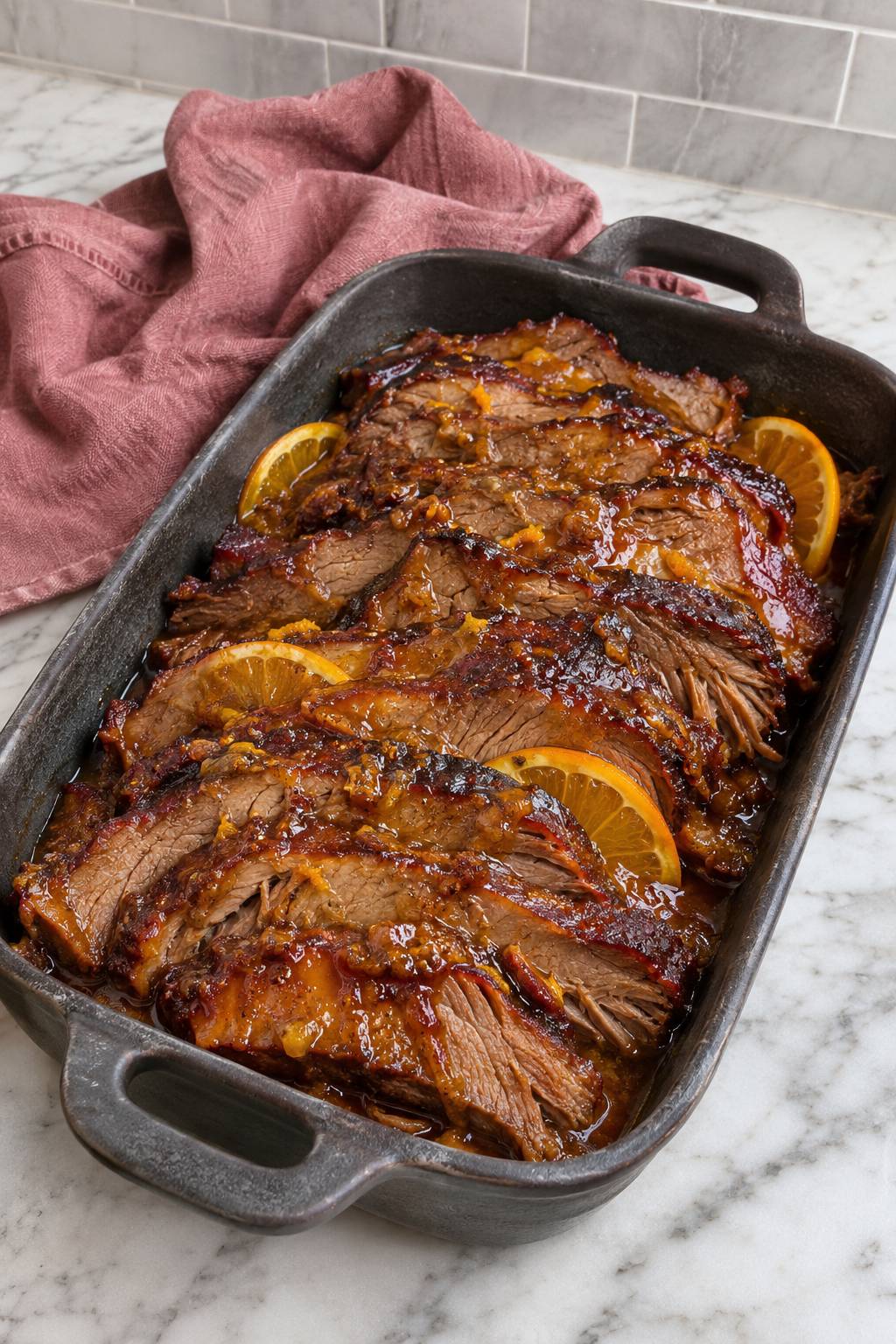
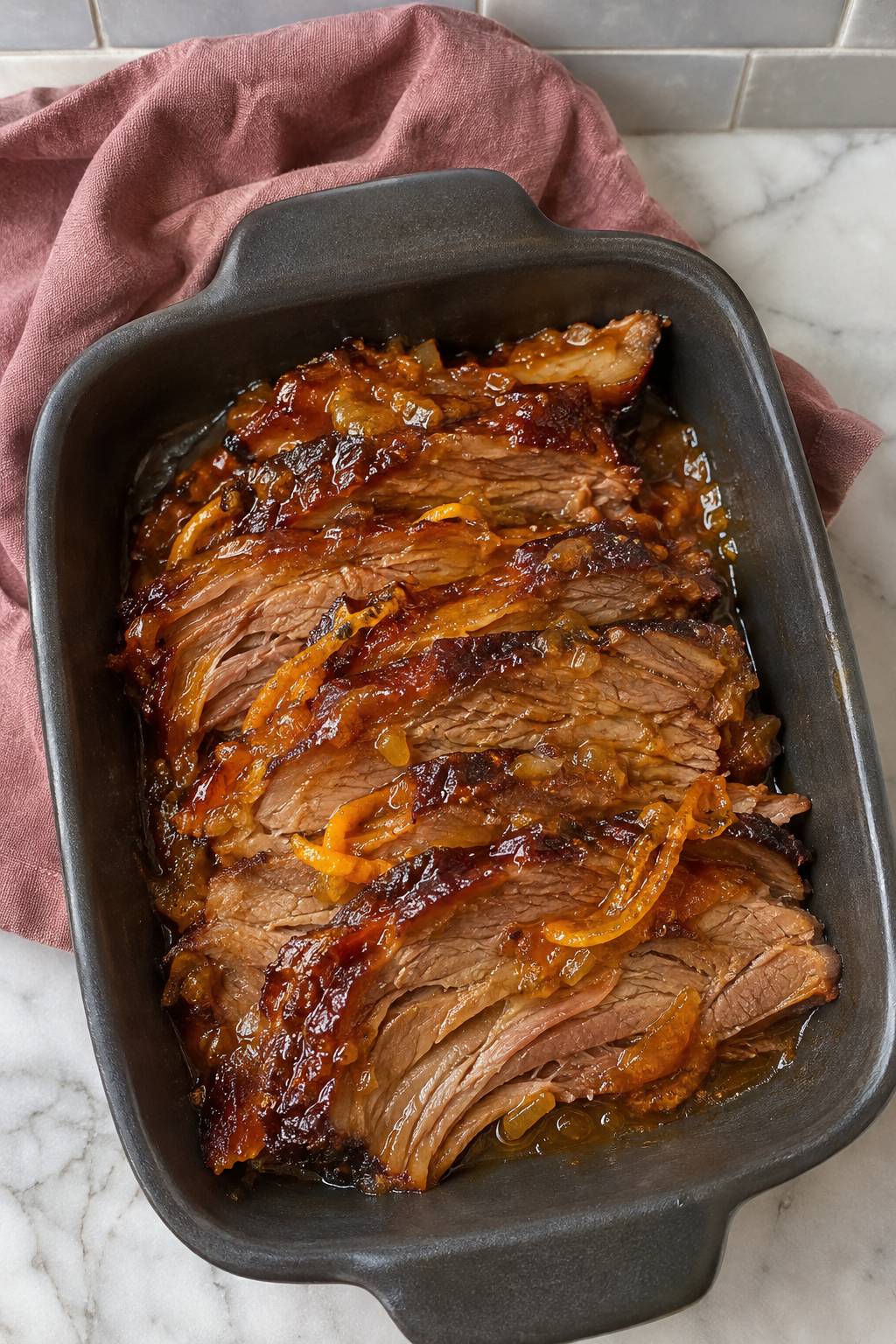
Arrange the slices with a slight overlap in a broiler-safe dish so the glaze can reach the broad faces and the edges are exposed to the heat. Stay close while the brisket broils. Look for bubbling glaze and darkening edges, especially on the pieces that sit highest in the dish. The glaze you spoon over the beef afterward gives the slices a glossy finish, and the thin orange half-moons tuck between them.
Frequently Asked Questions
How do I slice brisket across the grain?
Look for the lines that run along the meat, then cut perpendicular to them. Each slice will have shorter muscle fibers and be easier to chew. If the cooked surface makes the grain hard to see, use the direction you noted before searing.
Why is my orange glaze still runny?
If the glaze runs straight off a spoon, keep reducing it in the wide skillet. Stir more often as it thickens and check it again. Once the glaze coats the spoon, take the skillet off the heat and stir in the zest.
Should all the glaze go on before broiling?
Brush the exposed surfaces with glaze before broiling and save the rest for afterward. The glaze on the beef bubbles and caramelizes under the broiler. Spoon the reserved glaze over the slices once they come out of the oven.
Orange-Glazed Brisket
8
servings25
minutes3
hours58
minutes435
kcal4
hours26
minutesBeef brisket braises with onions, garlic, and orange juice until fork-tender. The sliced brisket gets a brush of brown sugar and orange glaze and a quick pass under the broiler to caramelize the edges.
Ingredients
- Brisket
3 1/2 lb beef brisket flat, trimmed to leave a thin layer of fat
1 1/2 tsp fine sea salt
1 tsp ground black pepper
1 tbsp olive oil
1 medium yellow onion, thinly sliced
4 garlic cloves, minced
1 cup low-sodium beef broth
1 cup orange juice
- Orange Glaze and Garnish
1 cup skimmed brisket braising liquid, reserved from the pan
1/2 cup orange juice
3 tbsp packed light brown sugar
1 tbsp apple cider vinegar
1 medium orange, for 2 tsp grated zest and thin half-moon slices
Directions
- Braise the Brisket
- Heat the oven to 300°F. Pat the brisket dry, note which way the grain runs for slicing later, and season both sides with the salt and pepper. Zest the orange, then slice it into thin half-moons and set them aside.
- Heat the olive oil in a large Dutch oven over medium-high heat. Sear the brisket for 4 minutes per side, then transfer it to a plate.
- Reduce the heat to medium and cook the onion for 4 minutes, stirring and scraping up the browned bits. Add the garlic and cook for 1 minute. Pour in the broth and 1 cup orange juice, then return the brisket to the pot fat side up.
- Cover tightly and braise for 3 hours 30 minutes, until a fork slides easily into the thickest part. If the brisket still feels firm, cover it again and continue braising, checking every 15 minutes.
- Glaze and Serve
- Transfer the brisket to a cutting board and let it rest for 15 minutes. Skim the surface fat from the braising liquid. While the brisket rests, combine 1 cup of the skimmed liquid with the 1/2 cup orange juice, brown sugar, and vinegar in a wide skillet. Boil over medium-high heat for 12 minutes, stirring more often toward the end, until reduced to about 3/4 cup and thick enough to coat a spoon. Stir in the orange zest off the heat.
- Set an oven rack about 6 inches below the broiler and heat the broiler on high. Slice the brisket 1/4 inch thick across the grain and arrange the slices in a slightly overlapping layer in a 9×13-inch broiler-safe baking dish. Brush the exposed surfaces with half the glaze and broil for 3 minutes, watching closely, until the glaze bubbles and the edges darken. Spoon the remaining glaze over the brisket and tuck the orange slices between the pieces.
Notes
- Leave a thin layer of fat on the brisket before braising. Trim any thick patches before slicing if you prefer.
- If you make the brisket a day ahead, refrigerate it in its braising liquid. Lift off the solidified fat, then reheat the brisket covered in the liquid before slicing, glazing, and broiling.