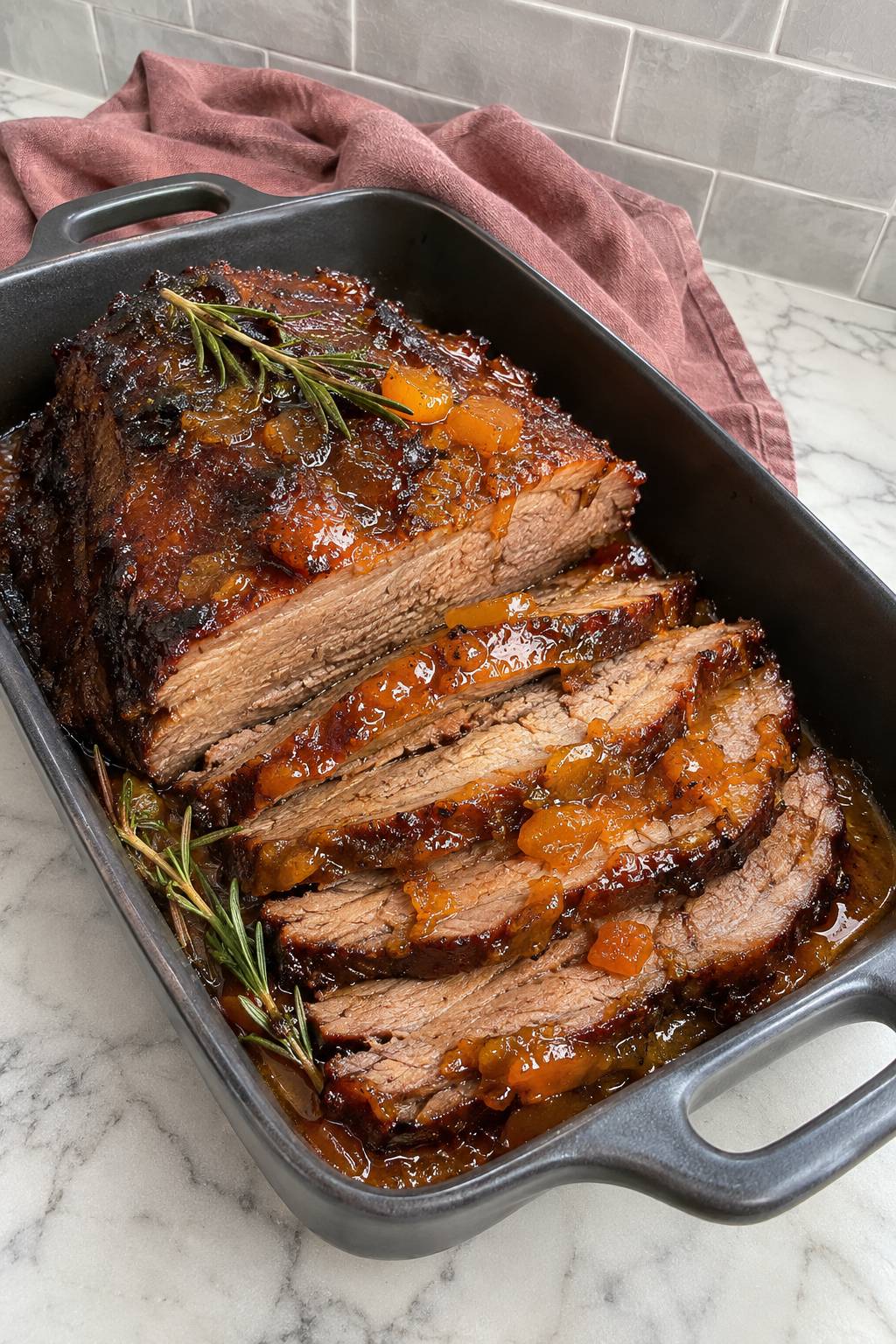
When you bring this Christmas brisket to the table, the glossy apricot glaze catches your eye first. Underneath are slices of fork-tender beef, with soft yellow onions and pieces of dried apricot tucked between them. The onions mellow in the braise, the apricots soften, and fresh rosemary gives the pan juices an herbal note. A little Dijon and apple cider vinegar give the sweet glaze a tangy finish.
What the brisket flat and the sear bring to the braise
A brisket flat has a broad surface for glazing and a grain you can usually see clearly before cooking. Look for the direction of those long muscle fibers before you season the meat. The grain can be harder to spot under the finished glaze. The thin fat cap belongs facing up in the roasting pan, where it will become part of the glazed surface.
Pat the beef dry so it browns readily in the skillet. The browned bits left behind are worth saving. When the beef broth goes in, scrape them up so their roasted flavor carries into the onions and eventually into the pan juices. Low-sodium broth gives you room to season the beef with kosher salt without starting with an especially salty braising liquid.
How to tell when the brisket is fork-tender
A tight foil cover keeps the pan moist as the brisket braises with the sliced onion, chopped dried apricots, and rosemary. Check the thickest part of the flat with a fork. That spot is a better guide to the whole cut than the thinner edge, which may already feel tender when the center is still firm.
If the fork meets resistance, seal the foil again and let the brisket keep braising. You’re looking for the fork to slide in easily. Get the beef to that point while the pan is still covered. The uncovered finish is what gives the glaze its glossy surface.
What to look for as the apricot glaze bubbles
Apricot preserves give the glaze enough body to cling to the top and sides of the brisket. Dijon adds a mustard bite, and apple cider vinegar sharpens the fruit flavor. The glaze goes onto the tender brisket before its uncovered oven finish, then the broiler bubbles and darkens the surface.
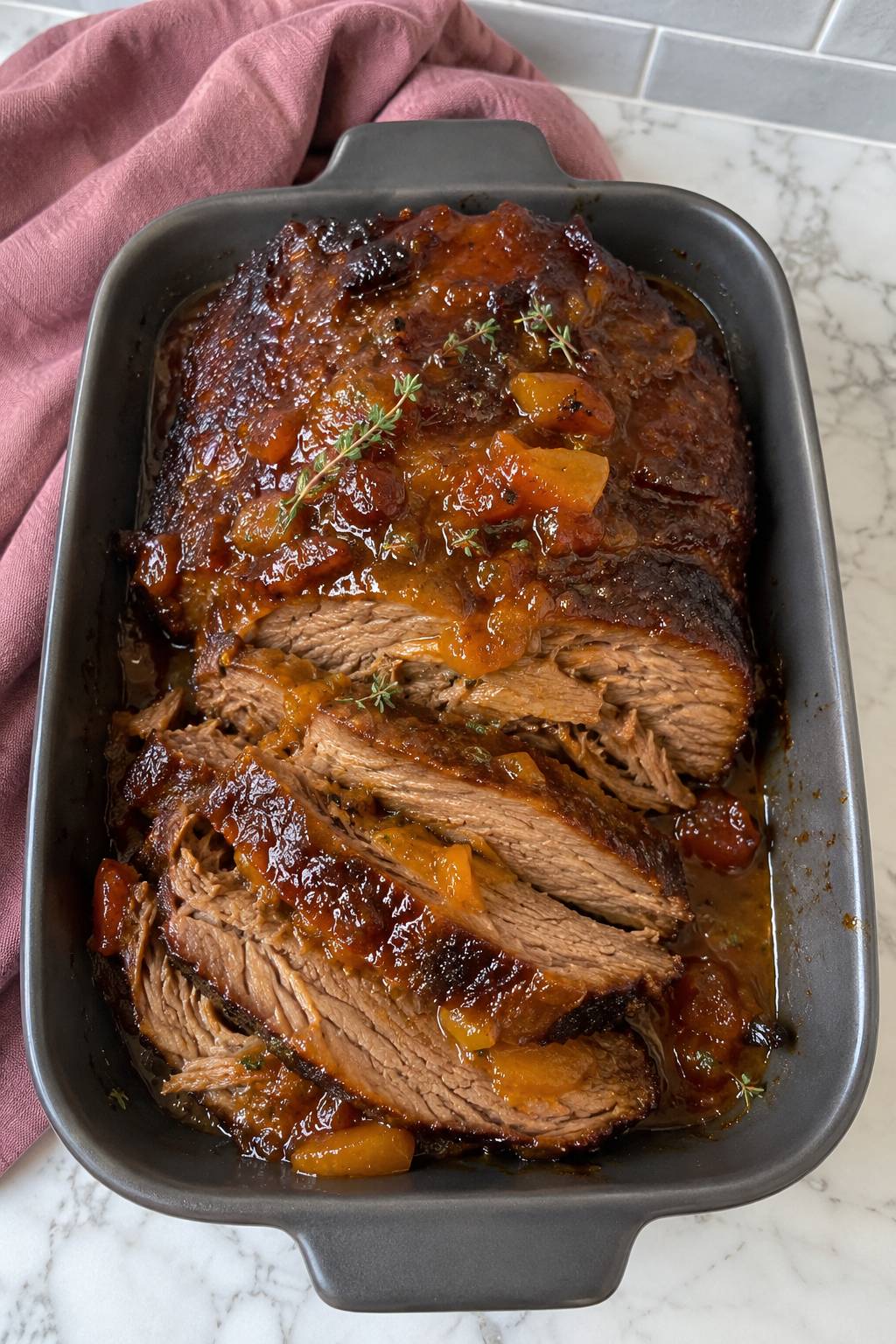
Use a broiler-safe metal roasting pan and stay close enough to watch the surface. When the glaze is bubbling and you see dark brown patches, pull the pan. Those scattered caramelized spots are the finish you’re after. Waiting for the whole surface to turn dark can take the glaze past that point.
Frequently Asked Questions
How do you know which way to slice the brisket?
Before seasoning, look for the long lines running along the surface of the beef. After the brisket rests, turn it on the board so your knife crosses those lines. Cutting across the grain shortens the muscle fibers, so each slice is easier to bite through.
Do the rosemary sprigs stay in the pan for serving?
Lift out the cooked rosemary sprigs when you uncover the pan to glaze the brisket. They’ve already flavored the braising liquid. Save the remaining fresh sprig for the garnish once you’ve sliced the beef and returned it to the pan.
What do you do with the onions, apricots, and pan juices?
Spoon off any excess fat from the pan juices before glazing. Once you’ve fanned the rested slices back into the roasting pan, spoon the juices, soft onions, and apricots over the beef. The juices can run between the slices and coat the cut surfaces.
Apricot-Glazed Christmas Brisket
8
servings25
minutes4
hours14
minutes510
kcal4
hours59
minutesBeef brisket braises with onions, dried apricots, and rosemary until fork-tender. An apricot and Dijon glaze bubbles under the broiler, leaving a glossy finish with dark caramelized spots.
Ingredients
- Brisket
4 lb beef brisket flat, trimmed to leave a thin fat cap
2 tsp kosher salt
1 tsp ground black pepper
1 tbsp olive oil
1 large yellow onion, thinly sliced
4 garlic cloves, minced
1 1/2 cups low-sodium beef broth
1/2 cup dried apricots, roughly chopped
3 fresh rosemary sprigs, divided
- Apricot Glaze
3/4 cup apricot preserves
1 tbsp Dijon mustard made with mustard seeds, water, distilled white vinegar, and salt
1 tbsp apple cider vinegar
Directions
- Brisket
- Heat the oven to 325°F. Pat the brisket dry and season it all over with the kosher salt and pepper. Heat the oil in a 12-inch skillet over medium-high heat. Sear the brisket for 5 minutes per side, then transfer it fat side up to a broiler-safe 9×13-inch metal roasting pan.
- Reduce the skillet heat to medium. Add the onion and cook for 7 minutes, stirring occasionally, until softened and lightly browned. Add the garlic and stir for 1 minute. Pour in the broth, scrape up the browned bits, and simmer for 2 minutes. Pour the onion mixture around the brisket and add the dried apricots and 2 rosemary sprigs.
- Cover the roasting pan tightly with foil and braise for 3 hours 30 minutes, until a fork slides easily into the thickest part. If the meat still feels firm, cover it again and keep braising, checking every 15 minutes.
- Apricot Glaze
- Stir together the apricot preserves, Dijon mustard, and apple cider vinegar. Uncover the pan, discard the cooked rosemary sprigs, and spoon off any excess fat from the pan juices. Brush the glaze over the top and sides of the brisket. Return it to the oven, uncovered, for 20 minutes.
- Set the pan so the top of the brisket is about 6 inches below the broiler element. Broil on high for about 4 minutes, watching closely and pulling the pan when the glaze is bubbling and dark brown in spots.
- Serving
- Rest the brisket for 20 minutes. Transfer it to a cutting board, slice it against the grain, and fan the slices back into the roasting pan. Spoon the pan juices, onions, and softened apricots over the slices and garnish with the remaining rosemary sprig.
Notes
- Check the direction of the grain before seasoning the brisket. It can be harder to see once the glaze is on, and slicing across it shortens the muscle fibers for a more tender bite.