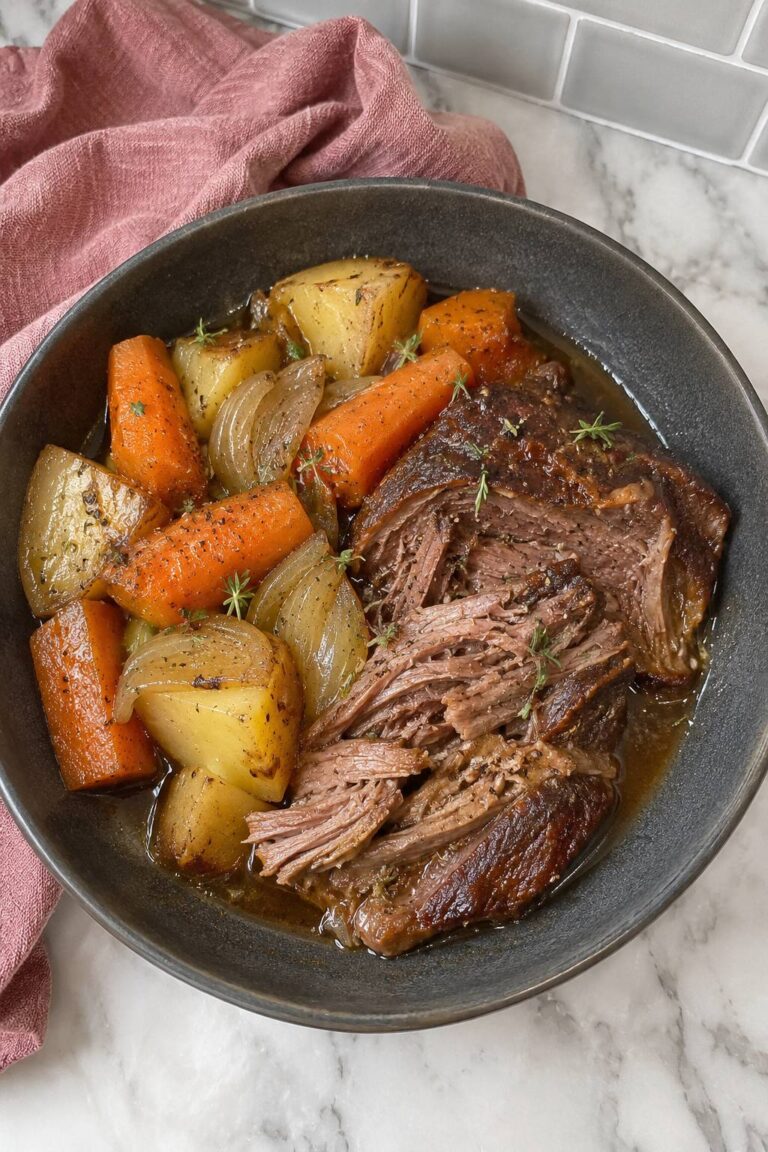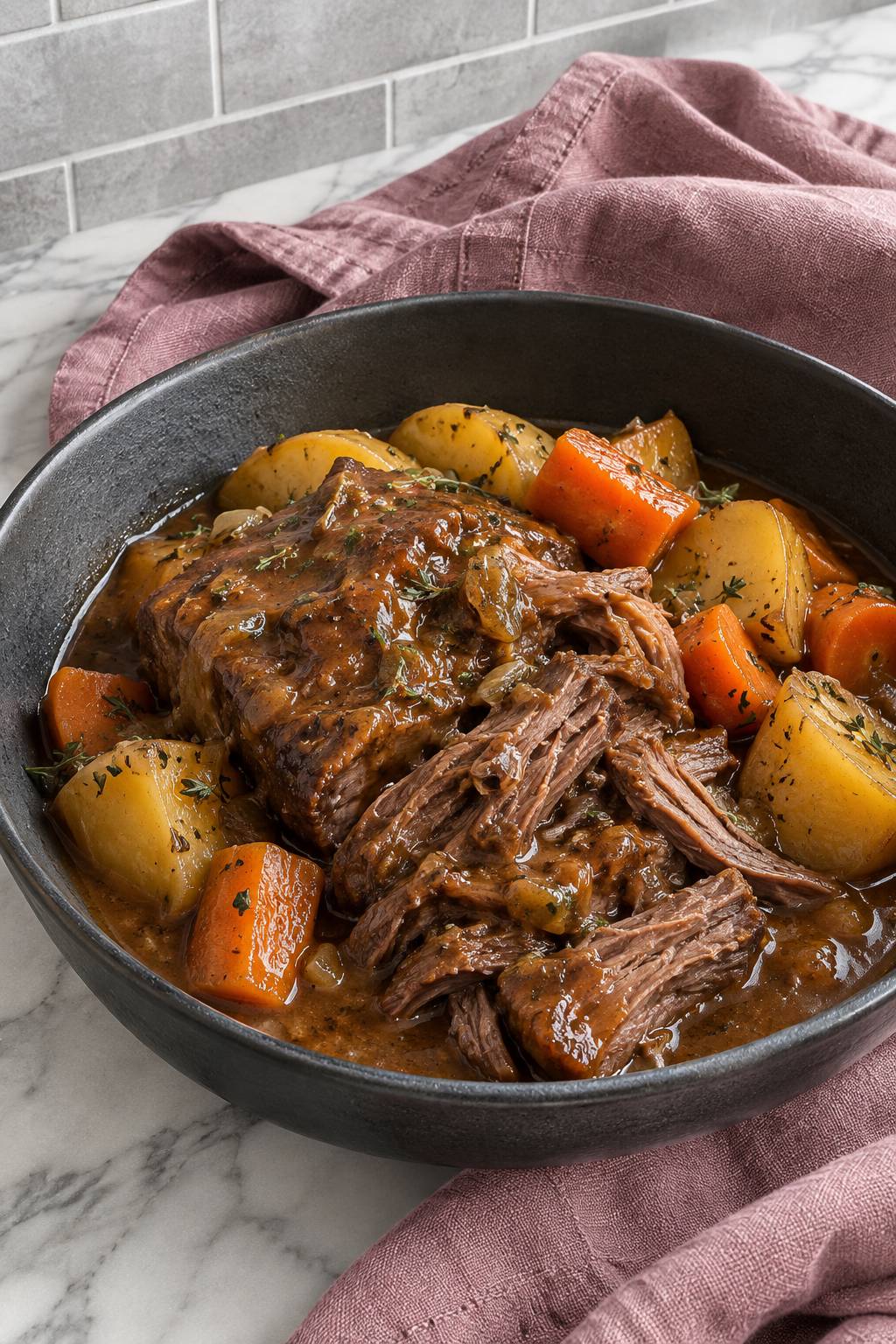
This Instant Pot pot roast is the kind you can pull apart with a fork and serve in big, tender chunks. The Yukon Gold potatoes and thick-cut carrots keep their shape because they go in after the beef has had a chance to soften. The cooking liquid becomes a glossy beef gravy that coats the meat and settles into the crevices between the vegetables.
Brown the chuck and save the browned bits
Boneless chuck is a good fit for pot roast because it cooks until you can pull it apart easily. Trim away the thick exterior fat and pat the beef dry before seasoning it with kosher salt and black pepper. Searing the pieces separately gives their broad sides room to sit flat against the pot and develop an even brown crust.
The browned bits left behind give the gravy a deeper beef flavor. After the yellow onion softens and the garlic and tomato paste cook, use the low-sodium beef broth to loosen everything stuck to the bottom. A wooden spoon helps you feel where the pot still needs scraping.
Check the beef with a twist of the fork
When you open the pot after the natural release and venting, press a fork into the chuck and give it a gentle twist. The twist tells you more than simply poking the meat. You want the fibers to yield easily so you can break the roast into large pieces for serving.
If the fork meets resistance when you turn it, give the chuck the additional pressure cooking and natural release called for on the recipe card. Keep the potatoes and carrots out until the beef passes the fork test so they get their own cooking cycle.
Keep the potatoes and carrots in distinct pieces
Yukon Gold potatoes give you a creamy bite in a chunk that holds its shape, and thick-cut carrots stay substantial enough to pick up with a fork. Keep the cuts consistent so the pieces cook evenly. Arrange them around and over the beef once it’s tender. Prompt venting at the end of the vegetable cycle helps keep the potatoes and carrots from softening past the point where they’re easy to lift into the serving dish.
Finish the gravy to a spoon-coating consistency
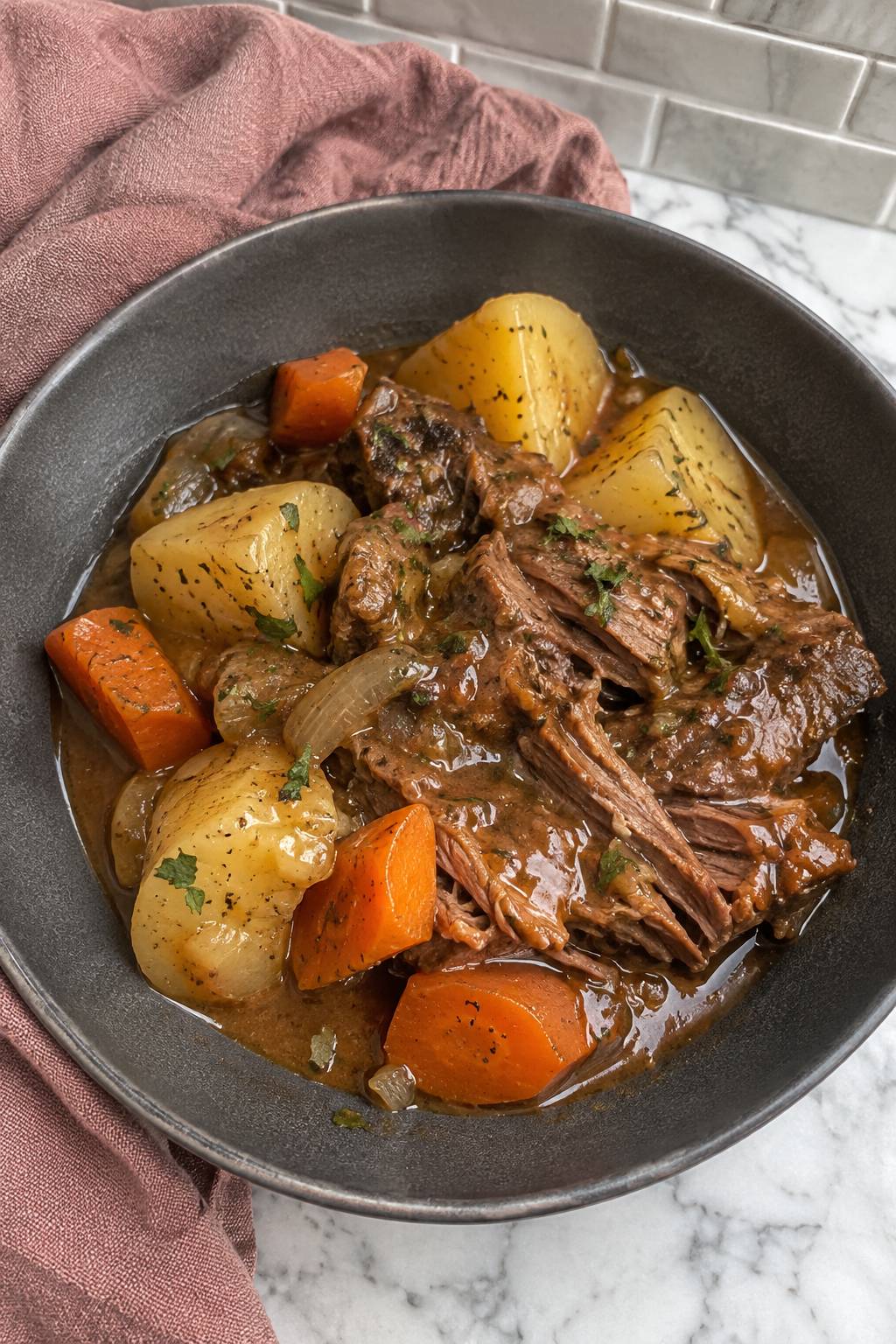
Once the beef and vegetables are in the serving dish, skim the excess fat from the cooking liquid so the finished gravy feels smooth without a greasy layer on top. Whisk the smooth cornstarch mixture into the simmering liquid and stir frequently. To judge the thickness, lift out a spoon and look at the back. The gravy is ready when it leaves a glossy coating you can spoon over the chunks of beef and vegetables.
Frequently Asked Questions
Why does the Instant Pot take a while to start pressure cooking?
The pot has to come up to pressure for both the beef and the vegetable cycles, and how long that takes varies by model. The recipe card counts that waiting, along with the beef cycle’s natural release, as inactive time.
Should I slice or shred the pot roast?
Use a fork to pull the tender chuck into large chunks. Follow the places where the meat separates easily and leave the pieces big enough to hold together when you spoon the gravy over them.
How do I keep cornstarch from clumping in the gravy?
Stir the cornstarch into cold water until the mixture is smooth. Give it another stir if it settles while the cooking liquid comes to a simmer, then whisk it in so it disperses evenly through the liquid.
Instant Pot Pot Roast with Gravy
6
servings20
minutes1
hour29
minutes620
kcal2
hours29
minutesFork-tender beef chuck roast is served in large chunks with Yukon Gold potatoes, thick-cut carrots, and glossy beef gravy. The vegetables go in near the end so they hold their shape.
Ingredients
- Pot roast
3 lb boneless beef chuck roast, trimmed of thick exterior fat and cut into 2 roughly equal pieces
1 1/2 tsp kosher salt
1 tsp ground black pepper
2 tbsp olive oil
1 cup chopped yellow onion
1 tbsp minced garlic
1 tbsp tomato paste
2 cups low-sodium beef broth
1 tsp dried thyme
1 bay leaf
1 1/4 lb Yukon Gold potatoes, cut into 2-inch chunks
1 lb carrots, peeled and cut into 2-inch pieces
- Gravy
3 tbsp cornstarch
3 tbsp cold water
Directions
- Pot roast
- Pat the beef dry and season all over with the salt and pepper. Set a 6-quart Instant Pot to Sauté on High. When the display reads Hot, add the olive oil. Sear the beef one piece at a time for 3 minutes on each broad side, 12 minutes total. Transfer the beef to a plate.
- Add the onion and cook for 4 minutes, stirring occasionally, until softened. Stir in the garlic and tomato paste and cook for 1 minute. Pour in the beef broth and scrape the bottom of the pot with a wooden spoon until all the browned bits loosen. Press Cancel.
- Return the beef and any juices from the plate to the pot. Add the thyme and bay leaf. Lock the lid, set the valve to Sealing, and cook on High Pressure for 65 minutes. Let the pressure release naturally for 15 minutes, then vent the remaining pressure.
- Check that a fork twists easily in the beef, then arrange the potatoes and carrots around and over it. Lock the lid, set the valve to Sealing, and cook on High Pressure for 4 minutes. Vent the pressure promptly when the cycle ends. Transfer the beef and vegetables to a deep serving dish and discard the bay leaf.
- Gravy
- Skim excess fat from the cooking liquid. Select Sauté and bring the liquid to a simmer. Stir the cornstarch and cold water together until smooth, then whisk the mixture into the simmering liquid. Cook for 3 minutes, stirring frequently, until glossy and thick enough to coat a spoon. Break the beef into large chunks and spoon the gravy over the beef, potatoes, and carrots.
Notes
- If the beef still feels firm after the first pressure cycle, cook it on High Pressure for another 10 minutes and let the pressure release naturally for 10 minutes before venting and adding the vegetables.
- The inactive time includes about 25 minutes for the two pressure cycles to come up to pressure and 15 minutes for the first natural release. The time to reach pressure varies by model.