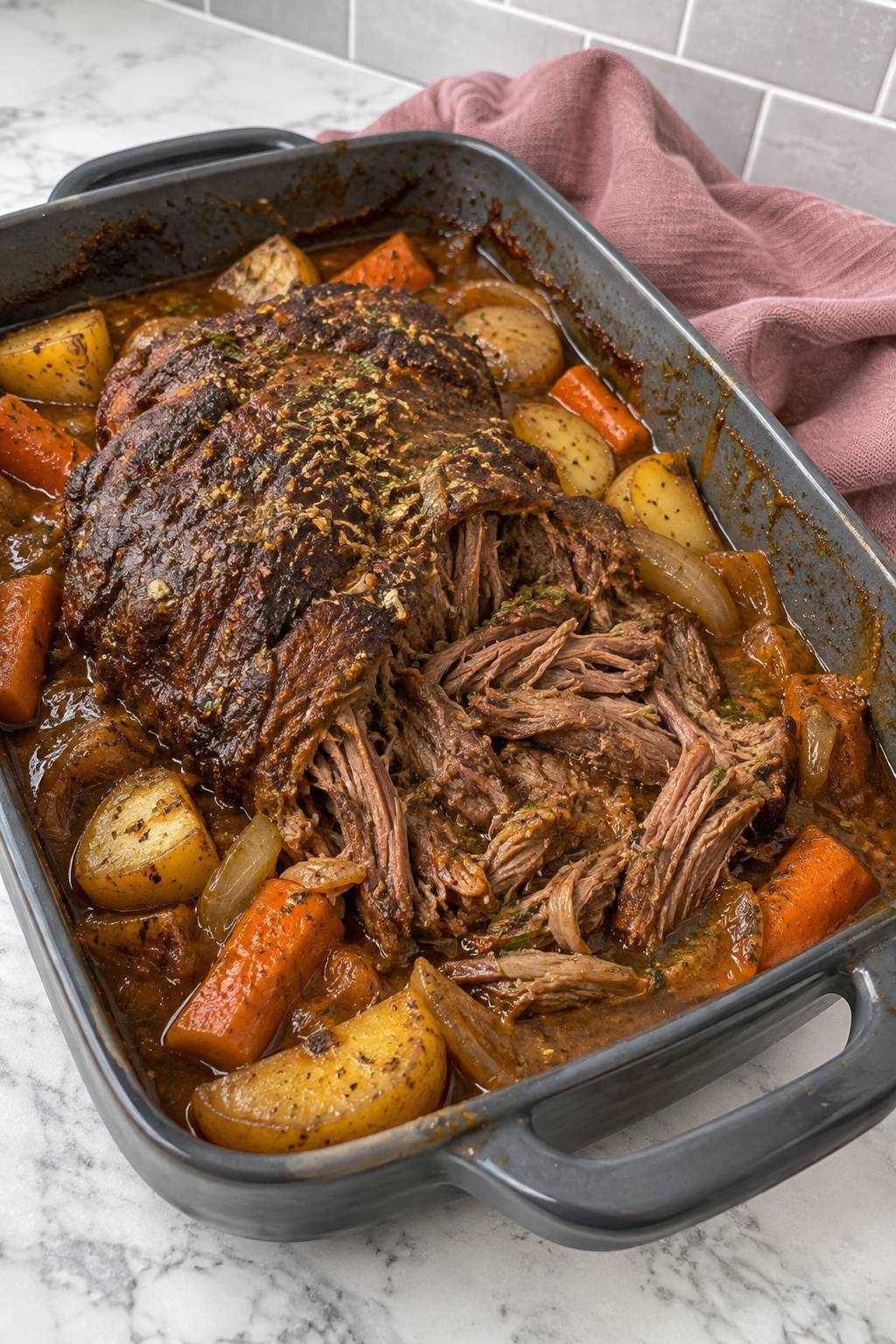
Ranch pot roast brings together beef that pulls apart easily, tender potatoes and carrots, and savory juices worth spooning over every bite. Dry ranch seasoning gives the broth its familiar flavor, while browned beef and softened onions add depth. The vegetables cook around the roast, taking on the flavor of the liquid.
The texture depends on more than getting the beef cooked through. Chuck roast needs covered cooking until a fork turns easily in the meat. Paying attention to that tenderness, along with the moisture in the pan, helps you judge when dinner is ready.
Why Chuck Roast and Dry Ranch Seasoning Work
Boneless beef chuck roast suits this covered braise because it becomes tender enough to pull into generous pieces. Trim away thick exterior fat as directed on the recipe card, and expect some fat to collect on the cooking juices. You can spoon that excess away after the roast rests.
Use dry ranch seasoning mix rather than bottled ranch dressing. The dry mix stirs into the broth to season the cooking liquid. Low-sodium beef broth and unsalted butter give you more control over saltiness, since the ranch seasoning already contributes salt. Taste the finished juices before deciding whether they need more seasoning.
Build Flavor with a Deeply Browned Crust
Patting the beef dry helps it brown in the skillet. Look for a deeply browned surface on the broad sides rather than treating a pale exterior as finished. This sear gives the roast a savory foundation that carries into the pan juices during covered roasting.
The skillet also holds flavor after the beef comes out. As the onions cook and the broth simmers, scraping up the browned bits brings that flavor into the liquid. Those browned bits belong in the broth you pour around the roast; leaving them behind means leaving part of the sear’s contribution in the skillet.
Keep the Pan Covered and Watch the Moisture
A tight foil cover traps steam during roasting. Crimping it securely around the pan’s edges matters because a loose cover lets moisture escape. When you uncover the pan to add the vegetables, keep your hands away from the escaping steam and check the cooking liquid.
If the pan looks dry, use the water guidance on the recipe card before covering it again. Turn the Yukon Gold potatoes and carrots in the liquid so their surfaces are coated. Adding them after the beef has begun braising lets you work toward tender vegetables alongside beef that pulls apart easily.
Judge Tenderness Before You Finish
A safe internal temperature alone does not tell you whether chuck roast has softened enough. Test the beef with a fork: it should twist easily, and the meat should separate without resistance. If it still feels firm, continue cooking it covered according to the recipe card. The roast’s thickness affects how much additional cooking it needs.
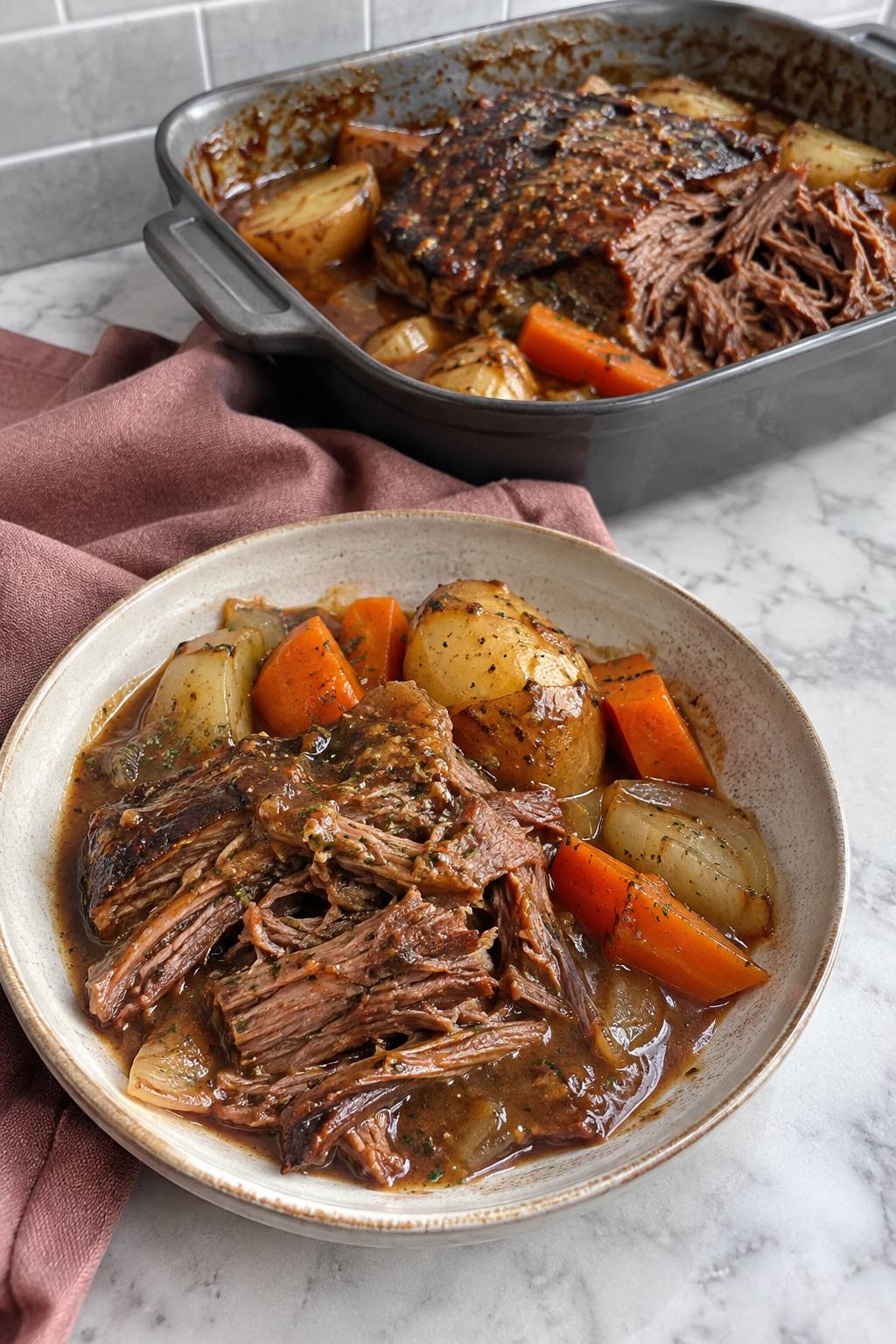
Let the beef rest in the pan before pulling it into pieces. Skim excess surface fat from the juices, then finish with chopped fresh parsley. The finished dish should have tender vegetables, yielding beef, and savory liquid you can spoon over both.
Frequently Asked Questions
Can I use bottled ranch dressing?
Use the dry ranch seasoning mix called for in this recipe. It blends into the beef broth to flavor the braising liquid. Bottled ranch dressing is a different product and is not what this recipe uses.
Why is my chuck roast still tough?
Chuck can be cooked through before it becomes tender enough to pull apart. If a fork does not twist easily in the beef, it needs additional covered cooking. Follow the recipe card’s guidance and judge readiness by texture.
What should I do if the pan looks dry?
Check the liquid when you uncover the roast to add the vegetables. If the pan looks dry, add water as directed on the recipe card. Seal the foil tightly again to help retain moisture while the beef and vegetables finish cooking.
Ranch Pot Roast
8
servings25
minutes4
hours2
minutes650
kcal4
hours42
minutesSlow-braised beef chuck roast with ranch seasoning, potatoes, carrots, and onions in savory pan juices. Searing the beef first creates a browned crust, while covered roasting makes it tender enough to pull apart.
Ingredients
3 1/2 lb boneless beef chuck roast, trimmed of thick exterior fat
1/2 tsp black pepper
2 tbsp olive oil
1 large yellow onion, cut into thick wedges
2 cups low-sodium beef broth
1 oz dry ranch seasoning mix
2 tbsp unsalted butter, cut into small pieces
1 1/2 lb Yukon Gold potatoes, cut into 2-inch pieces
1 lb carrots, peeled and cut into 2-inch pieces
1 tbsp chopped fresh parsley
Directions
- Preheat the oven to 325°F. Set out a deep 9×13-inch roasting pan with sides at least 3 inches high. Pat the beef dry with paper towels and season with the black pepper.
- Heat the olive oil in a large skillet over medium-high heat. Sear the beef for 5 minutes on each broad side, 10 minutes total, until deeply browned. Transfer to the roasting pan.
- Reduce the heat to medium. Add the onion to the skillet and cook for 5 minutes, stirring occasionally. Add the broth and simmer for 2 minutes, scraping up the browned bits. Stir in the ranch seasoning, then pour the onions and broth around the beef. Place the butter on top of the roast.
- Cover the roasting pan tightly with heavy-duty foil, crimping it around the edges to trap steam. Bake for 2 hours 30 minutes.
- Carefully uncover the pan, keeping your hands away from the escaping steam. Arrange the potatoes and carrots around the beef and turn them in the cooking liquid. Cover tightly again and bake for 1 hour 15 minutes, until the vegetables are tender and a fork twists easily in the beef. If necessary, continue cooking, covered, in additional 20-minute intervals until the beef is tender.
- Let the roast rest in the pan, loosely covered, for 15 minutes. Spoon excess fat from the surface of the juices. Pull the beef into large pieces, sprinkle with parsley, and serve with the vegetables and pan juices.
Notes
- Use dry ranch seasoning mix, not bottled ranch dressing. The seasoning and broth provide salt, so taste the juices before adding more.
- If the pan begins to look dry when you add the vegetables, add 1/2 cup water before covering it again.
- Chuck roast is ready when it pulls apart easily; reaching a safe internal temperature alone does not mean its connective tissue has softened. Additional cooking time depends on the roast's thickness.