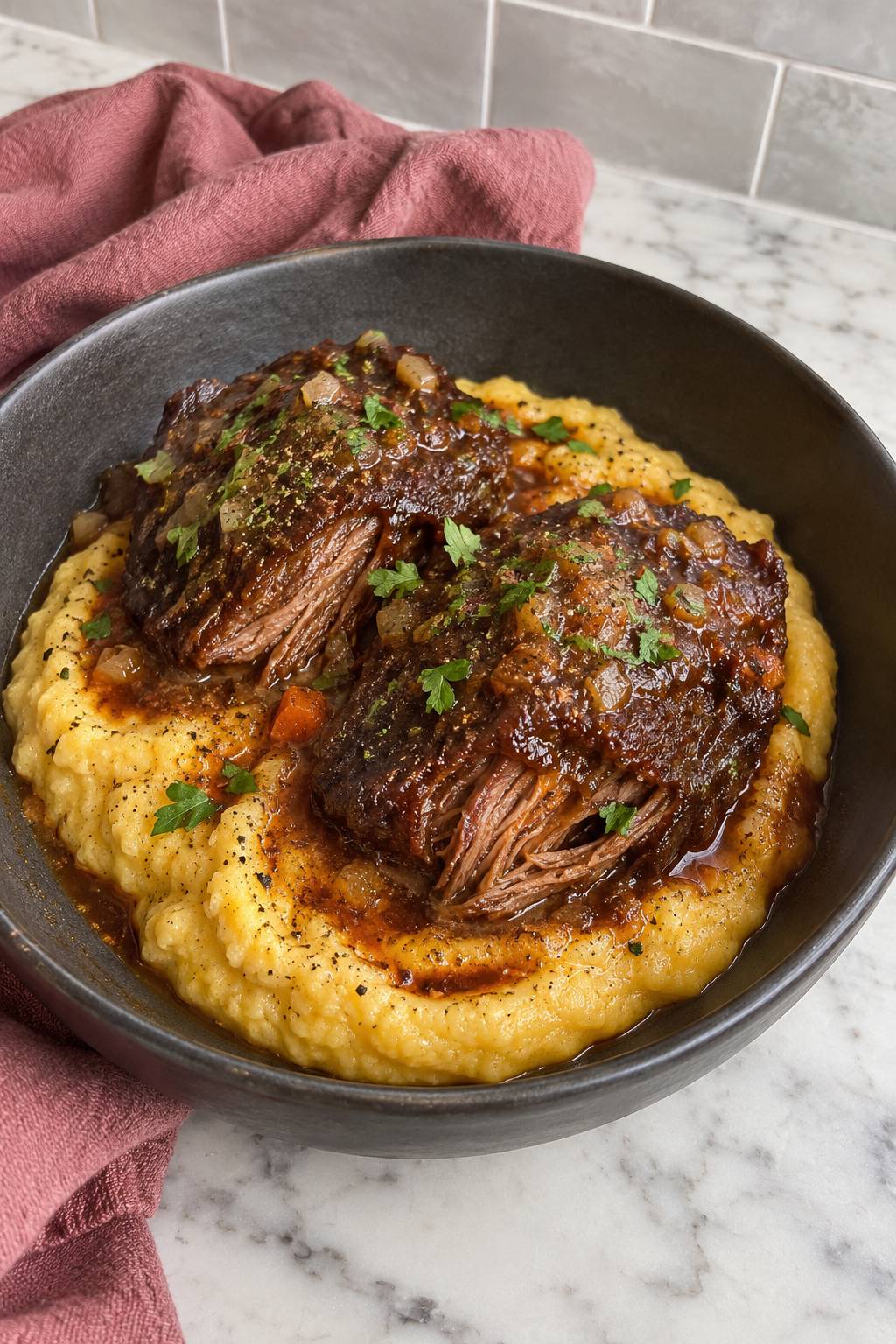
Braised beef cheeks turn a humble cut into a deeply savory main course. Slow cooking with onions, carrots, garlic, and herbs softens the meat until it yields easily, while the braising liquid becomes a rich sauce.
Soft polenta gives that sauce somewhere to go. Parmesan and butter add a savory finish, and fresh parsley brings a bright note to each bowl.
Why beef cheeks need a gentle braise
Beef cheeks contain plenty of connective tissue, so they benefit from covered, low, steady cooking. The goal is meat that gives way under gentle pressure, not simply meat that has reached a particular point on the clock. If a fork still meets resistance, keep braising and check again later; larger pieces can take longer.
Patting the cheeks dry helps them brown in the pot. Sear in batches so the pieces have room to make good contact with the surface. A deep brown crust adds savory flavor to the vegetables and sauce. Avoid crowding the pot, which can make browning less even.
Build flavor in the pot
After searing, cook the onion and carrots until softened and lightly browned. Stir the garlic and tomato paste as they cook so they become fragrant without scorching. Beef broth and balsamic vinegar loosen the browned bits from the pot, carrying that flavor into the braising liquid.
The thyme, rosemary, and bay leaves lend an herbal backdrop as the beef cooks. Keep the pot tightly covered and check the liquid partway through. It should come about halfway to two-thirds up the meat at the start; if it drops below one-third, add hot water to bring it back to halfway.
Keep the polenta creamy
Dry coarse-ground yellow polenta needs time and frequent stirring to become tender and creamy. Whisk it into boiling salted water gradually to help prevent lumps, then keep stirring as it cooks. If it becomes too thick before it is tender, add hot water a few tablespoons at a time.
Butter, Parmesan, and freshly ground black pepper finish the polenta with richness and savory flavor. Since it thickens as it stands, check its texture before serving and loosen it with a little hot water if needed. Taste for salt after adding the cheese and butter.
Finish the sauce and serve
When the beef is fork-tender, remove it while you finish the sauce. Discard the herb stems and bay leaves, skim excess fat, and simmer the liquid uncovered until slightly thickened. Return the beef to the sauce so it is coated along with the vegetables, then taste and adjust the salt.
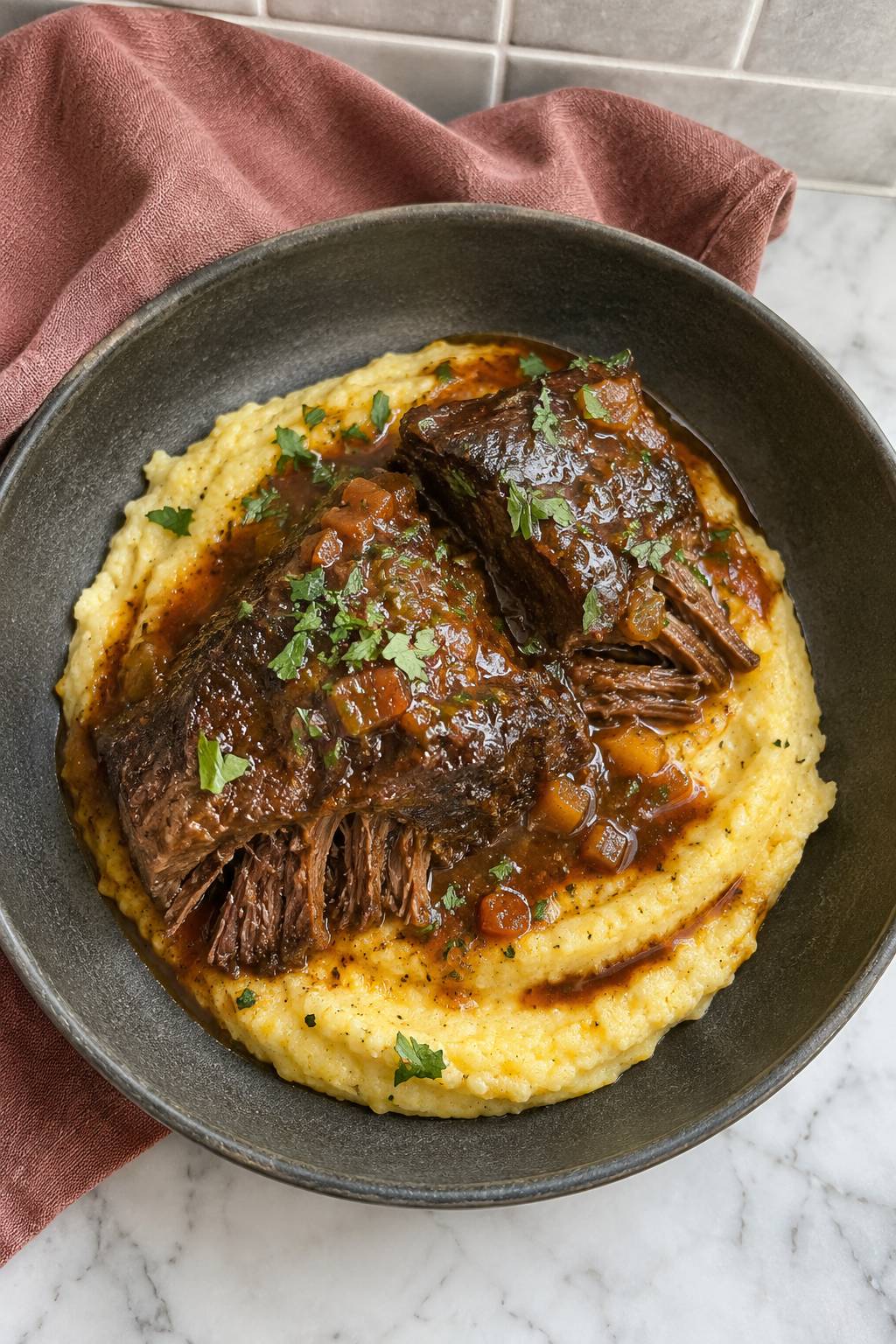
Spoon the polenta into shallow bowls and add the beef and glossy sauce. Fresh parsley provides a fresh contrast to the long-cooked flavors. Try to serve the polenta while it is still soft and spoonable; if it has tightened up, stir in hot water just before serving.
Frequently Asked Questions
How can you tell when beef cheeks are done?
Test a piece with a fork: it should slide in easily, and the meat should yield with gentle pressure. If it still feels firm, it needs more braising. Check again as it cooks rather than relying on the base cooking time alone.
What should you do if the braising liquid gets too low?
Check the pot during braising. If the liquid has fallen below one-third of the meat’s height, add enough hot water to restore it to halfway up the pieces. Keep the pot tightly covered so the beef can continue cooking gently.
How do you keep polenta from getting too thick?
Stir frequently while it cooks, and add hot water a few tablespoons at a time if it thickens before becoming tender. Polenta also firms as it stands, so stir in a little more hot water just before serving if it needs loosening.
Braised Beef Cheeks with Polenta
4
servings25
minutes4
hours40
minutes850
kcal4
hours30
minutesBeef cheeks slowly braise with onions, carrots, and herbs until fork-tender. Serve them over soft polenta with the reduced braising sauce and fresh parsley.
Ingredients
- Braised Beef Cheeks
2 1/2 lb beef cheeks, trimmed of tough exterior membranes and excess fat
1 1/2 tsp kosher salt, plus more to taste
1/2 tsp freshly ground black pepper
2 tbsp olive oil
1 large yellow onion, finely diced
2 medium carrots, finely diced
4 garlic cloves, minced
2 tbsp tomato paste
3 cups low-sodium beef broth
1 tbsp balsamic vinegar
4 fresh thyme sprigs
1 fresh rosemary sprig
2 bay leaves
2 tbsp chopped fresh parsley
- Polenta
4 cups water, plus more hot water as needed
1 cup dry coarse-ground yellow polenta, not instant
1/2 tsp kosher salt, plus more to taste
2 tbsp unsalted butter
1/2 cup finely grated Parmesan cheese
1/4 tsp freshly ground black pepper
Directions
- Braised Beef Cheeks
- Preheat the oven to 325°F. Pat the beef cheeks thoroughly dry and season with the salt and pepper.
- Heat the olive oil in a 5- to 6-quart Dutch oven over medium-high heat. Sear the beef in two batches, allowing about 3 minutes per side, for 12 minutes total, until deeply browned. Transfer to a plate.
- Reduce the heat to medium. Add the onion and carrots and cook for 8 minutes, stirring frequently, until softened and lightly browned. Add the garlic and tomato paste and cook, stirring, for 2 minutes.
- Pour in the beef broth and balsamic vinegar. Scrape up the browned bits and bring to a simmer, about 3 minutes. Return the beef and any collected juices to the pot. Add the thyme, rosemary, and bay leaves. The liquid should reach halfway to two-thirds up the beef; add a little water if needed.
- Cover tightly and braise in the oven for 3 1/2 hours, turning the beef halfway through. The beef is ready when a fork slides in easily and the meat yields with gentle pressure. If still firm, continue braising, checking every 20 minutes.
- Polenta
- Begin the polenta during the final 25 minutes of the braise. In a medium saucepan, bring the water and salt to a boil over medium-high heat, allowing about 5 minutes. Gradually whisk in the polenta. Reduce the heat to low and cook for 30 minutes, stirring frequently, until tender and creamy. Add hot water a few tablespoons at a time if it becomes too thick. Stir in the butter, Parmesan, and pepper; taste for salt.
- Finish and Serve
- While the polenta finishes its final 10 minutes, transfer the tender beef to a plate and cover loosely. Remove and discard the herb stems and bay leaves. Spoon excess fat from the braising liquid, then simmer the sauce uncovered over medium-high heat for 10 minutes, stirring occasionally, until slightly thickened. Taste for salt and return the beef to the sauce.
- Spoon the soft polenta into shallow bowls. Top with the beef cheeks, spoon over the glossy sauce and vegetables, and sprinkle with parsley.
Notes
- Beef cheeks contain tough connective tissue that softens during a long, gentle braise. Use fork tenderness to judge doneness; larger pieces may need extra time beyond the base cooking time.
- Check the covered pot halfway through cooking. If the liquid has fallen below one-third of the meat's height, add enough hot water to restore it to halfway.
- Polenta thickens as it stands. Stir in a little hot water just before serving if needed to restore a soft, spoonable consistency.
- The cooking time includes the polenta's 35 minutes of cooking, which overlap with the final 25 minutes of braising and 10 minutes of sauce reduction.