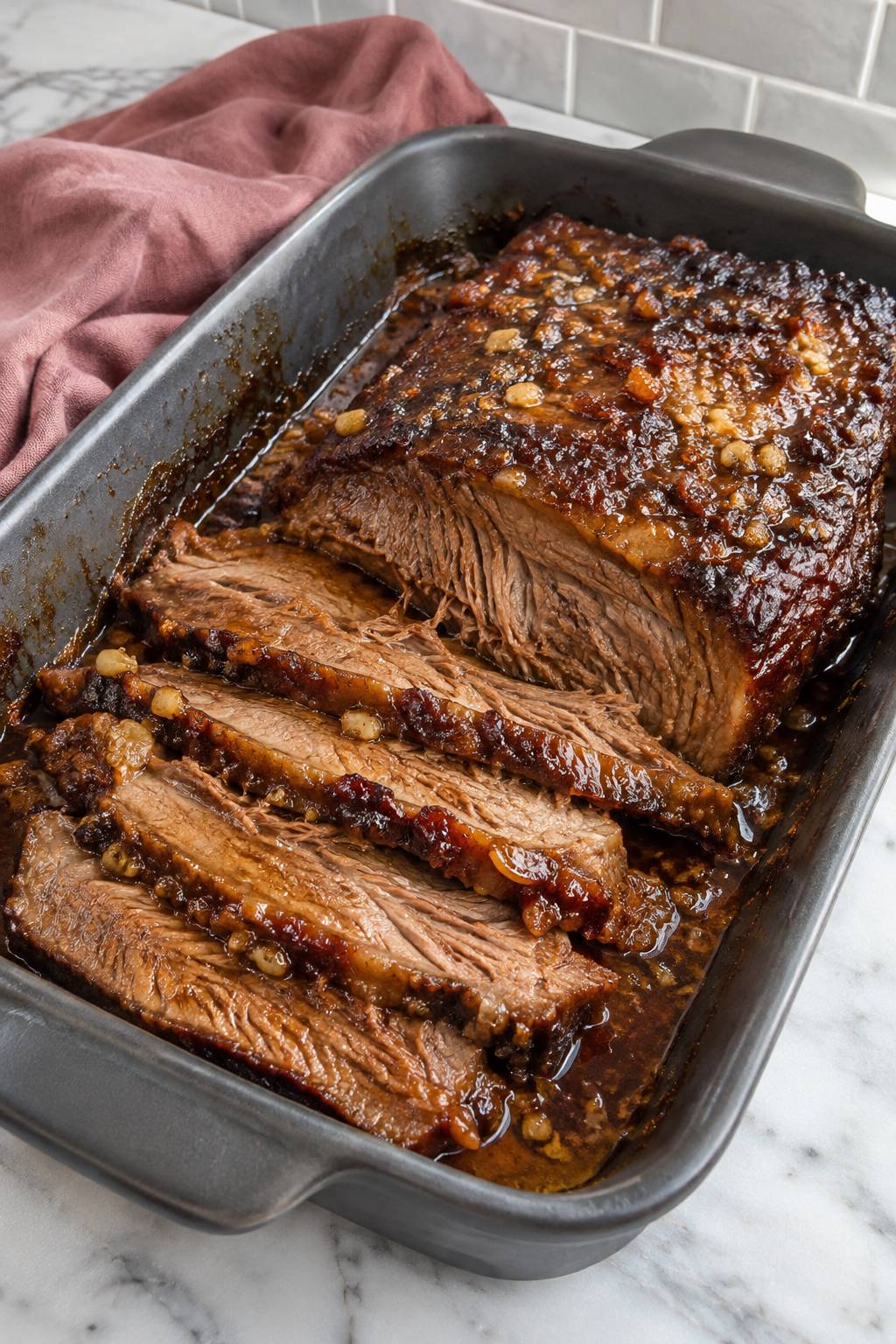
Brown sugar garlic brisket brings together savory beef, sweet brown sugar, fragrant garlic, and a rich sauce built right in the roasting pan. The brisket braises covered until it yields easily, then finishes uncovered so the surface turns glossy and deeply browned.
The pan juices are part of the dish: spoon them over the sliced meat along with the softened onion and garlic. A little attention to tenderness, browning, and slicing helps you get the most from this slow-braised cut.
How the sauce balances sweet and savory
Packed light brown sugar gives the sauce its sweetness and helps create the brisket’s glossy finish. Tomato paste adds depth, while low-sodium beef broth keeps the mixture savory and moist. Low-sodium soy sauce brings a rounded, salty note, and apple cider vinegar cuts through the sweetness. Smoked paprika adds a gentle smoky accent without taking over.
Coarsely chopped garlic and finely chopped yellow onion sit beneath the brisket as it cooks. They soften in the pan juices and add flavor to the sauce you spoon over the meat. Kosher salt and ground black pepper season the beef directly, while olive oil coats the bottom of the pan and helps keep the onion mixture from sticking.
Let tenderness guide the covered braise
Brisket needs time in a tightly covered pan for its firm texture to soften. Keep the foil sealed during the covered bake so the meat can braise in the sauce and the onions and garlic. Use a snug roasting pan that holds the brisket and sauce close together; a pan that is too large can leave the juices spread thin.
Check the thickest part with a fork or skewer. The useful sign is easy penetration and meat that yields, rather than relying on the clock alone. Briskets vary in thickness and connective tissue, so if the center still feels firm, keep it covered and check again at the intervals given on the recipe card. Avoid moving to the uncovered finish before it is tender.
Build color without scorching the sugar
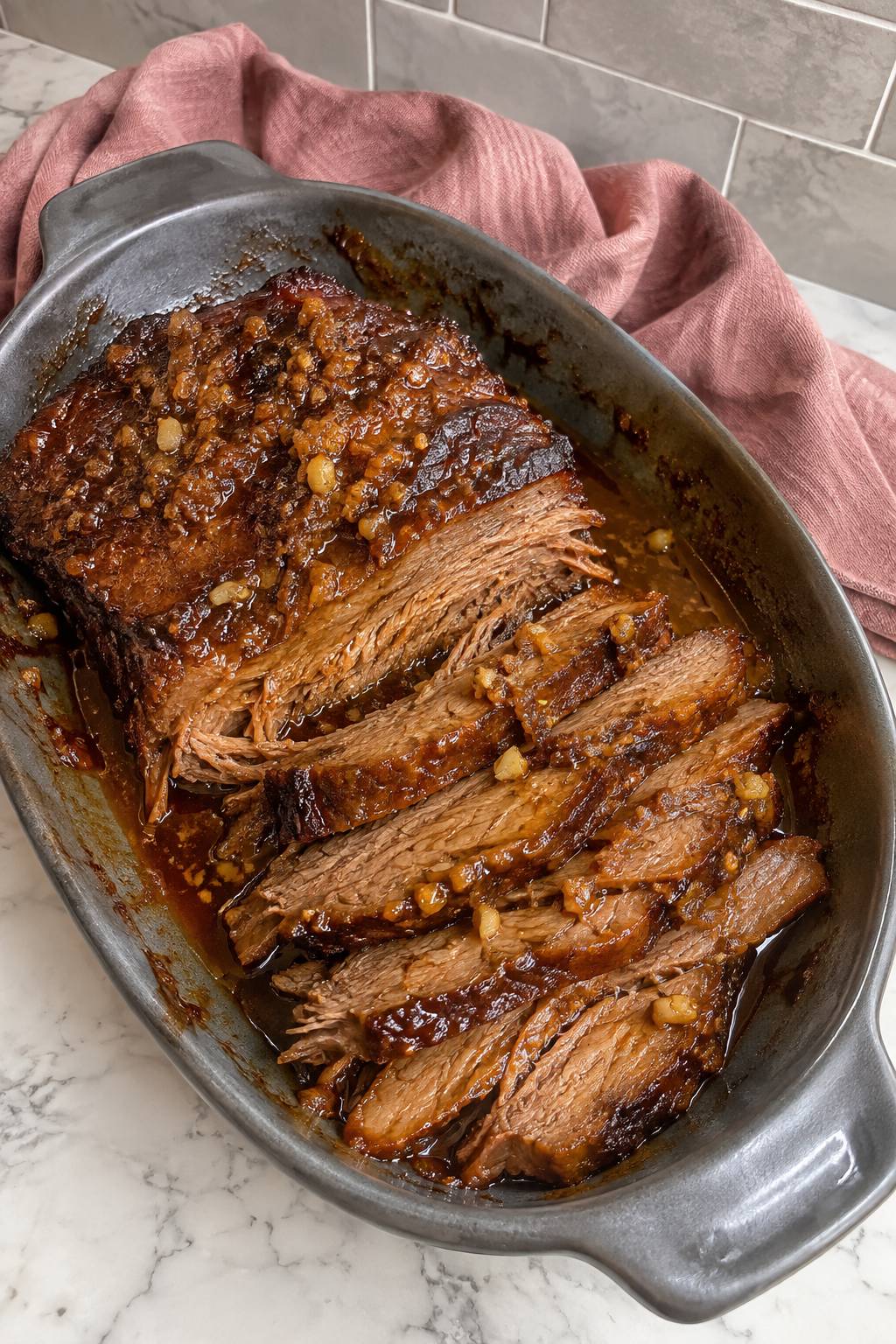
Once the brisket is tender, uncover it and spoon the pan juices, onion, and garlic across the top. The uncovered roast concentrates the surface color and gives the brisket its glossy, deeply browned finish. Baste again halfway through this stage to keep the top coated with the flavorful juices.
Keep an eye on the pan as the surface browns. If the sauce starts drying out, add the water amount listed on the recipe card around the meat. If the sugar begins to scorch, loosely shield the top with foil. These small adjustments help the surface brown without letting the sauce burn.
Rest, slice across the grain, and serve with juices
After roasting, transfer the brisket to a cutting board and tent it loosely with foil while it rests. Before cooking, note which way the muscle fibers run; after resting, cut across that direction. Slicing across the grain shortens the visible fibers and makes each piece easier to eat.
Skim excess fat from the pan juices, then return the sliced brisket to the pan. Spoon the sauce, onion, and garlic over the slices so they stay coated for serving. Store leftovers with their juices in an airtight container in the refrigerator, and reheat them covered until heated through, following the recipe card’s guidance.
Frequently Asked Questions
How can you tell when brisket is tender?
Pierce the thickest part with a fork or skewer. It should go in easily, and the meat should yield. If the center still feels firm, continue the covered bake and check again at the intervals specified on the recipe card.
Why does the brisket roast uncovered after braising?
The covered braise softens the brisket in the sauce. Removing the foil for the final roast lets the surface become glossy and deeply browned. Basting with the pan juices helps coat the top as it colors.
Which way should you slice the brisket?
Look at the direction of the muscle fibers before cooking so you can recognize them after the brisket rests. Slice across the grain, cutting perpendicular to those fibers, then spoon the pan juices, onion, and garlic over the slices.
Brown Sugar Garlic Brisket
6
servings20
minutes4
hours20
minutes590
kcal5
hoursBeef brisket slowly braises with brown sugar, garlic and onions, then finishes uncovered for a glossy, deeply browned surface. Serve it sliced with the rich pan juices.
Ingredients
3 lb beef brisket flat, with the fat cap trimmed to about 1/4 inch
1 tsp kosher salt
1 tsp ground black pepper
1 tbsp olive oil
1 medium yellow onion, finely chopped
10 garlic cloves, coarsely chopped
1/2 cup packed light brown sugar
1 cup low-sodium beef broth
2 tbsp tomato paste
2 tbsp low-sodium soy sauce
1 tbsp apple cider vinegar
1 tsp smoked paprika
Directions
- Heat the oven to 300°F. Pat the brisket dry and season all over with the salt and pepper. Rub the olive oil over the bottom of a snug 9×13-inch roasting pan, then spread the onion and garlic in the pan.
- Whisk together the brown sugar, broth, tomato paste, soy sauce, vinegar and smoked paprika. Place the brisket fat side up over the onion mixture. Pour the sauce over and around the meat.
- Cover the pan tightly with foil and bake for 4 hours. The brisket should yield easily when pierced in the thickest part with a fork or skewer. If it still feels firm, continue baking covered, checking every 30 minutes until tender; this additional time is beyond the base cooking time.
- Remove the foil and increase the oven temperature to 425°F. Spoon the pan juices, onion and garlic over the brisket. Roast uncovered for 20 minutes, basting again halfway through, until the surface is glossy and deeply browned. If the pan begins to dry out, add 1/4 cup water around the meat. Loosely shield the top with foil if the sugar starts to scorch.
- Transfer the brisket to a cutting board and loosely tent with foil. Let it rest for 20 minutes. Skim excess fat from the pan juices, then slice the brisket across the grain into roughly 1/4-inch-thick slices. Return the slices to the roasting pan and spoon the juices, onion and garlic over them to serve.
Notes
- Brisket tenderness varies with thickness and connective tissue. It often becomes tender around 195–205°F internally, but easy penetration with a skewer is the more useful finishing check.
- Identify the direction of the meat fibers before cooking so you can slice across them after resting.
- Refrigerate leftovers with their juices in an airtight container for up to 4 days. Reheat covered at 300°F until heated through.