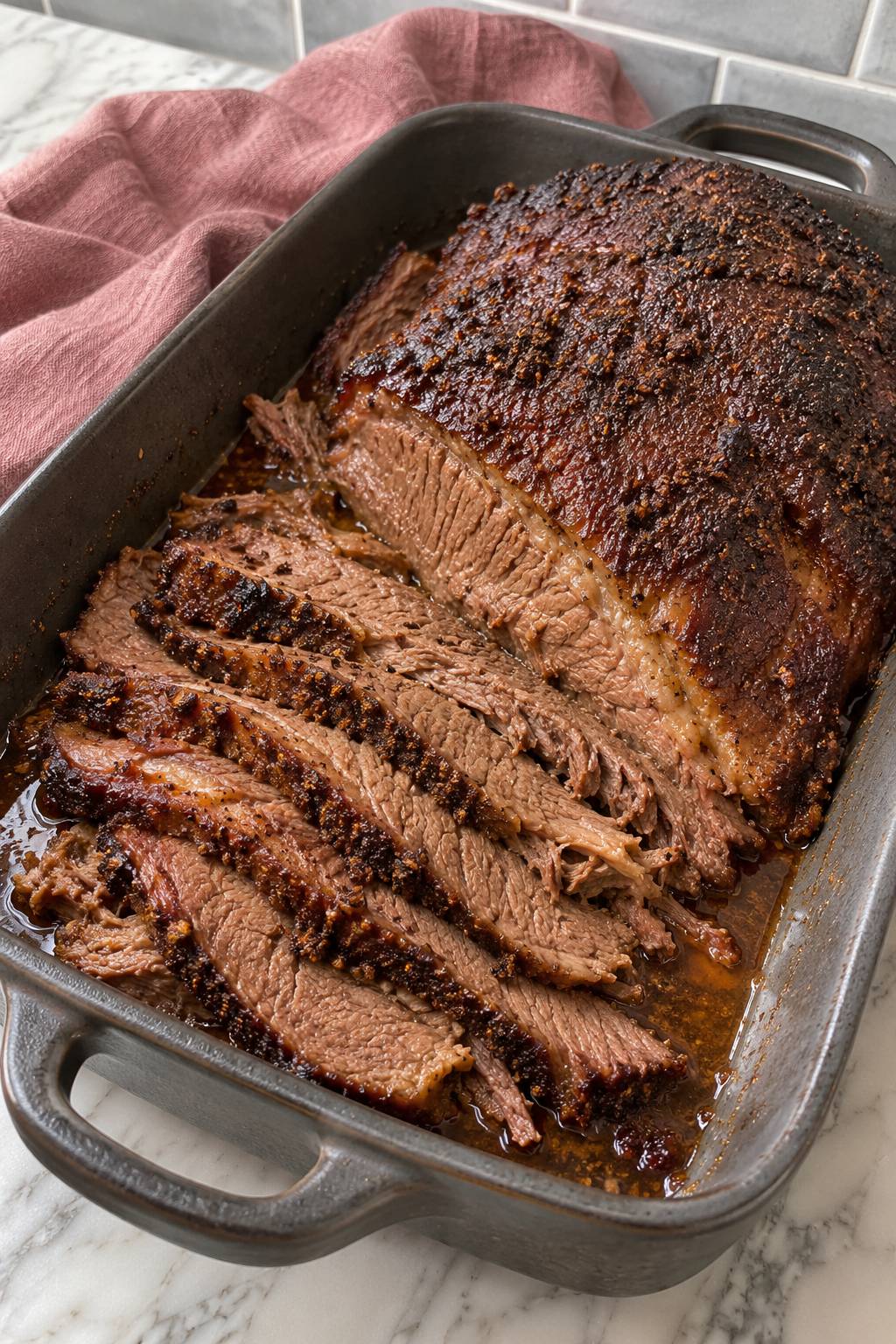
Coffee-Rubbed Brisket pairs a savory, gently sweet rub with the deep flavor of beef. The coffee adds an earthy edge, while brown sugar and smoked paprika help form a dark crust as the brisket finishes uncovered.
The covered roasting pan keeps the meat surrounded by broth as it cooks. When it is tender, you can slice it across the grain and spoon the flavorful pan juices over the slices.
What each part of the rub brings
Finely ground roasted coffee is the heart of the rub. Choose ground coffee rather than whole beans or brewed coffee so it can coat the meat evenly. Packed dark brown sugar balances the coffee’s bitterness, and smoked paprika adds a warm, smoky note. Garlic powder, onion powder, kosher salt, and coarsely ground black pepper round out the seasoning.
Olive oil helps the seasoning cling to the brisket. Pat the meat dry first, then press the rub over every side. A thorough coating gives the fat cap and the exposed sides a more even layer of flavor. Before seasoning, take a moment to identify the direction of the grain; that will make it easier to slice across it later.
Keep the brisket covered as it tenderizes
A deep, evenly sized metal roasting pan should hold the brisket comfortably. Set the meat fat side up and pour the low-sodium beef broth around it, taking care not to wash away the rub. Seal the pan tightly with foil so the broth stays beneath the meat as it cooks.
Brisket can vary in thickness and connective tissue, so tenderness matters more than relying on temperature alone. When you check the thickest part, a thin skewer should slide in with little resistance. If the meat still feels firm, cover the pan again and continue cooking until it feels tender. The cooking time on the recipe card assumes the brisket is fully thawed and the pan is sealed tightly.
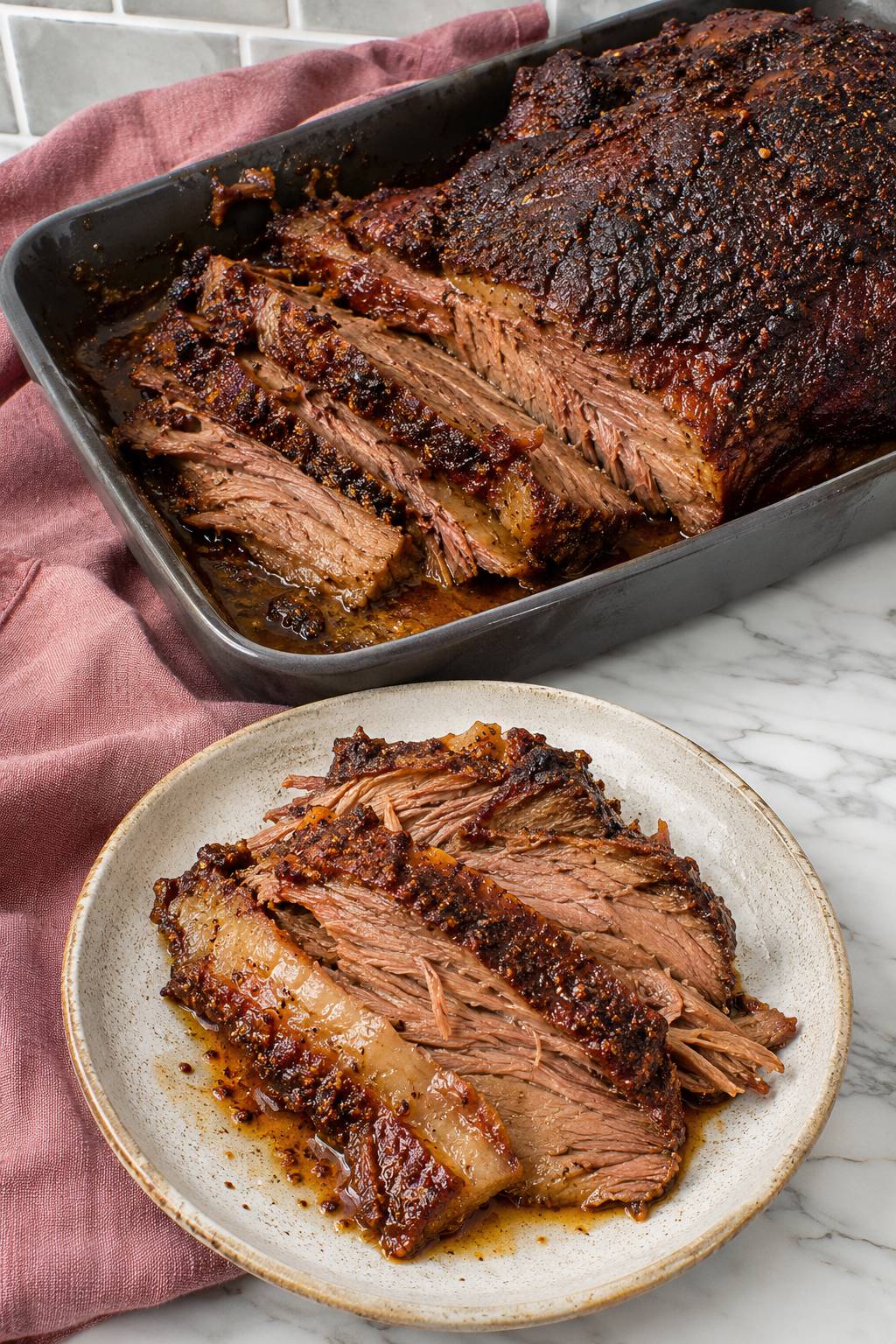
Set the crust without scorching the rub
Once the brisket is tender, removing the foil lets the outside darken and the rub set. Keep the pan juices beneath the meat during this finish. If the pan looks nearly dry, add the water amount listed on the recipe card around the edges, rather than over the crust.
Keep an eye on the rub toward the end of this uncovered stage. If the top begins to scorch, loosely shield it with foil. This lets you protect the crust while the brisket finishes in the oven.
Rest, slice, and serve with the juices
After cooking, transfer the brisket to a cutting board and tent it loosely with foil while it rests. Skim excess fat from the pan juices, then slice the meat across the grain. Cutting across those visible fibers helps make each slice easier to bite through.
Return the slices to the pan and spoon the juices around the meat. The broth picks up flavor from the brisket and rub as they cook together, giving you a savory finish for the slices.
Frequently Asked Questions
How do I know when the brisket is tender?
Check the thickest part with a thin skewer. It should slide in with little resistance. If the meat still feels firm, reseal the pan and continue cooking, then check again; brisket thickness and connective tissue can affect how long it needs.
Why pour the broth around the brisket?
Pouring low-sodium beef broth around the meat helps keep the rub in place on the brisket’s surface. Keeping liquid beneath the meat also leaves flavorful pan juices to skim and spoon around the slices when you serve.
How should I slice the brisket?
Look for the direction of the grain, or the lines running through the meat, and cut across those lines. Slicing across the grain shortens the visible fibers. Return the slices to the roasting pan and spoon the juices around them.
Coffee-Rubbed Brisket
8
servings20
minutes4
hours20
minutes570
kcal5
hours10
minutesBeef brisket cooks slowly in a covered roasting pan until tender, then finishes uncovered for a dark, seasoned crust. Serve it sliced with the rich pan juices.
Ingredients
- Brisket
4 lb beef brisket flat, with the fat cap trimmed to about 1/4 inch
1 tbsp olive oil
1 1/2 cups low-sodium beef broth
- Coffee Rub
2 tbsp finely ground coffee
2 tbsp packed dark brown sugar
2 tsp smoked paprika
2 tsp garlic powder
2 tsp onion powder
2 tsp kosher salt
2 tsp coarsely ground black pepper
Directions
- Preheat the oven to 300°F. Use a deep 9×13-inch metal roasting pan that holds the brisket comfortably.
- Mix the coffee, brown sugar, smoked paprika, garlic powder, onion powder, salt, and pepper in a small bowl. Pat the brisket dry, coat it with the olive oil, and press the rub onto all sides.
- Place the brisket fat side up in the roasting pan. Pour the broth around the meat without washing off the rub. Cover the pan tightly with foil.
- Bake for 4 hours. Carefully lift the foil and test the thickest part: a thin skewer should slide in with little resistance, usually at an internal temperature of 195–205°F. If it is still firm, reseal and continue baking in additional 30-minute intervals until tender. These additional intervals are beyond the listed cooking time.
- Remove the foil and increase the oven temperature to 425°F. Leave the brisket in the oven for 20 minutes to darken and set the crust. Keep the pan juices beneath the meat; if the pan is nearly dry, add 1/2 cup water around the edges. Check toward the end and loosely shield the top with foil if the rub begins to scorch.
- Transfer the brisket to a cutting board, loosely tent with foil, and rest for 30 minutes. Skim excess fat from the pan juices. Slice the brisket across the grain into roughly 1/4-inch-thick slices, return them to the pan, and spoon the juices around the meat to serve.
Notes
- Use finely ground roasted coffee, not whole beans or brewed coffee, for the rub.
- Brisket tenderness varies with thickness and connective tissue. Allow extra time if needed; temperature alone does not confirm tenderness.
- Locate the direction of the grain before applying the rub so you can slice across it after cooking.
- The cooking time assumes fully thawed brisket and a tightly sealed pan.