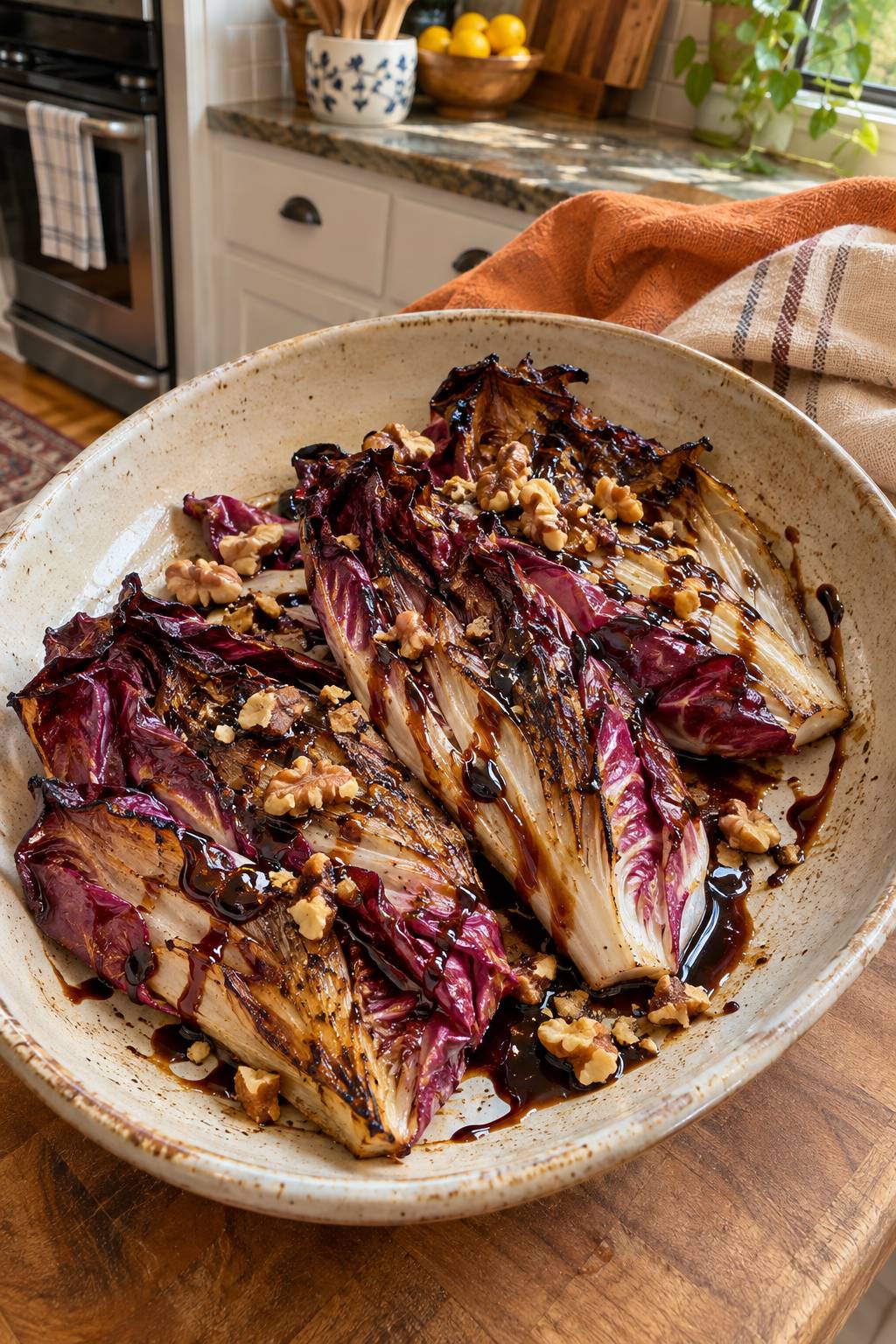
Radicchio surprises many people the first time they taste it cooked. Raw, its leaves are sharp and bitter, but a hot skillet softens that edge and leaves behind a rich, mellow flavor with crisp, dark edges. This charred radicchio makes a warm, colorful side dish, or a light starter for a small table.
The whole dish comes together in one skillet, so cleanup stays simple. It’s a bright, quick companion to a slow cooker pot roast or a Dutch oven braise, and it doesn’t ask for much hands-on time. Read the sections below before you start, because the radicchio needs your attention once it hits the pan.
Choosing and Trimming Radicchio
Look for firm, heavy heads with tight leaves and no slimy or brown spots. Round heads are easy to halve through the core, which keeps the leaves together in the pan. Trimming matters too. Removing bruised outer leaves gives you clean surfaces that char evenly, and a thin slice from the base helps the halves sit flat.
Don’t skip drying the halves. Moisture on the cut sides steams the leaves instead of browning them, and you’ll lose the crisp, dark edges that make this dish worth the effort.
Building a Deep, Even Char
The cut sides do most of the work, so resist the urge to move the halves around. Leaving them undisturbed lets a deep brown crust form, and that crust carries much of the flavor. Give each half room in the skillet, because crowded halves release moisture and steam instead of searing.
Watch the leaf edges closely as they darken. If they blacken before the core softens, ease back on the heat. Use tongs when you turn them, and handle them gently so the leaves stay attached to the core.
Balancing the Balsamic Glaze
Balsamic vinegar brings sharp acidity, and honey rounds it into something sweet and glossy. Keep the saucepan under close watch, since a glaze that reduces too far turns sticky and hard. Pull it off the heat while it’s still slightly syrupy, because it keeps thickening as it cools.
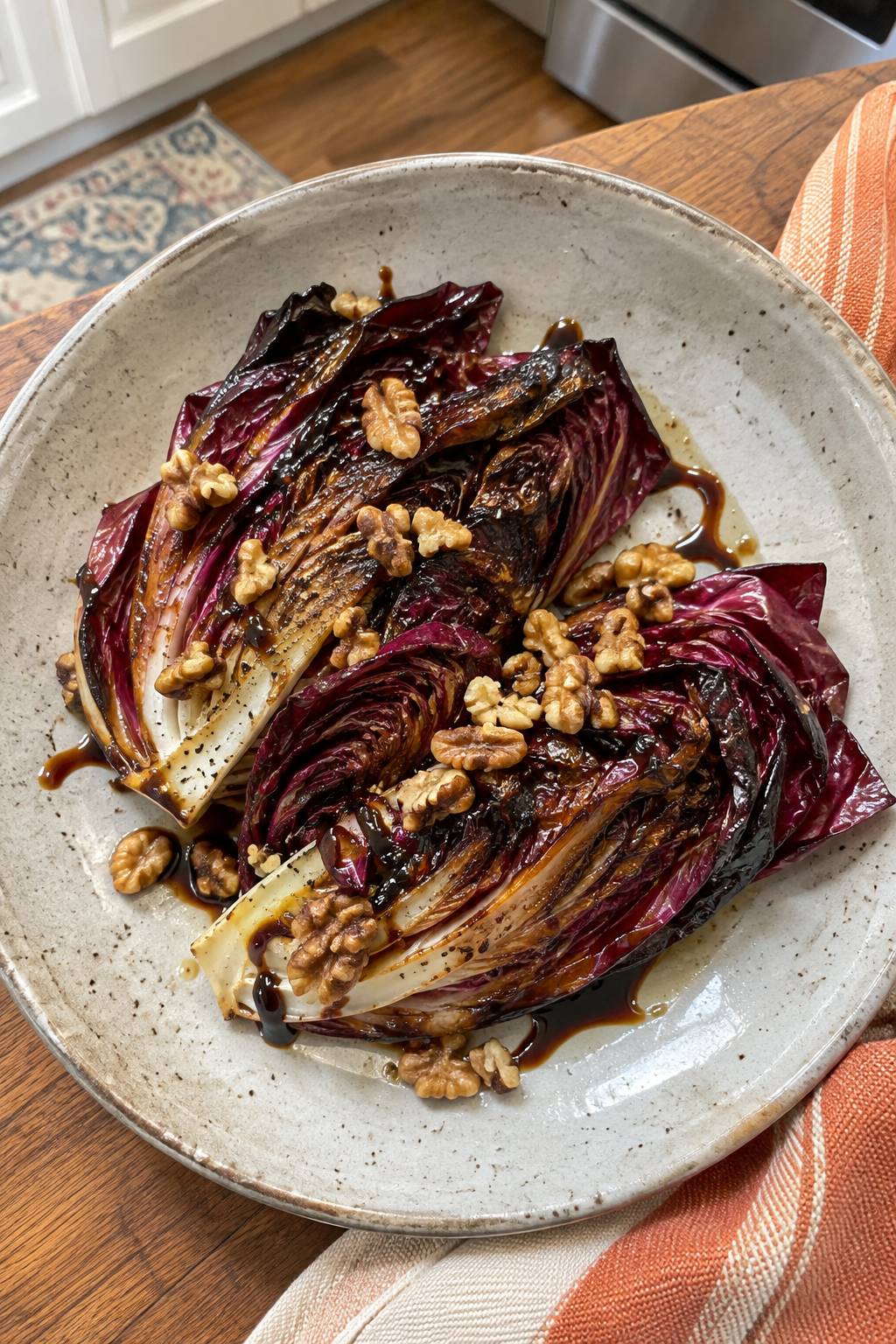
Drizzle the glaze over the radicchio just before serving so it stays glossy against the char. The contrast between the dark leaves and the ribbons of glaze is part of what makes this dish look so appealing on the table.
Toasting Walnuts for Crunch
Toasted walnuts add crunch and a nutty depth that suits the bitter greens. Stir them often and watch for a fragrant aroma and a shade of darker color. Move them to a bowl right away so they stop cooking, and keep them separate until serving so they stay crisp against the soft, warm leaves.
Frequently Asked Questions
Why does my radicchio taste bitter?
Some bitterness is part of radicchio’s character, and searing softens it. Leaves charred too far or heads past their prime can taste harsher. Choose firm heads, aim for deep browning rather than black edges, and finish with the sweet balsamic glaze to balance the flavor.
Why did my balsamic glaze turn too thick?
Balsamic glaze keeps thickening as it cools, so take the saucepan off the heat when it is only slightly syrupy. If it becomes too thick to drizzle, stir in a few drops of warm water until it loosens. Drizzle it just before serving for the cleanest look.
How do I know when the walnuts are toasted?
Watch for a rich, nutty aroma and a shade of darker color. Stir them often so they don’t scorch, then move them to a bowl right away so they stop cooking. Keep them separate from the radicchio until serving so they stay crunchy.
Charred Radicchio with Balsamic Glaze and Walnuts
4
servings10
minutes18
minutes220
kcal23
minutesHalved radicchio is seared cut side down in a skillet until the leaves char and the core softens, then finished with a honey-sweetened balsamic glaze and toasted walnuts. It makes a warm, colorful side dish or a light starter for four.
Ingredients
- Radicchio
2 heads radicchio (about 1 lb total)
2 tbsp extra-virgin olive oil, divided
1/2 tsp kosher salt
1/4 tsp freshly ground black pepper
- Balsamic glaze
1/2 cup balsamic vinegar
1 tbsp honey
- Walnuts
1/2 cup walnut halves or pieces (about 2 oz), roughly chopped
Directions
- Walnuts
- Heat a 12-inch skillet over medium heat. Add the walnuts and cook, stirring often, until fragrant and a shade darker, about 3 minutes. Transfer to a small bowl and set aside. Leave the skillet on the burner for the radicchio.
- Radicchio
- Trim a thin slice off the stem end of each radicchio head and peel off any wilted or bruised outer leaves. Cut each head in half lengthwise through the core so the leaves stay attached while they char. Rinse and pat the halves very dry. Brush the cut sides with 1 tbsp of the olive oil and season with the salt and pepper.
- Increase the heat under the skillet to medium-high and let it warm for about 1 minute. Add the remaining 1 tbsp olive oil, then place the radicchio halves cut side down in the skillet. Cook without moving them for 6 minutes, until the cut sides are deeply browned and the leaf edges are charred.
- Balsamic glaze
- While the radicchio sears, combine the balsamic vinegar and honey in a small saucepan. Bring to a simmer over medium heat, then reduce the heat to medium-low and simmer, stirring occasionally, for about 5 minutes, until slightly syrupy. Remove from the heat. The glaze will thicken further as it cools.
- Radicchio
- Turn the radicchio halves over with tongs and cook for 4 more minutes, until the leaves are wilted and the core is tender when pierced with a paring knife. Lower the heat if the leaves char too quickly.
- Assembly
- Transfer the radicchio to a serving platter, cut side up. Drizzle with the balsamic glaze, scatter the toasted walnuts over the top, and serve warm.
Notes
- Cutting through the core keeps each leaf cluster attached, so the halves hold together in the pan and the cut surfaces make full contact with the hot skillet for an even char.
- Balsamic glaze thickens as it cools. If it becomes too thick to drizzle, stir in a few drops of warm water.
- Toasting the walnuts before the radicchio goes in makes them crisp and fragrant. Keep them separate until serving so they stay crunchy.