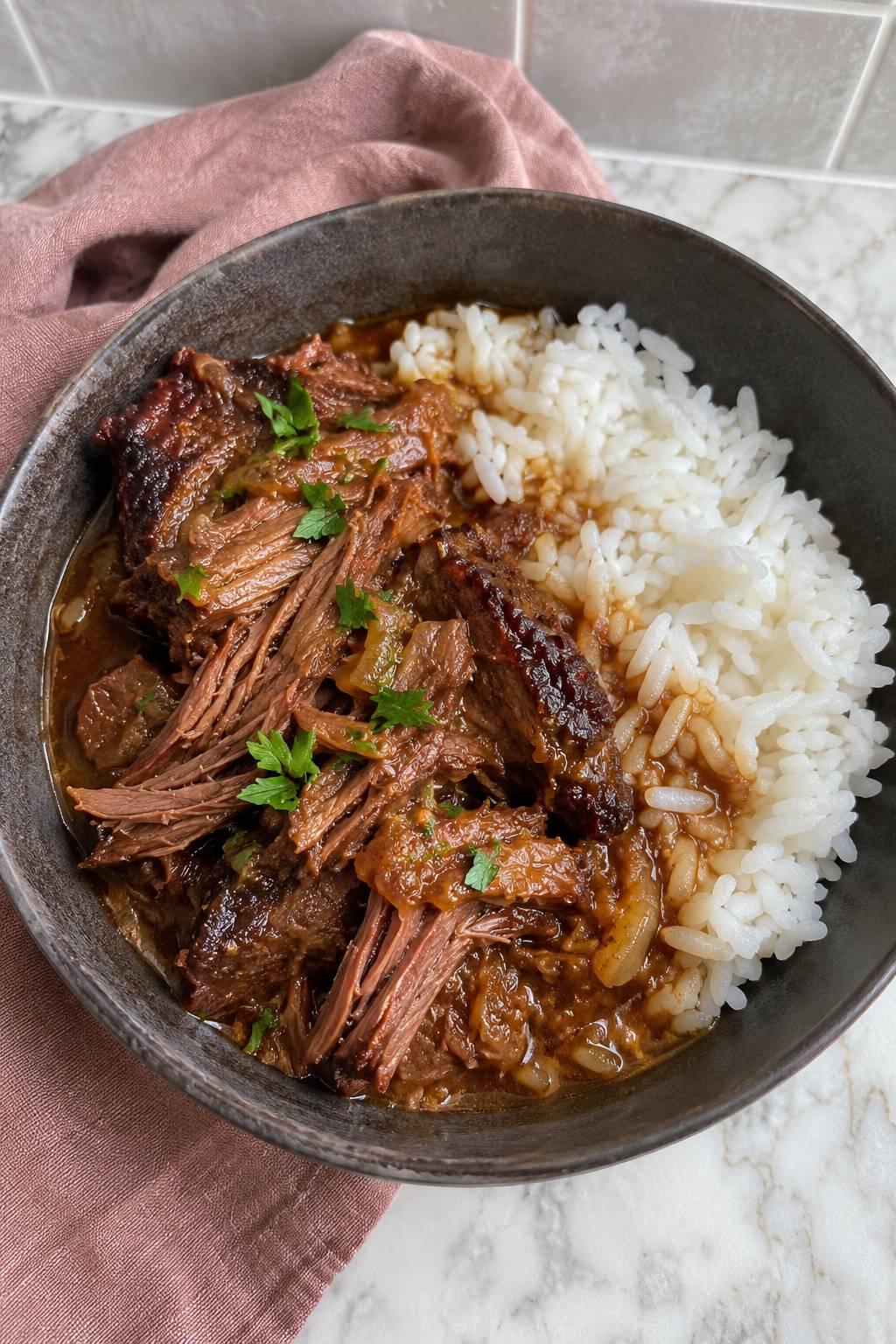
The best part of this chuck pot roast might be the rice that catches the onion gravy. The beef pulls apart into tender chunks, the onions soften into the sauce, and the fluffy white rice gives the rich gravy somewhere to go. A sprinkle of fresh flat-leaf parsley brightens the bowl.
The recipe card has the timing, but what you see and feel matters just as much. Look for a deep brown crust on the beef, check that a fork can pull the roast apart without a struggle, and aim for gravy that still flows easily from a spoon.
Build flavor with a deep sear
Pat the chuck roast dry before you season it so the surface can brown rather than steam. Once a broad side is against the hot Dutch oven, resist the urge to keep moving it. Pale patches aren’t the same as a deep brown crust, and that crust is where much of the gravy’s flavor starts.
The browned bits stuck to the pot are worth keeping. Scrape them into the beef broth so that savory flavor ends up in the gravy. The yellow onion brings sweetness as it softens and starts to brown, while tomato paste gives the broth a richer flavor. Low-sodium beef broth lets the seasoning on the roast come through without making the gravy overly salty.
Check the chuck with a fork
Chuck is a good fit for a covered braise because it can soften enough to pull apart while still holding together in generous pieces. Keep the lid snug so the roast cooks in a moist environment. The clearest sign that it’s ready isn’t the color of the beef or how easily you can pierce the surface. Slide a fork into the meat and gently tug: the beef should separate with little resistance.
Keep the white rice fluffy
Long-grain white rice gives you distinct grains that take on the gravy without turning the bowl into a single soft texture. Rinse it under cool water to wash away loose surface starch, then drain it well so extra rinse water doesn’t go into the saucepan. Once the cooking water is absorbed, leave the rice covered off the heat so the remaining steam can finish softening the grains. Fluff gently with a fork rather than pressing or stirring with a spoon.
Aim for gravy that pours easily
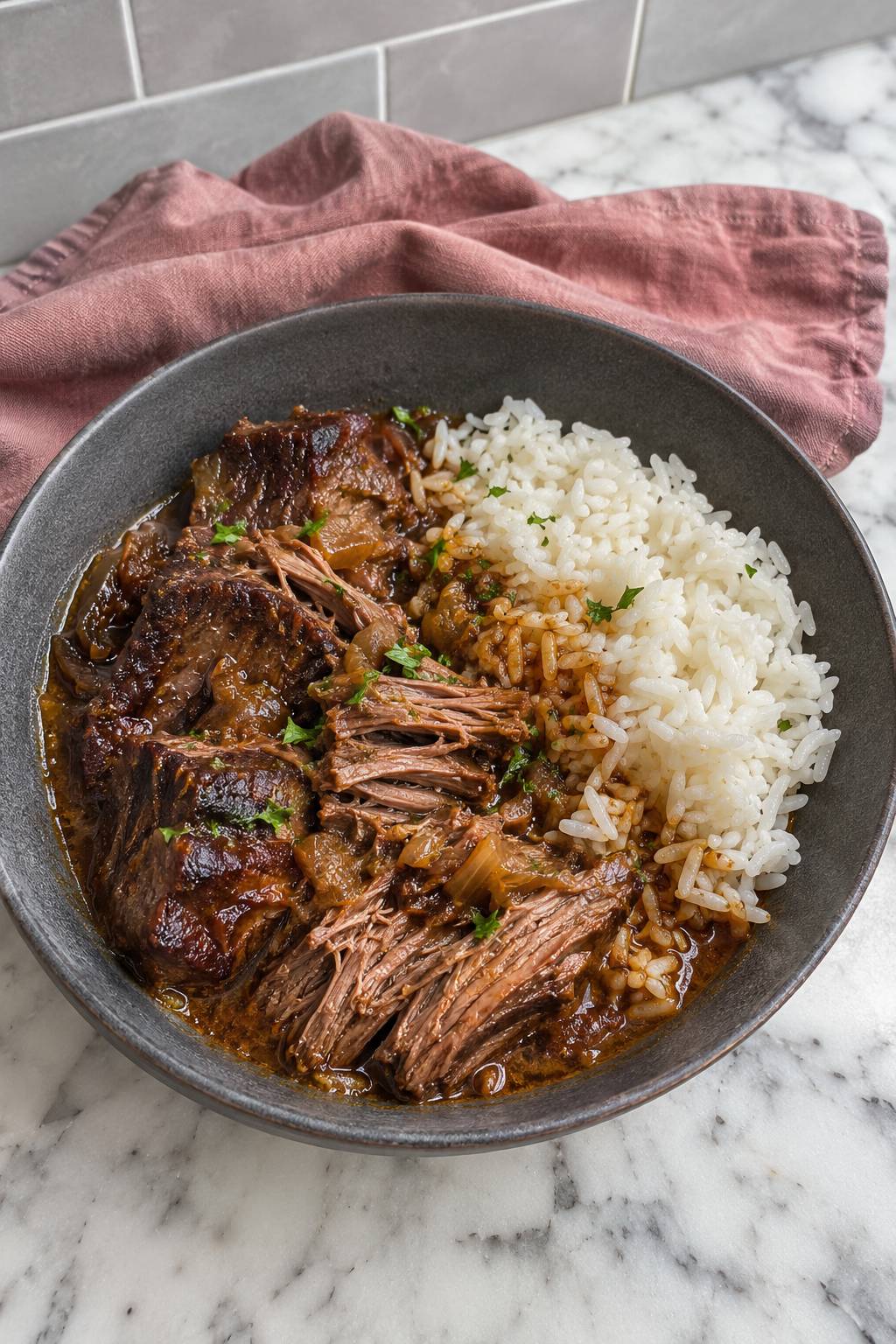
Skim the excess fat from the braising liquid so the finished gravy doesn’t feel greasy. Cornstarch gives the broth enough body to cling to the beef, but the gravy should stay loose enough to run into the rice. Whisk the cornstarch into cold water so it disperses instead of clumping in the hot broth. The starch settles quickly, so give the slurry another stir right before pouring it into the simmering liquid.
Frequently Asked Questions
What if the roast is still firm when I check it?
Put the lid back on and let the roast continue braising. A fork may go into the meat before it separates easily. If you still have to work to pull a piece away, the chuck isn’t ready.
Should I slice the roast or pull it apart?
Use forks to pull the roast into large pieces rather than slicing it or shredding it finely. Follow the places where the meat naturally separates, and discard any large pieces of fat you find as you go.
Do I strain the onions out of the gravy?
No. Remove the bay leaf, but leave the softened onions in the pot. They give the gravy its texture as well as its flavor, and you can scoop them up with the sauce when you spoon it over the beef and rice.
Chuck Pot Roast with Rice
6
servings20
minutes3
hours43
minutes610
kcal3
hours43
minutesBeef chuck roast is seared until deeply browned, then braised with onions and beef broth until it pulls apart with a fork. Serve it with fluffy white rice, plenty of pan gravy, and a sprinkle of parsley.
Ingredients
- Pot Roast and Gravy
2 1/2 lb boneless beef chuck roast
1 tsp fine salt
1/2 tsp ground black pepper
2 tbsp olive oil
1 large yellow onion, thinly sliced
3 garlic cloves, minced
1 tbsp tomato paste
2 cups low-sodium beef broth
1 bay leaf
1 tbsp cornstarch
2 tbsp cold water
2 tbsp chopped fresh flat-leaf parsley
- Rice
1 1/2 cups long-grain white rice
2 1/4 cups water
1/2 tsp fine salt
Directions
- Pot Roast and Gravy
- Preheat the oven to 325°F. Pat the roast dry and season it all over with the salt and pepper.
- Heat the olive oil in a Dutch oven over medium-high heat. Sear the roast on its two broad sides until deeply browned, about 5 minutes per side. Transfer it to a plate.
- Reduce the heat to medium. Add the onion and cook, stirring occasionally, for 6 minutes, until softened and starting to brown. Stir in the garlic and tomato paste and cook for 1 minute. Pour in the broth, scrape up the browned bits from the bottom, and bring to a simmer, about 3 minutes.
- Return the roast and any juices to the pot and add the bay leaf. Cover tightly and braise in the oven for 3 hours, until a fork slides in easily and the meat pulls apart with little resistance. If it still feels firm, cover and continue braising until tender.
- Rice
- During the last 30 minutes of braising, rinse the rice under cool water and drain it well. Combine the rice, water, and salt in a saucepan and bring to a boil over medium-high heat, about 5 minutes. Cover, reduce the heat to low, and cook for 15 minutes, until the water is absorbed. Remove from the heat and let stand, covered, for 10 minutes. Fluff with a fork.
- Pot Roast and Gravy
- Transfer the tender roast to a plate. Discard the bay leaf and skim excess fat from the surface of the braising liquid, leaving the onions in the pot. Whisk the cornstarch with the cold water. Bring the liquid to a simmer over medium-high heat, stir in the slurry, and cook until lightly thickened, about 3 minutes total.
- Serving
- Pull the beef into large pieces with two forks, discarding any large pieces of fat. Divide the rice among bowls and add the beef alongside. Spoon the onion gravy over the beef and some of the rice, then sprinkle with parsley.
Notes
- Judge the roast by how easily it pulls apart, not just by the timer. If a fork still meets resistance, the chuck needs more time in the covered pot.
- Stir the cornstarch slurry just before adding it to the pot, since the starch settles quickly.