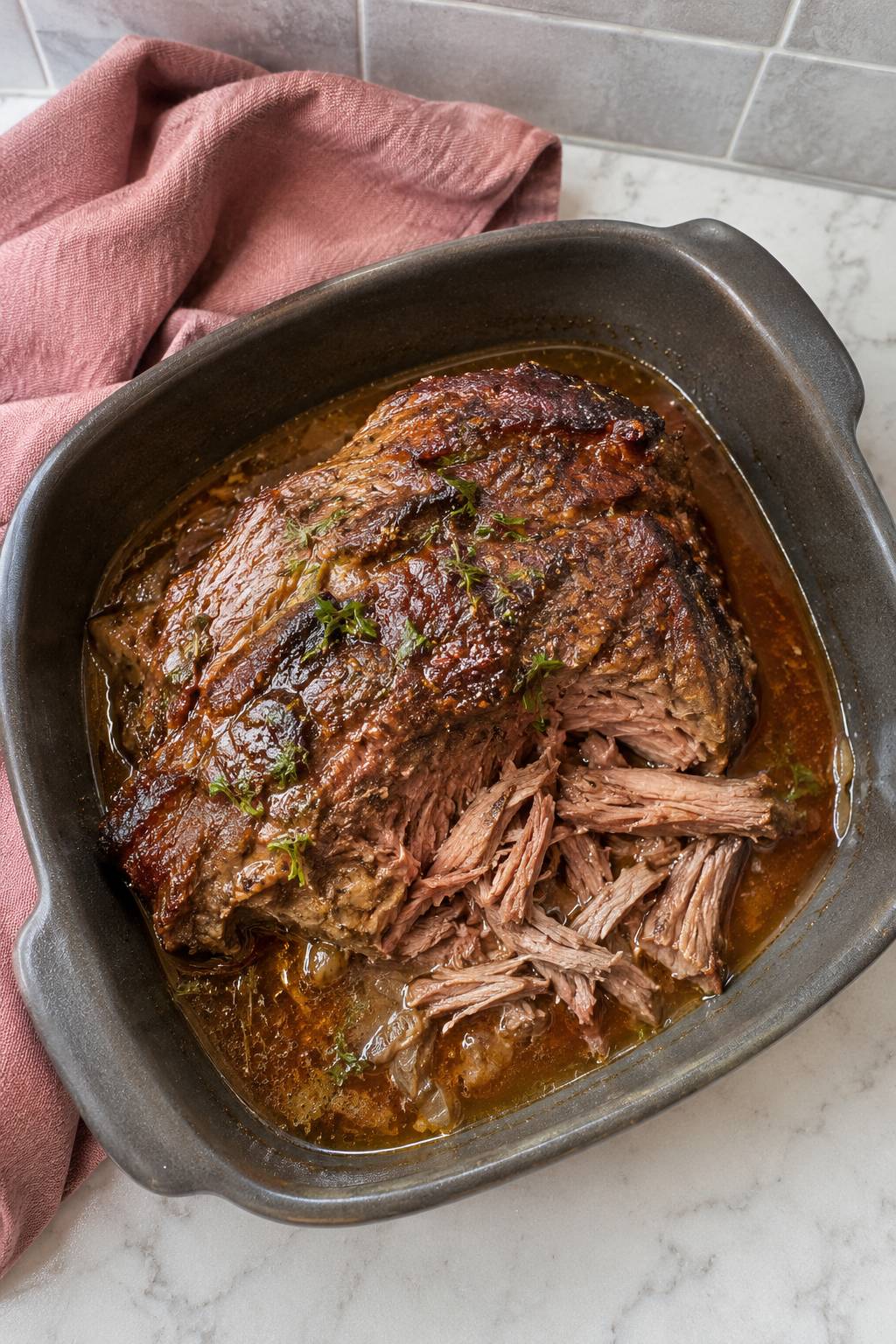
A good pot roast gives you meat you can pull apart at the table and juices worth spooning over every piece. This Instant Pot chuck roast gets its savory depth from a dark sear, with softened yellow onion and garlic rounding out the beefy cooking liquid. The onions are part of what makes the finished dish so good: serve them right alongside the roast, where they can soak up the juices.
Judge Chuck Roast by How It Pulls Apart
Boneless chuck is a good fit here because you want the roast to separate into generous pieces rather than hold together in tidy slices. The most useful test is how the meat feels under a fork. Push the fork into a thick part of the roast and twist gently. If the meat gives and pulls apart easily, it’s ready. If the fork goes in but the meat still grips it when you twist, don’t mistake that for tenderness.
Give the Broad Sides a Deep Sear
Pat the roast dry before seasoning it with fine sea salt and black pepper. If the surface is wet, the beef will steam instead of browning readily. Let the Instant Pot get hot on Sauté before the roast goes into the olive oil, and resist the urge to slide the meat around to check it. You’re looking for a deeply browned surface on the broad sides, not just a change from pink to gray. That browning flavors the cooking liquid as well as the beef.
Let the Onions Soften Without Getting Dark
Lightly golden is the target for the sliced yellow onion. You want it soft enough to lose its raw bite, but there’s no need to take it to a deep brown. The minced garlic goes in after the onion has softened so it doesn’t scorch while the onion cooks. Low-sodium beef broth gives the cooking juices a beefy base without piling more salt onto a roast you’ve already seasoned.
Serve the Juices Alongside the Roast
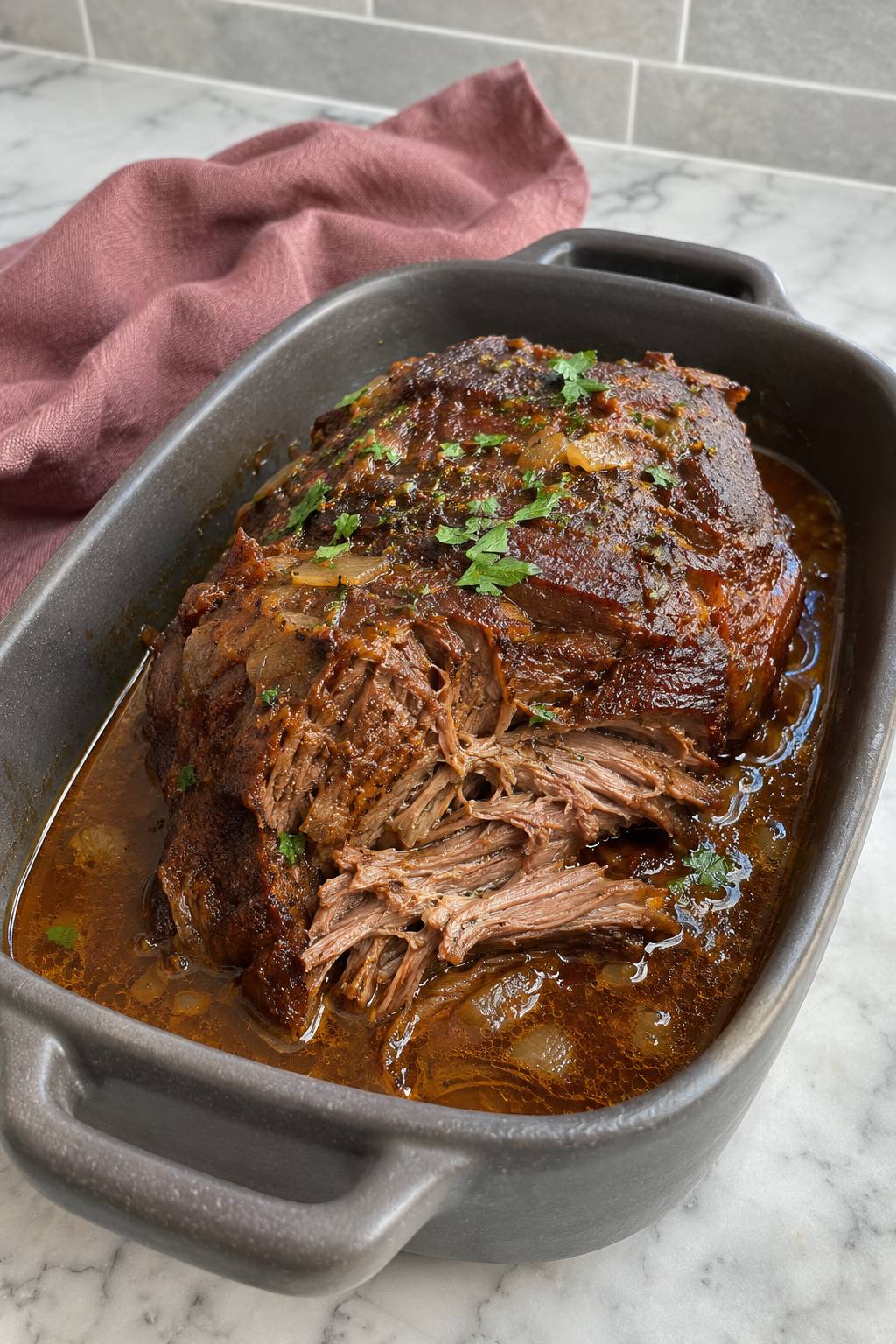
A shallow dish lets you spoon the onions and juices around the beef without burying it. Pull part of the roast into large pieces so the juices can settle between them; you don’t need to shred the whole roast. Skim excess fat from the surface of the cooking liquid so the juices taste rich without feeling greasy. Discard the cooked thyme stems and scatter fresh thyme leaves over the meat for a brighter herbal finish.
Frequently Asked Questions
Why do I need to scrape the bottom of the Instant Pot?
The browned bits are flavorful, but leaving them stuck to the bottom can trigger a burn warning during pressure cooking. Once the broth is in, run a wooden spoon across the bottom until you no longer feel stuck patches.
Can I vent the pot as soon as pressure cooking ends?
No. Let the pressure release naturally as directed on the recipe card, then carefully vent any remaining pressure. Wait until the float valve has dropped before opening the lid, even if you no longer hear steam escaping.
What should I do if the roast is still tough?
If the meat resists when you twist a fork, it needs more pressure cooking. Use the extra cooking time on the recipe card, follow the natural-release directions before venting, and test the meat again rather than trying to force it apart.
Instant Pot Chuck Roast
6
servings15
minutes1
hour36
minutes530
kcal2
hours21
minutesA deeply browned chuck roast cooks with onions, garlic, and thyme until it pulls apart with a fork. Serve it in a shallow dish with the onions and plenty of the savory cooking juices.
Ingredients
1 boneless beef chuck roast (3 lb)
1 1/4 tsp fine sea salt
3/4 tsp ground black pepper
1 tbsp olive oil
1 medium yellow onion, sliced
4 garlic cloves, minced
1 1/2 cups low-sodium beef broth
5 sprigs fresh thyme, divided
Directions
- Pat the roast dry with paper towels and season all over with the salt and pepper. Set a 6-quart Instant Pot to Sauté on High. When the display reads Hot, add the olive oil and sear the roast for 5 minutes on each broad side, until deeply browned. Transfer it to a plate.
- Add the onion and cook for 5 minutes, stirring occasionally, until softened and lightly golden. Stir in the garlic and cook for 1 minute. Press Cancel, pour in the broth, and scrape the bottom with a wooden spoon until no browned bits are stuck to it.
- Nestle the roast into the onions and pour in any juices from the plate. Tuck 4 thyme sprigs into the broth. Lock the lid, set the valve to Sealing if needed, and pressure cook on High for 80 minutes. Allow about 10 minutes for the pot to come to pressure before the timer starts.
- Let the pressure release naturally for 20 minutes, then carefully vent any remaining pressure. Once the float valve drops, open the lid. The roast is ready when a fork twists easily in the meat.
- Lift the roast into a shallow serving dish and pull part of it into large pieces with two forks. Discard the cooked thyme stems and skim excess fat from the surface of the cooking liquid. Spoon the onions and juices around the roast and scatter the leaves from the remaining thyme sprig over the top.
Notes
- If the meat still resists when you twist a fork, cook it on High pressure for 10 more minutes, then let the pressure release naturally for 10 minutes before venting.