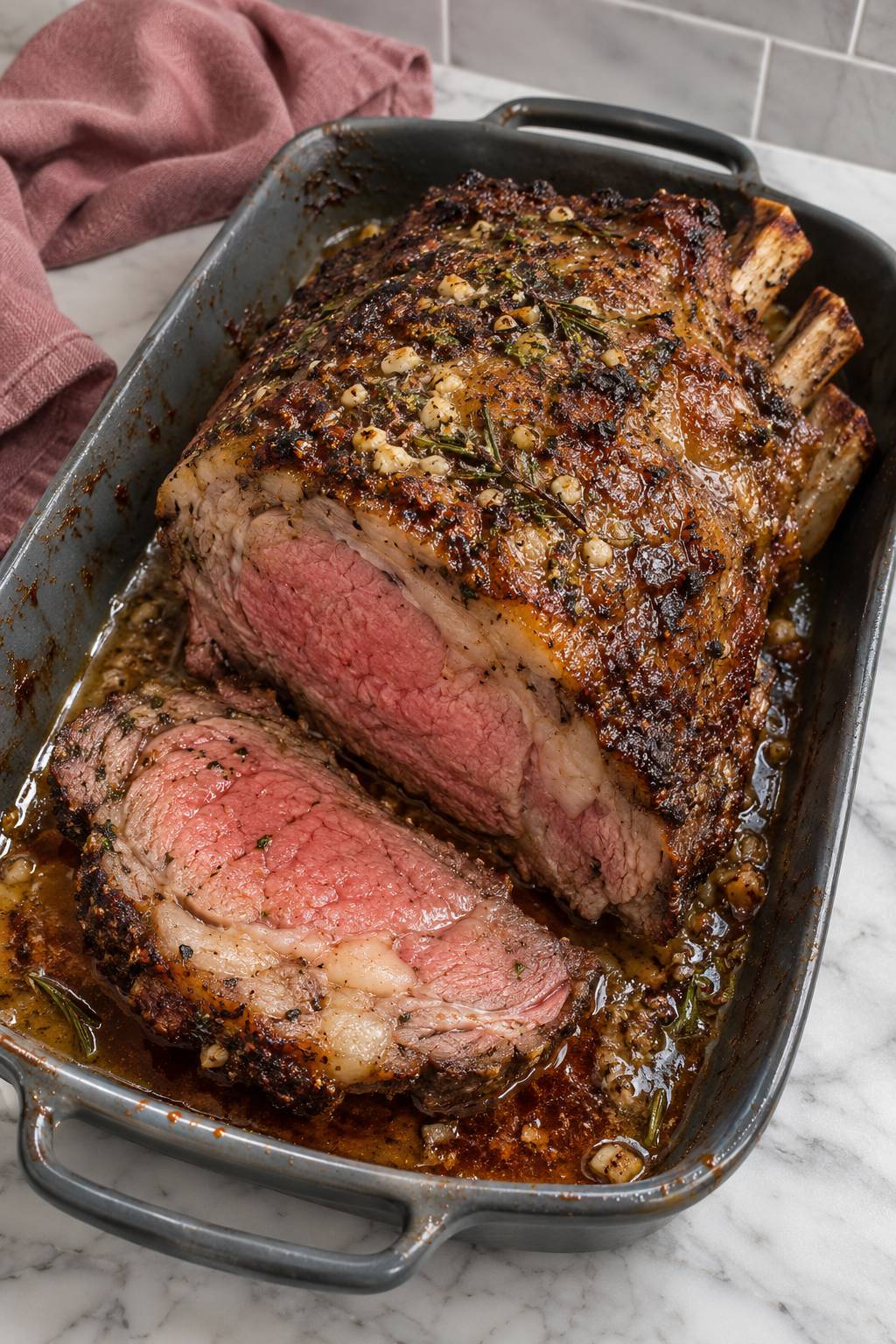
This garlic butter prime rib roast pairs a deeply browned exterior with a rosy center and the savory flavor of fresh herbs. The bones support the meat as it roasts, while the butter, garlic, rosemary, and thyme create a rich crust.
The roasting juices bring the slices together: beef broth collects in the pan, then mingles with the drippings and carving juices. Use the recipe card for the exact oven settings and timing, and let a thermometer guide doneness.
Why the roast’s ingredients work together
A bone-in beef roast has a substantial shape and a fat cap that browns as it cooks. Patting the surface thoroughly dry helps the exterior brown; olive oil, kosher salt, and freshly ground black pepper season the beef before it goes into the pan. Placing it bone-side down and fat-side up lets the bones support the meat.
Softened unsalted butter blends smoothly with minced fresh garlic, chopped rosemary, and chopped thyme. Spreading this mixture over the roast after the initial browning gives the herbs and garlic time to flavor the crust. Beef broth in the bottom of the pan contributes to the juices without washing the butter from the surface.
Use temperature to judge doneness
Prime rib’s shape, its starting temperature, and oven accuracy all affect how quickly it cooks. Minutes per pound are only an estimate, so begin checking the thickest part with a meat thermometer as directed on the recipe card. Keep the probe away from bone and large pockets of fat for a useful reading.
For the recipe’s rosy medium-rare target, remove the roast within the temperature range specified on the card. The center typically rises a little during the rest. If the garlic darkens too quickly, loosely shield the top with foil. For the USDA-recommended minimum, cook whole beef roasts to the card’s stated guidance before removing them, then rest as directed; this takes additional cooking time.
Rest, carve, and finish with the pan juices
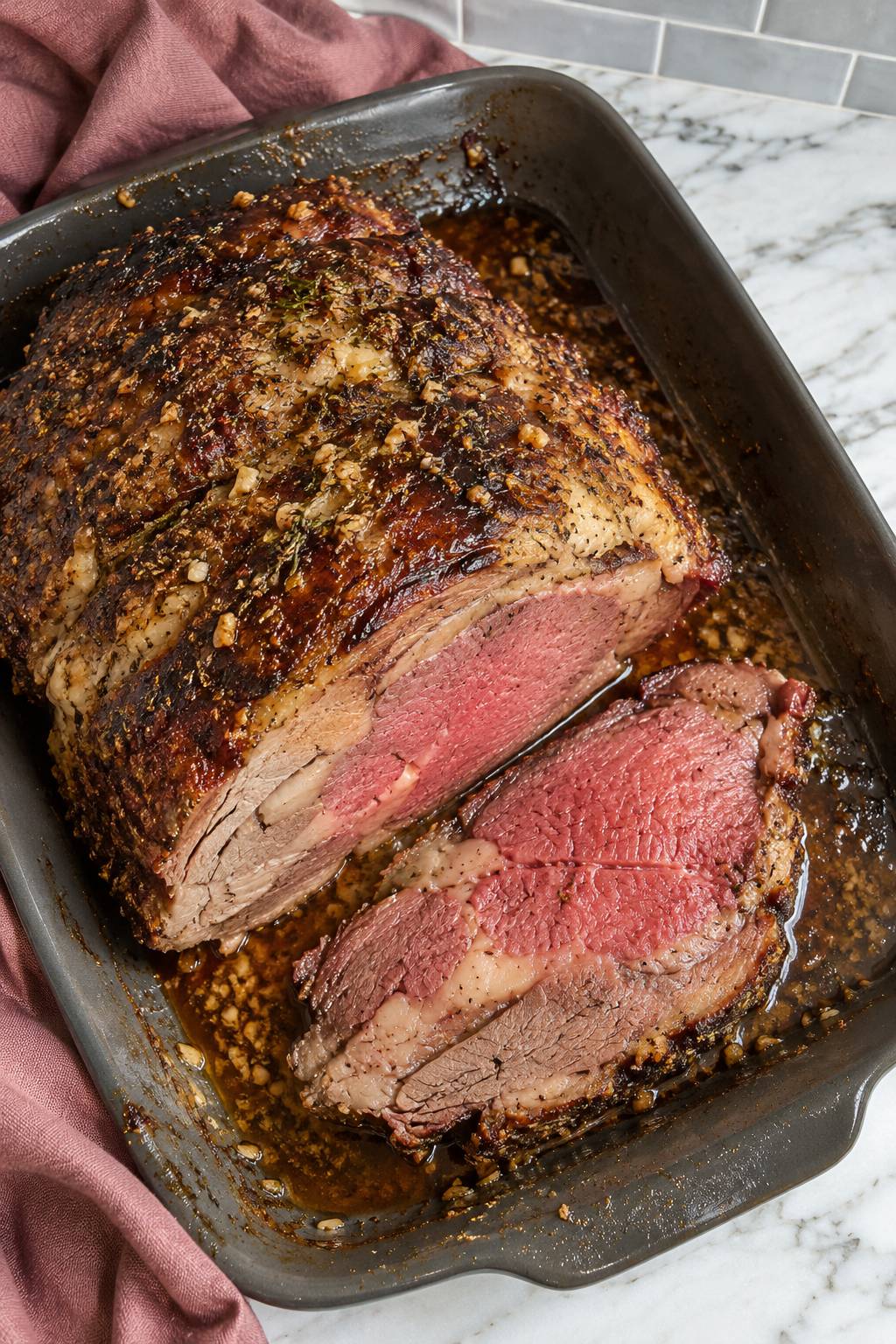
Rest the roast loosely tented on a carving board with a juice groove. This gives the meat time to settle and catches juices that escape while it rests. Before carving, spoon excess fat from the roasting pan while keeping the flavorful liquid beneath it.
Cut the beef away from the rib bones in one piece, then slice across the grain. Stir the juices collected on the board into the pan juices and spoon them over the slices. If you use fine table salt instead of kosher salt, reduce it as directed on the recipe card, since salt crystals vary by brand. Refrigerate leftovers in a shallow, covered container within the time stated on the card and use within three to four days.
Frequently Asked Questions
Where should I place the thermometer?
Insert it into the thickest part of the beef, away from the rib bones and large pockets of fat. Check the temperature as the recipe card directs, since roast shape and oven accuracy can change how long cooking takes.
Why does the roast rest before carving?
Resting lets the center temperature rise a little and gives the juices time to settle. A carving board with a juice groove catches liquid released during the rest; stir those carving juices into the pan juices before serving.
How do I carve the roast around the bones?
After resting, cut the beef away from the rib bones in one piece. Set the boneless roast on the board and slice across the grain, then spoon the pan juices and collected carving juices over the beef.
Garlic Butter Prime Rib Roast
8
servings20
minutes2
hours680
kcal2
hours50
minutesThis bone-in beef prime rib roast has a deeply browned garlic-and-herb crust and a rosy center. Serve thick slices with the buttery roasting juices spooned over the top.
Ingredients
- Roast
5 lb bone-in beef prime rib roast, with the bones attached
1 tbsp kosher salt
2 tsp freshly ground black pepper
1 tbsp olive oil
- Garlic-Herb Butter
1/2 cup unsalted butter, softened
2 tbsp minced fresh garlic
1 tbsp chopped fresh rosemary
1 tbsp chopped fresh thyme
- Pan Juices
1 cup low-sodium beef broth
Directions
- Preheat the oven to 450°F with a rack in the lower third. Pat the beef roast thoroughly dry. Rub with the olive oil, salt and pepper. Place bone-side down and fat-side up in a heavy 12×16-inch roasting pan; the bones will support the meat.
- Mix the softened butter, garlic, rosemary and thyme in a small bowl until evenly combined.
- Roast for 15 minutes to begin browning the exterior. Remove the pan and reduce the oven temperature to 325°F. Carefully spread the garlic-herb butter over the top and sides of the roast with a heatproof spatula. Pour the beef broth into the bottom of the pan, avoiding the buttered surface.
- Return the roast to the oven and cook for approximately 105 minutes more, for a planned total cooking time of 120 minutes. Begin checking the temperature after 75 minutes at 325°F. For a rosy medium-rare center, remove the roast when a thermometer inserted into the thickest part, away from bone and large pockets of fat, reads 125–130°F. Temperature determines doneness; the roast may finish earlier or require additional time. If the garlic darkens too quickly, loosely shield the top with foil.
- Transfer the roast to a carving board with a juice groove. Tent loosely with foil and rest for 30 minutes before carving. The center temperature will typically rise another 5–10°F during this rest.
- Spoon excess fat from the roasting pan, leaving the flavorful juices. After resting, cut the beef away from the rib bones in one piece, then slice across the grain. Stir any carving juices into the pan juices and spoon over the sliced beef.
Notes
- Roast shape, starting temperature and oven accuracy affect cooking time. Use a meat thermometer rather than relying on minutes per pound.
- The medium-rare temperatures in this recipe are below USDA guidance. For the USDA-recommended minimum, cook whole beef roasts to 145°F before removing them from the oven, then rest for at least 3 minutes; reaching that temperature will require additional cooking time.
- Kosher salt varies by brand. If using fine table salt, reduce the amount to 1 1/2 tsp.
- Refrigerate leftovers in a shallow, covered container within 2 hours and use within 3–4 days.