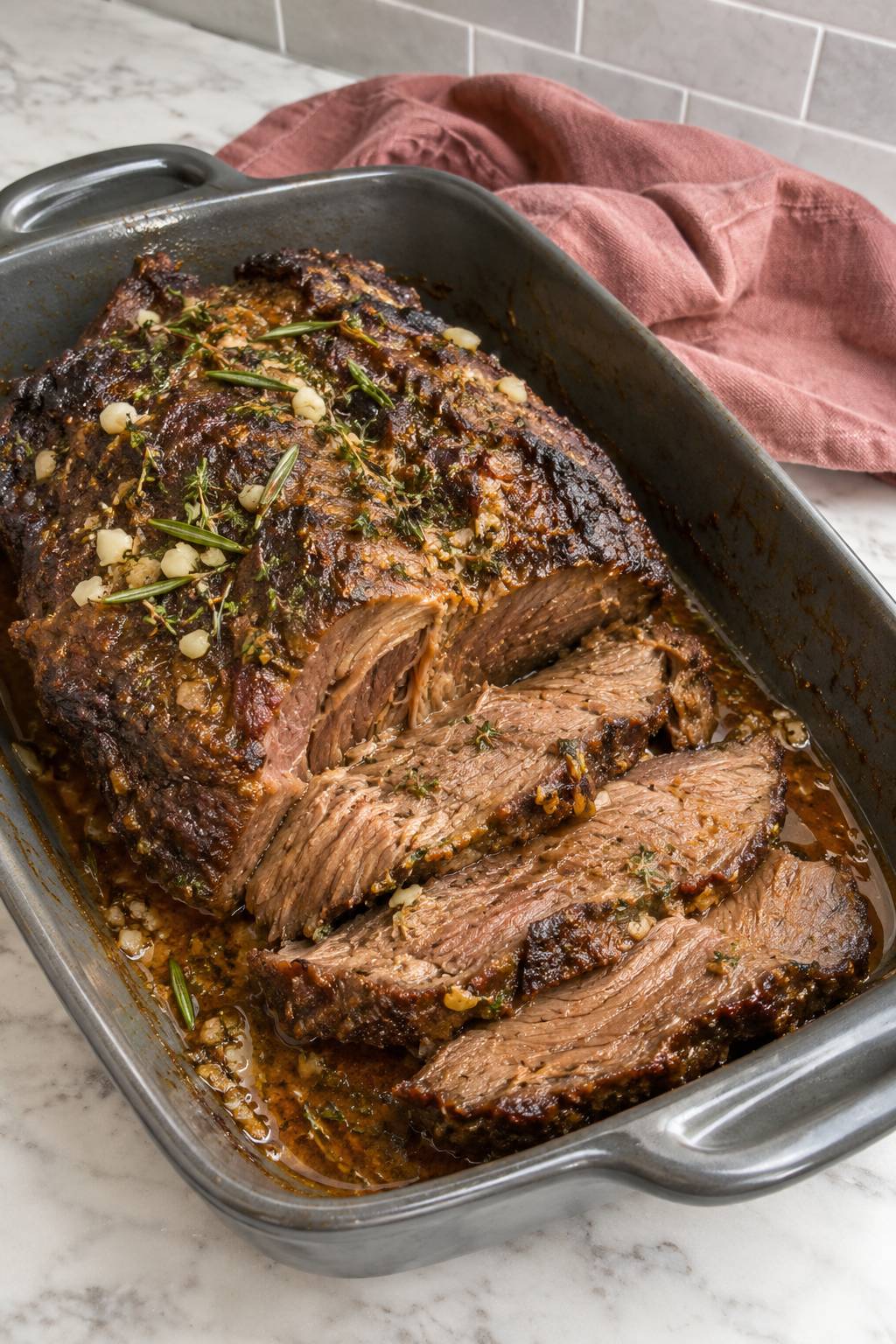
A good chuck roast turns richly browned and tender through a slow braise. Here, garlic, rosemary, and thyme mingle with beef broth and lemon juice, while softened butter helps the herbs coat the roast. The result is savory meat with plenty of flavorful juices to spoon over each slice.
The method has two useful stages: a tightly covered bake to soften the meat, followed by a brief uncovered finish to deepen the crust. Let tenderness guide the covered cooking, since chuck roasts can vary in how long they need.
Why these ingredients work together
Boneless beef chuck roast has the hearty texture suited to slow cooking. Patting it dry before seasoning helps the surface brown during searing. Kosher salt and freshly ground black pepper season the beef, while olive oil helps it make good contact with the hot skillet.
Softened unsalted butter makes a spreadable base for chopped garlic, fresh rosemary, and thyme leaves. That mixture coats the roast with aromatic herbs as it cooks. Low-sodium beef broth brings savory depth to the pan, and fresh lemon juice adds a bright note that balances the richness without taking over.
Build flavor before the braise
Sear the roast on its broad sides until deeply browned. This step creates a flavorful surface and leaves browned bits in the skillet. After transferring the beef to a roasting pan with enough room for the liquid, loosen those bits with the broth and lemon juice. Scraping the skillet well helps carry their flavor into the pan juices.
Spread the herb butter over the top and sides, then cover the roasting pan tightly with foil. A snug seal traps steam around the meat during the covered bake. If the foil is loose or the pan is not tightly covered, the liquid can evaporate more quickly and the roast may remain firm.
Let tenderness set the pace
The roast is ready to move on when a fork enters readily and the meat yields with little resistance. If it still feels firm, keep it covered and continue cooking in the intervals listed on the recipe card. The base cooking time is a guide; additional covered time may be needed for the chuck to become tender.
Once the roast is tender, spoon pan juices over it before the uncovered finish. Keep an eye on the liquid level: if the pan is nearly dry, add the water specified on the card around the meat. The uncovered stage deepens the browned crust, while the juices help keep the roast moist for serving.
Rest, slice, and keep the juices
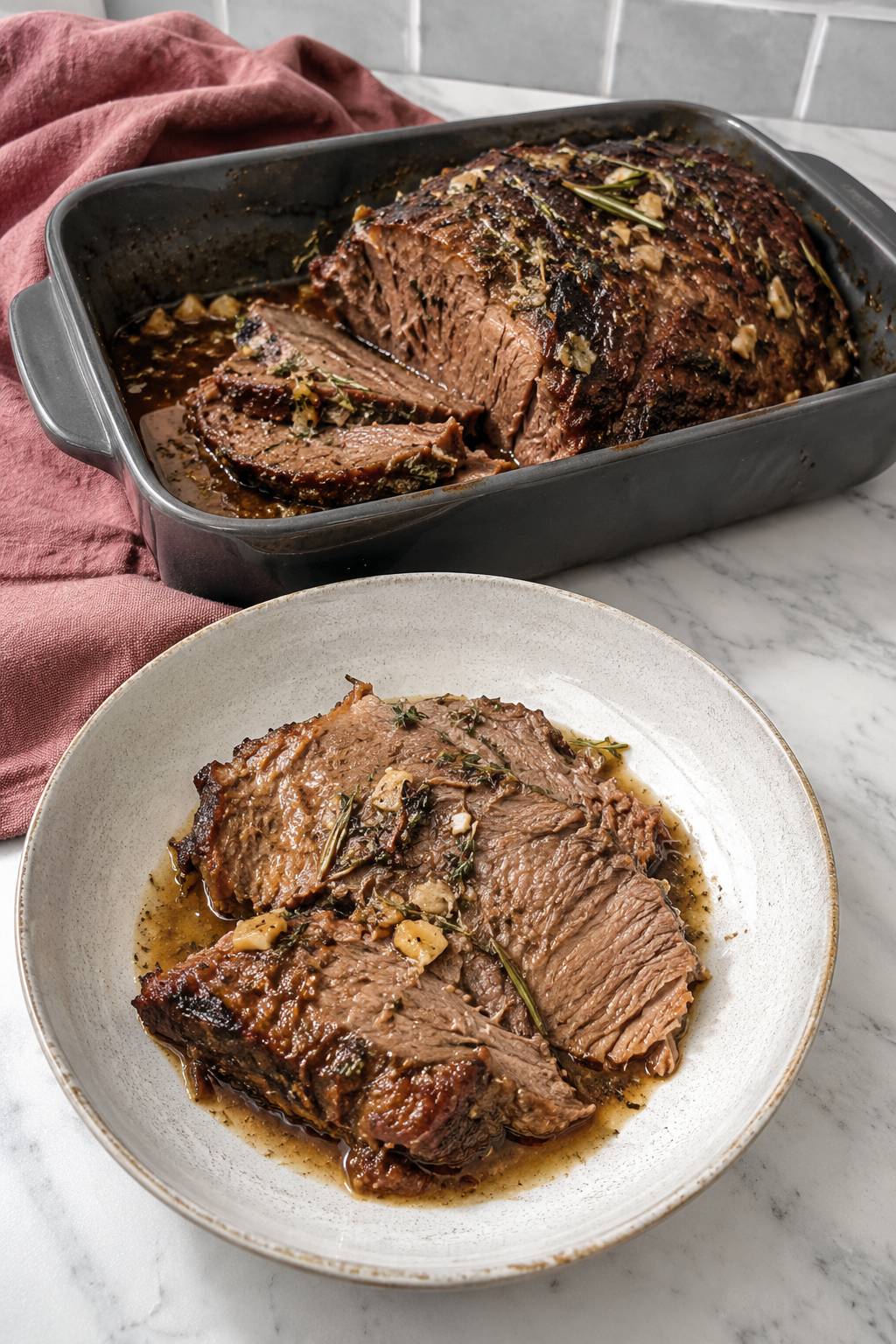
After baking, transfer the roast to a cutting board and tent it loosely with foil while it rests. Skim excess fat from the pan juices. Slice across the grain into thick pieces, or separate the roast into large pieces if it is very tender. Return the meat to the roasting pan and spoon the juices over it.
For leftovers, refrigerate the meat with its juices in a covered container. Reheat it covered until heated through, so the roast stays surrounded by moisture.
Frequently Asked Questions
How can I tell when the chuck roast is tender?
Pierce the meat with a fork. It should yield readily, with little resistance. If it still feels firm, cover it again and continue cooking in the additional intervals listed on the recipe card; chuck roast may need more covered time.
Why is the roast covered for most of the bake?
A tight foil cover traps steam around the meat while it cooks. That covered stage helps the chuck roast become tender. The later uncovered finish deepens the browned crust, so keep the pan covered until the meat yields readily.
Can I serve the roast with its pan juices?
Yes. Skim excess fat from the juices, then spoon them over the sliced or separated meat in the roasting pan. The broth, lemon juice, and browned bits give the juices savory flavor that complements the garlic and herbs.
Garlic Herb Chuck Roast
6
servings15
minutes4
hours5
minutes590
kcal4
hours40
minutesBeef chuck roast is seared, coated with garlic, rosemary and thyme, then slowly braised until tender. A short uncovered finish deepens the browned crust while keeping plenty of juices for serving.
Ingredients
3 1/2 lb boneless beef chuck roast, approximately 3 inches thick
2 tsp kosher salt
1 tsp freshly ground black pepper
2 tbsp olive oil
2 tbsp unsalted butter, softened
2 tbsp chopped fresh garlic
1 tbsp chopped fresh rosemary
1 tbsp fresh thyme leaves
2 cups low-sodium beef broth
1 tbsp fresh lemon juice
Directions
- Preheat the oven to 325°F. Pat the beef chuck roast dry and season all over with the salt and pepper. Mix the softened butter, garlic, rosemary and thyme in a small bowl.
- Heat the olive oil in a large skillet over medium-high heat. Sear the roast for 5 minutes on each broad side, 10 minutes total, until deeply browned. Transfer to a 9×13-inch roasting pan with sides at least 2 inches high.
- Reduce the skillet heat to medium. Carefully add the beef broth and lemon juice, scraping up the browned bits. Simmer for 5 minutes, then pour the liquid around the roast.
- Spread the garlic-herb butter over the top and sides of the roast. Cover the roasting pan tightly with foil, crimping it around the edges to trap steam. Bake for 3 hours and 30 minutes. The meat should yield readily when pierced with a fork; if it still feels firm, continue covered in additional 20-minute intervals until tender.
- Remove the foil and spoon some pan juices over the roast. Bake uncovered for 20 minutes to deepen the crust. If the pan is nearly dry, add 1/2 cup water around the meat.
- Transfer the roast to a cutting board, tent loosely with foil and rest for 20 minutes. Skim excess fat from the pan juices. Slice the roast across the grain into thick slices, or separate it into large pieces if very tender. Arrange in the roasting pan and spoon the juices over the meat.
Notes
- The base cooking time includes 10 minutes of searing, 5 minutes of simmering, 3 hours and 30 minutes covered in the oven, and 20 minutes uncovered. Extra covered cooking, if needed, is additional.
- Chuck roast becomes tender as its connective tissue softens during slow cooking. A fork should slide in with little resistance; the internal temperature is commonly around 195–205°F at this stage.
- Refrigerate leftovers with their juices in a covered container for up to 4 days. Reheat covered at 300°F until heated through.