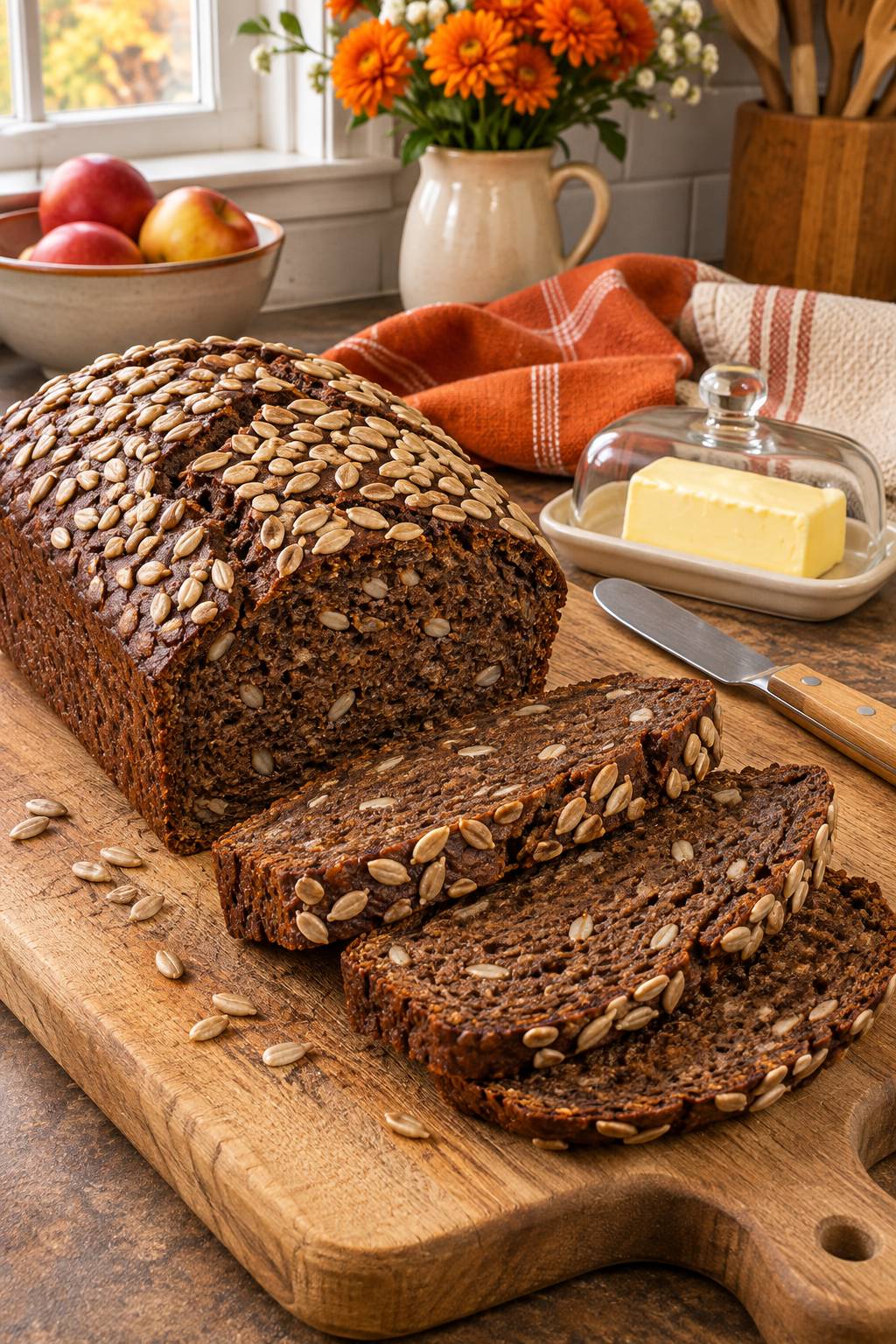
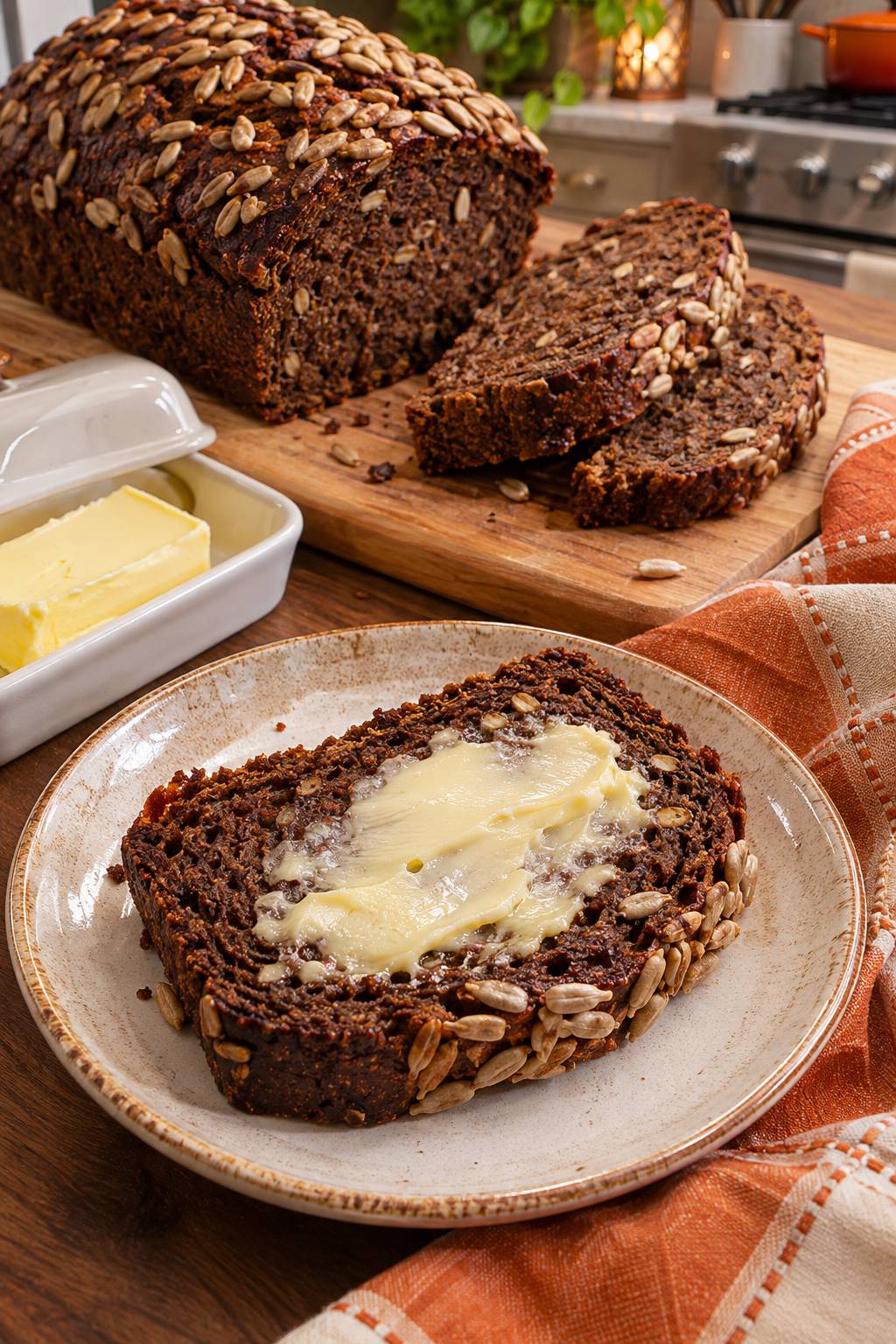
Pumpernickel is the dark, dense rye bread many people know from the deli counter, and this loaf brings that character home. Molasses, cocoa, and caraway give it deep color, gentle richness, and an earthy aroma. The result is a close-textured loaf that slices well and makes hearty toast or sandwich bread.
This is a bread that rewards patience. The dough is sticky, the rise is quiet, and the loaf needs to cool before you cut it. The notes below explain why each stage matters.
Why Rye Dough Feels Sticky
Rye flour contains less gluten than wheat, so it cannot build the stretchy network found in a white sandwich loaf. That is why this bread stays denser and moister. Expect soft, loose dough, and add extra flour only sparingly. Wetting your hands before shaping keeps the dough from clinging, and a slower rise is normal for rye.
Flavor from Molasses, Cocoa, and Caraway
Molasses deepens the crumb’s color and adds a mellow edge that balances the tang of rye, so choose unsulphured for a clean flavor. Unsweetened cocoa is not there to taste like chocolate. It rounds out the dark notes. Caraway seeds bring the signature aroma, so stir them in thoroughly so every slice carries it.
Low Heat, Foil, and a Deep Brown Crust
The low, slow bake is what makes this loaf work. Tenting the pan with foil at first lets the center set and turn moist before the surface darkens too much. Removing the foil lets the crust dry and deepen. Watch the color rather than the clock, and check the center with an instant-read thermometer. Brushing with egg white helps the sunflower seeds stick, and the single shallow cut gives the top a tidy place to open.
Cool Fully Before Slicing
Patience matters most at the end. Let the loaf rest briefly in the pan, then move it to a wire rack. Rye starches keep setting as the bread cools, so cutting too early leaves a gummy crumb. Wait until it is fully cool, then use a sharp knife with a gentle sawing motion.
Frequently Asked Questions
Why is my pumpernickel dough so sticky?
Rye flour has less gluten than wheat, so the dough stays soft and loose even when it is well mixed. Wet your hands before shaping, and add the reserved bread flour only a little at a time if the dough clings heavily. Aim for soft, smooth, and slightly tacky rather than dry.
Can I slice the bread right after baking?
It is better to wait. Cool the loaf in the pan briefly, then move it to a wire rack and let it cool completely before cutting. Rye starches are still setting during cooling, so cutting early can leave the crumb gummy. Patience gives you clean, even slices with a tender texture.
Why does the loaf need foil at the start of baking?
The foil tent shields the loaf during the early part of the bake. It gives the center time to set and turn moist before the surface darkens too much. After the foil comes off, the crust dries and develops its deep brown color, which gives the bread its classic dark look.
Slow-Baked Pumpernickel Bread with Sunflower Seeds
12
servings25
minutes1
hour30
minutes160
kcal4
hours40
minutesA dark, close-textured rye loaf made with molasses, cocoa, and caraway, baked low and slow at 300°F and topped with sunflower seeds. It slices well once fully cooled and makes a hearty toast or sandwich bread.
Ingredients
- Dough
1 1/8 cups warm water (110°F)
2 1/4 tsp (1 packet) active dry yeast
3 tbsp unsulphured molasses
1 tbsp unsweetened cocoa powder
2 tbsp unsalted butter, melted
1 tsp olive oil, for the rising bowl
1 tsp fine sea salt
2 tsp caraway seeds
1 1/2 cups dark rye flour
1 cup bread flour, plus 2 tbsp for dusting
1/3 cup raw unsalted sunflower seeds
- Topping and pan
1 tsp unsalted butter, for greasing the pan
1 egg white
1 tbsp water
3 tbsp raw unsalted sunflower seeds
Directions
- Dough
- Pour the warm water into a large bowl, sprinkle the yeast over it, and let it stand 5 minutes until foamy.
- Stir in the molasses, cocoa powder, melted butter, salt, and caraway seeds until smooth.
- Add the dark rye flour, 1 cup bread flour, and 1/3 cup sunflower seeds. Stir with a wooden spoon or sturdy spatula until a sticky, shaggy dough forms.
- Lightly flour your hands and a clean work surface with 1 tablespoon of the remaining bread flour. Knead the dough 5 minutes, adding more of the remaining flour a little at a time only if it sticks heavily to your hands, until soft, smooth, and slightly tacky.
- Shape the dough into a ball, place it in a lightly oiled bowl, cover, and let rise in a warm spot about 1 hour, until puffed and noticeably larger.
- Shaping
- Grease a 9×5-inch loaf pan with the 1 teaspoon of butter. Gently deflate the dough, shape it into a log about the length of the pan, and place it seam side down in the pan.
- Cover the pan and let the loaf rise about 45 minutes, until puffed and just cresting over the rim. Rye dough rises more slowly than wheat dough, so the rise may look modest.
- Baking
- While the loaf rises, heat the oven to 300°F with a rack in the lower-middle position.
- Whisk the egg white with 1 tablespoon water. Brush the top of the loaf with the egg wash, sprinkle with the 3 tablespoons sunflower seeds, and press them lightly into the surface. Make one shallow lengthwise cut down the center with a sharp knife.
- Loosely tent the pan with foil and bake 60 minutes. Remove the foil and bake 30 minutes more, until the crust is deep brown and an instant-read thermometer inserted in the center reads 200°F to 210°F.
- Cooling
- Cool the loaf in the pan 10 minutes, then turn it out onto a wire rack and cool at least 50 minutes more before slicing.
Notes
- Rye flour has less gluten than wheat flour, so this loaf stays denser and more moist than a sandwich white loaf. Wetting your hands before shaping keeps the sticky dough from clinging.
- The 300°F oven and foil tent give the center time to set and turn moist before the surface darkens too much. Removing the foil for the final 30 minutes lets the crust dry and color.
- Slicing before the loaf has cooled fully can leave the crumb gummy because the starches in rye are still setting as the bread cools.
- Wrap cooled bread tightly and store at room temperature up to 3 days, or freeze slices for up to 3 months.