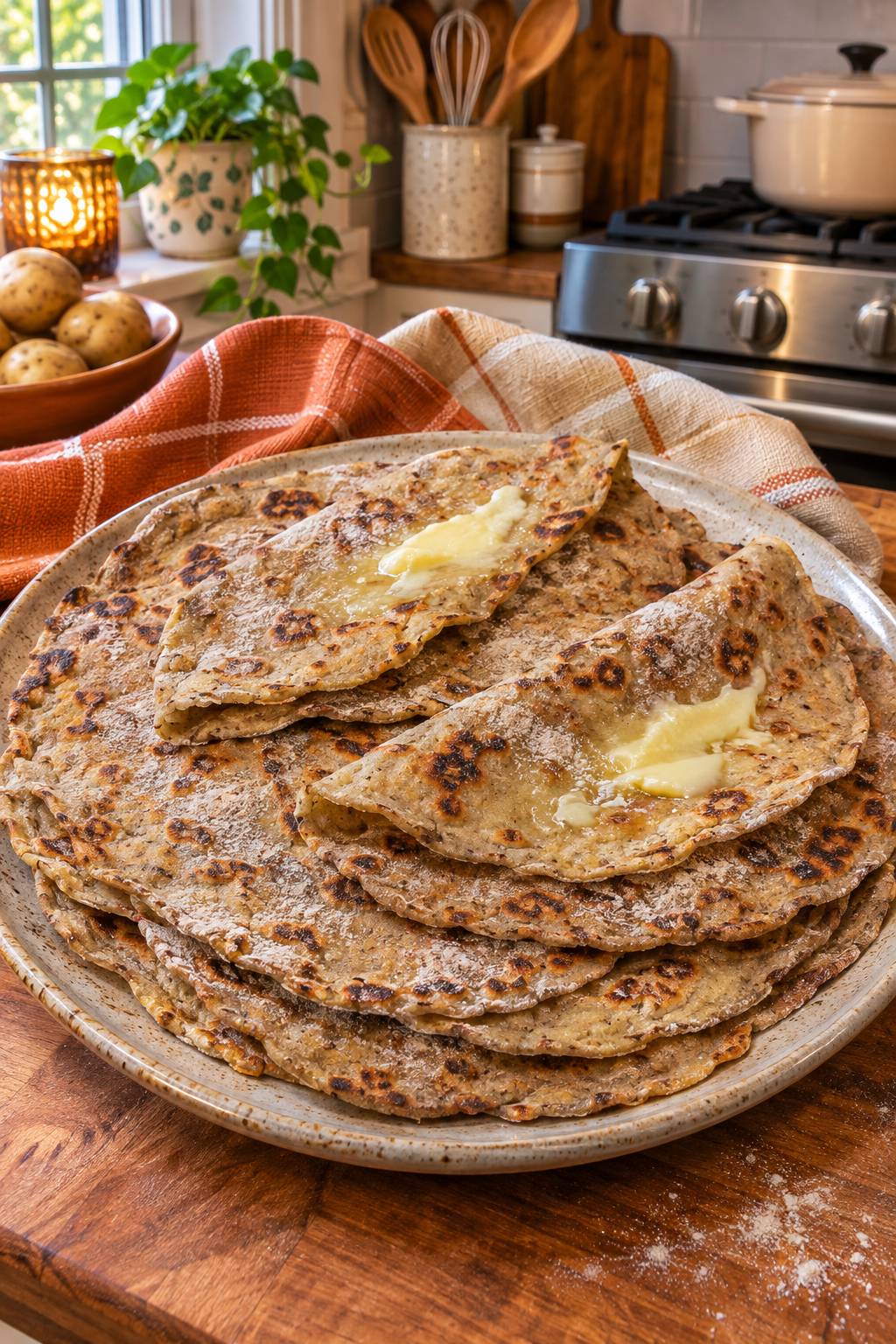
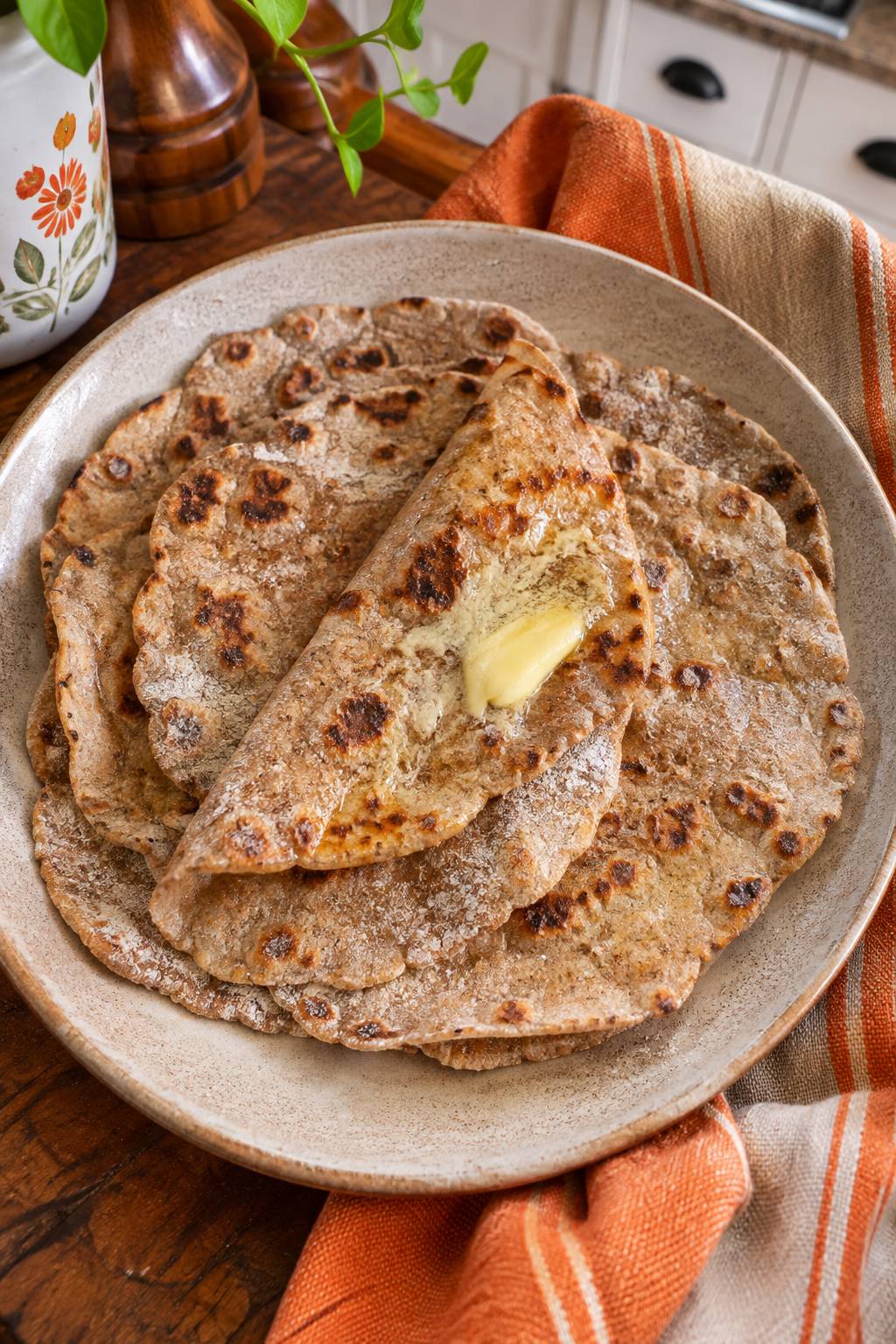
If you have never made Finnish flatbreads, these potato rye rounds are a welcoming place to start. They are thin and round, built from rye flour, all-purpose flour, and mashed potato, then dry-cooked until blistered and charred in spots.
Folded warm around softened butter, they make a comforting companion to a pot of soup, stew, or braise that has been simmering all afternoon.
Why the Mashed Potato Matters
The potato does more than add flavor. Cut the peeled russets into even pieces so they cook at the same pace, and drain them well once they turn fork-tender. Mash the hot potatoes until completely smooth, since lumps make the dough harder to work evenly.
Spread the mash out to cool completely before adding it. Cooled potato firms slightly, which makes the dough easier to mix and knead by hand, while warm mash can leave the dough loose and sticky.
Reading the Dough by Feel
Aim for a dough that is soft and slightly tacky, not dry or crumbly. Whisk the flours and salt together, then add the mash, melted butter, and warm water. Add extra water only a little at a time if the dough feels dry, and extra flour the same way if it turns sticky. Go slowly, because it is easy to overcorrect.
Rye flour contains less gluten than all-purpose flour, so cold dough tears easily when rolled. Kneading until smooth and then letting the dough rest under a towel gives the rye time to absorb moisture, so the dough relaxes and rolls into thinner rounds.
Rolling and Skillet Cooking
Roll the dough into thin, evenly thick rounds, and stack them with parchment or dust each lightly with flour. Keep them covered while you cook so they stay supple and don’t dry out.
A dry cast-iron or heavy skillet gives the most reliable blisters. Press each flatbread lightly with a spatula so it makes full contact. Look for charred spots rather than an even golden color, and lower the heat if the pan begins to smoke or the bread darkens too fast.
Keeping Them Soft and Serving Warm
As each flatbread leaves the skillet, wrap it in a clean kitchen towel. The towel traps steam, keeping the bread pliable. Without it, flatbreads cool quickly, stiffen, and crack when folded.
Spread the warm rounds with softened butter, fold them in half or into quarters, and serve right away while the butter melts into the blistered spots.
Frequently Asked Questions
Do I need a cast-iron skillet for these flatbreads?
A cast-iron or other heavy skillet is the best choice because it holds steady heat, which helps the flatbreads blister and char in spots. Watch the color as you cook, and lower the heat if the pan starts to smoke or the flatbreads darken too fast.
Why does my dough tear when I roll it?
Rye flour contains less gluten than all-purpose flour, so dough can tear when it is rolled cold. Kneading, then letting the dough rest under a towel, gives the rye time to absorb moisture so the dough relaxes and rolls more easily.
Why wrap the flatbreads in a towel after cooking?
A clean towel traps steam, which keeps each flatbread soft and pliable while you cook the rest. Without that steam, the flatbreads can cool quickly, stiffen, and crack when you fold them in half or into quarters.
Finnish Potato Rye Flatbreads
6
servings40
minutes39
minutes280
kcal2
hours19
minutesThin, round flatbreads made from rye flour, all-purpose flour and mashed potato, dry-cooked in a skillet until blistered and charred in spots, then folded and served warm with butter.
Ingredients
- Dough
1 lb russet potatoes (about 2 medium), peeled and cut into 1-inch pieces
Cold water, enough to cover the potatoes by 1 inch (about 1 quart)
1 cup rye flour
1 1/4 cups all-purpose flour, plus 1 to 2 tbsp for adjusting and more for dusting
1 tsp fine salt
1 tbsp unsalted butter, melted
1/2 cup warm water, plus 1 to 2 tbsp as needed
- For serving
2 tbsp unsalted butter, softened
Directions
- Potato
- Place the potato pieces in a medium saucepan and cover with cold water by 1 inch. Bring to a boil over medium-high heat, then reduce the heat to medium-low and simmer until the potatoes are fork-tender, about 15 minutes. Drain well.
- Mash the hot potatoes until smooth with no lumps, then spread them on a plate or baking sheet and let cool completely, about 30 minutes.
- Dough
- In a large bowl, whisk together the rye flour, all-purpose flour and salt. Add the cooled mashed potatoes, melted butter and 1/2 cup warm water. Stir with a wooden spoon, then mix with your hands until a soft, slightly tacky dough forms. If the dough is too dry, add the extra water 1 tablespoon at a time. If it is too sticky, add all-purpose flour 1 tablespoon at a time. Use no more than 2 tablespoons of extra water or flour.
- Knead the dough on a lightly floured surface for about 5 minutes, until smooth. Cover with a clean kitchen towel and let rest for 30 minutes so the rye flour can absorb moisture and the dough becomes easier to roll.
- Shape
- Divide the dough into 12 equal pieces and roll each into a ball. On a lightly floured surface, roll each ball into a thin 7- to 8-inch round, about 1/16 inch thick. Stack the rounds with parchment between them or dust each lightly with flour, and cover them with a towel while you cook.
- Cook
- Heat a dry cast-iron or heavy skillet over medium-high heat for about 3 minutes. Cook one flatbread at a time for 1 minute per side, pressing lightly with a spatula, until blistered and charred in spots. If the pan begins to smoke or the flatbreads darken too fast, lower the heat slightly.
- Transfer each cooked flatbread to a clean kitchen towel and wrap it to keep it soft while you finish the rest.
- Serve
- Spread the warm flatbreads with the softened butter, fold them in half or into quarters, and serve right away.
Notes
- Rye flour contains less gluten than all-purpose flour, so the dough tears more easily when rolled cold. Letting it rest after kneading gives the flour time to hydrate and relaxes the dough for thinner rounds.
- Cooling the mashed potatoes firms them slightly, which makes the dough easier to handle when you mix and knead it by hand.
- Stacking the cooked flatbreads in a towel traps their steam, which helps keep them pliable. Without a towel, they can cool quickly, stiffen and crack more easily when folded.