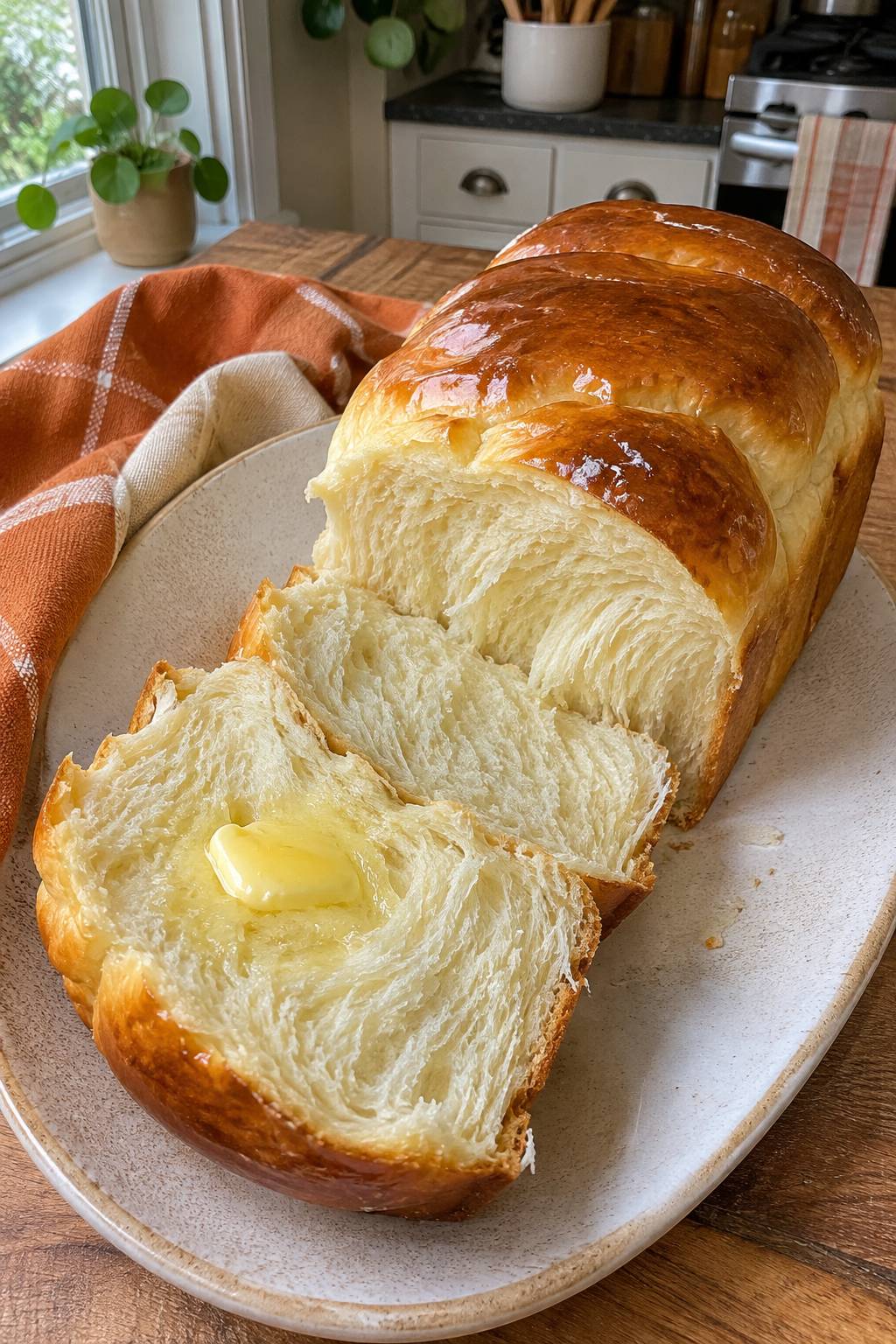
Japanese milk bread is the kind of loaf that tempts you to tear off the end before it has fully cooled. It is soft, lightly sweet, and so tender that a slice folds over without crumbling.
This version relies on a tangzhong, a cooked paste of flour and milk folded into the dough. It is a simple step, but it is the reason the crumb feels so fine and pillowy. Read through the tips below before you start.
Why the Cooked Flour Paste Matters
Tangzhong looks almost too simple to matter. You whisk flour into milk and cook it over gentle heat until the mixture thickens into a paste. Keep whisking the whole time, since flour stuck to the bottom of the pan can scorch and turn gritty. The paste is ready when your whisk leaves visible lines, a sign it has thickened enough to blend smoothly into the dough.
Let the paste cool to lukewarm before it goes in. This habit matters more than it seems. A hot paste can damage the yeast and slow the rise, and your loaf will not puff the way it should. Scrape it into a small bowl and be patient. The wait is worth it.
Building a Smooth, Glossy Dough
Soft, enriched dough can feel sticky at first, and that is normal. Combine the dry ingredients on low speed so the yeast and salt are evenly distributed, then add the cooled paste, the warm milk, and the egg. Knead until the dough is smooth and elastic, letting the mixer do most of the work.
Butter is where many home cooks rush, so go slowly. Add the pieces a few at a time and let each one absorb before adding the next. The dough will look loose and greasy at first, then turn glossy and silky. It is ready when it stretches into a thin, translucent sheet without tearing.
Shaping, Rising, and Getting a Golden Top
Shaping gives the loaf its character. Press out the air, divide the dough into equal pieces, and let them relax so they are easy to roll. Tight rolls and seam-side-down placement keep the loaf neat in the pan and help it rise evenly for a fine, even crumb.
Judge the rise by shape, not by the clock. The dough should dome gently above the rim of the pan and look soft and airy. Meanwhile, the egg yolk wash brushed over the top creates that deep golden color. If the crust darkens too quickly near the end of baking, loosely tent it with foil so the top does not burn.
Finishing and Keeping the Loaf Soft
Melted butter brushed over the loaf as it leaves the oven adds richness and a soft sheen to the crust. Coat both the top and the sides, then move the loaf to a wire rack. Resist slicing right away. Letting it cool lets the crumb set so the slices hold together cleanly.
Once fully cooled, wrap the loaf in plastic and keep it at room temperature. Refrigerating bread dries it out faster, so the counter is the better choice.
Frequently Asked Questions
Can I skip the cooked flour paste to save time?
The paste is what gives this loaf its soft, pillowy texture, so it is not a step to skip if you want the bread to feel like this recipe. It is a quick stovetop task, and whisking constantly keeps it smooth. Let it cool to lukewarm before adding it to the dough.
How do I know when the dough is kneaded enough?
Look for dough that is smooth, glossy, and elastic, with a gentle spring when pressed. The most reliable test is stretching a small piece into a thin, translucent sheet without tearing. If it tears, keep kneading a little longer, and avoid adding extra flour, which can make the crumb heavier.
Why is my loaf browning faster than I expected?
The egg yolk wash encourages deep color, and ovens vary, so the top can darken quickly. Check the loaf near the end of baking and loosely tent it with foil if the crust is getting too dark. Use the recipe card’s thermometer reading to confirm doneness.
Fluffy Japanese Milk Bread with Golden Butter Crust
8
servings25
minutes34
minutes340
kcal4
hours14
minutesA soft, enriched white loaf made with a cooked flour and milk paste (tangzhong), baked in a 9×5-inch pan and finished with an egg wash and melted butter for a glossy, golden top. The slices are tender and pillowy with a fine, even crumb.
Ingredients
- Tangzhong
3 tbsp bread flour
1/2 cup whole milk
- Dough
3 cups bread flour (about 12.75 oz)
1/4 cup granulated sugar
1 tsp fine sea salt
2 1/4 tsp instant yeast (1 packet)
1/2 cup whole milk, warmed to about 110°F
1 large egg, at room temperature
3 tbsp unsalted butter, softened and cut into pieces
1 tsp neutral oil, for the bowl
1 tsp unsalted butter, softened, for the pan
- Golden Finish
1 large egg yolk
1 tbsp whole milk
2 tbsp unsalted butter, melted
Directions
- Tangzhong
- In a small saucepan, whisk the 3 tablespoons bread flour and 1/2 cup milk until smooth. Cook over medium-low heat, whisking constantly, for about 4 minutes, until the mixture thickens into a paste and the whisk leaves visible lines.
- Scrape the paste into a small bowl and let it cool to lukewarm, about 15 minutes, before adding it to the dough.
- Dough
- Grease the 9×5-inch loaf pan with the softened teaspoon of butter. In a stand mixer fitted with the dough hook, combine the 3 cups bread flour, sugar, salt and yeast on low speed.
- Add the cooled tangzhong, the 1/2 cup warm milk and the egg. Mix on low speed for about 2 minutes until a shaggy dough forms, then knead on medium-low for about 10 minutes until smooth and elastic.
- With the mixer running on low, add the butter a few pieces at a time, letting each addition absorb before adding the next. Knead for 5 to 6 more minutes until the dough is smooth, glossy and stretches into a thin, translucent sheet without tearing.
- First Rise
- Shape the dough into a ball and place it in a bowl greased with the neutral oil. Cover with plastic wrap or a clean towel and let it rise in a warm spot for about 60 minutes, until doubled in size.
- Shape and Proof
- Turn the dough onto a lightly floured counter, press out the air and divide it into 3 equal pieces. Cover and rest for about 15 minutes.
- Flatten each piece into a rectangle about 6 inches wide. Roll it up tightly from the short end, pinch the seam closed and place the 3 rolls seam-side down in the greased pan.
- Cover the pan and let the dough rise for about 45 minutes, until it domes about 1 inch above the rim. Meanwhile, preheat the oven to 350°F with a rack in the center.
- Bake
- Whisk the egg yolk with 1 tablespoon milk and gently brush the top of the loaf.
- Bake for about 30 minutes, until the top is deep golden brown and an instant-read thermometer inserted into the center reads 190°F. If the top browns too quickly, loosely tent it with foil during the last 10 minutes.
- Remove the loaf from the oven and immediately brush the top and sides with the 2 tablespoons melted butter. Turn the loaf out onto a wire rack and let it cool for about 60 minutes before slicing.
Notes
- Let the tangzhong cool to lukewarm before adding it to the dough. A hot paste can damage the yeast and slow the rise.
- Brushing melted butter on the hot loaf adds richness and a soft sheen to the crust, while the egg yolk wash applied before baking is what gives the top its deep golden color.
- Store the cooled loaf wrapped in plastic at room temperature for up to 3 days. Refrigerating bread dries it out faster.