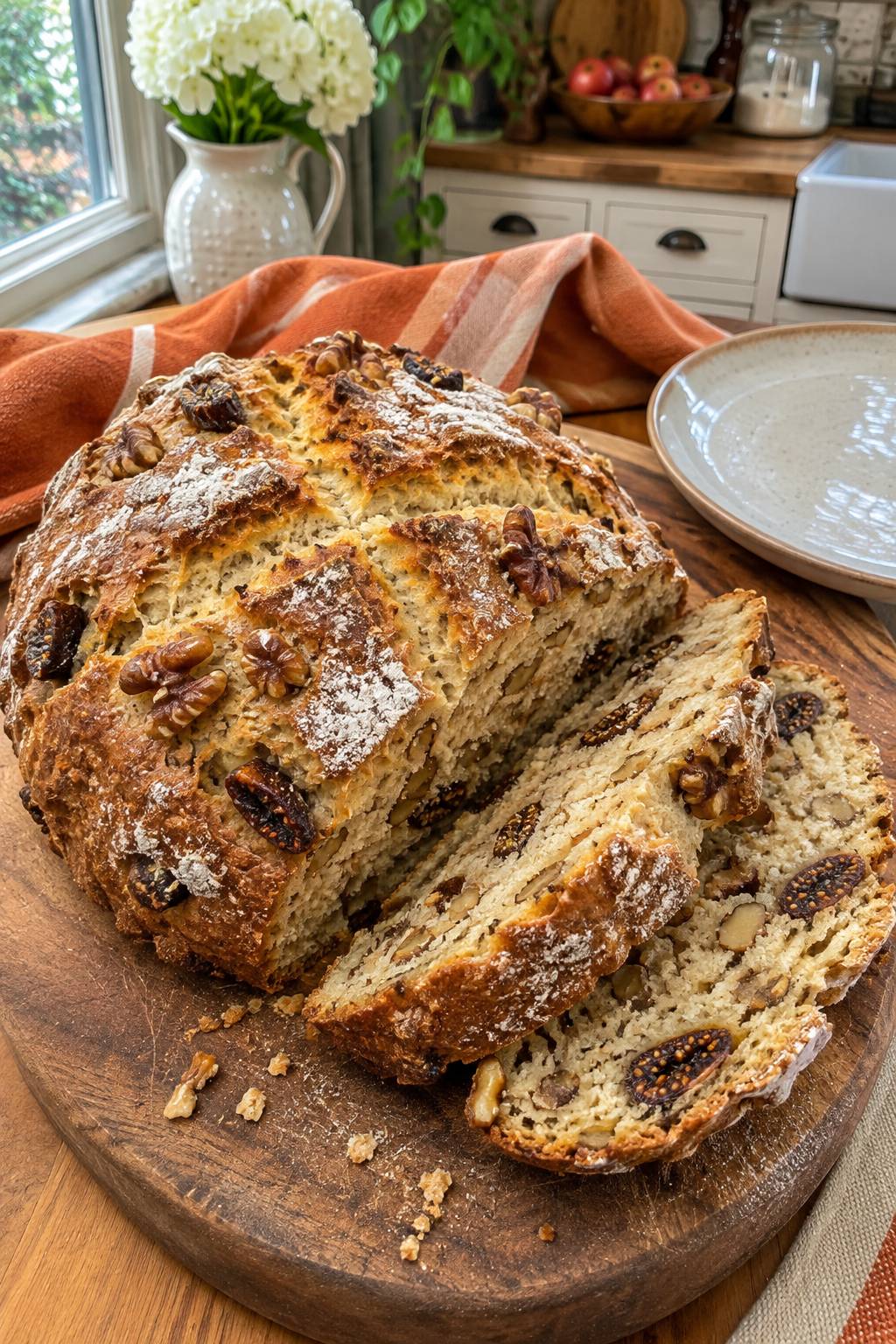
Soda bread is one of the most forgiving loaves you can bake at home. This rustic walnut fig version needs no yeast and no long rise, so it fits easily into a busy day. It does reward a little attention to detail, and this article walks you through the parts that matter most so your loaf turns out with a golden crust and a tender crumb.
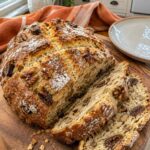
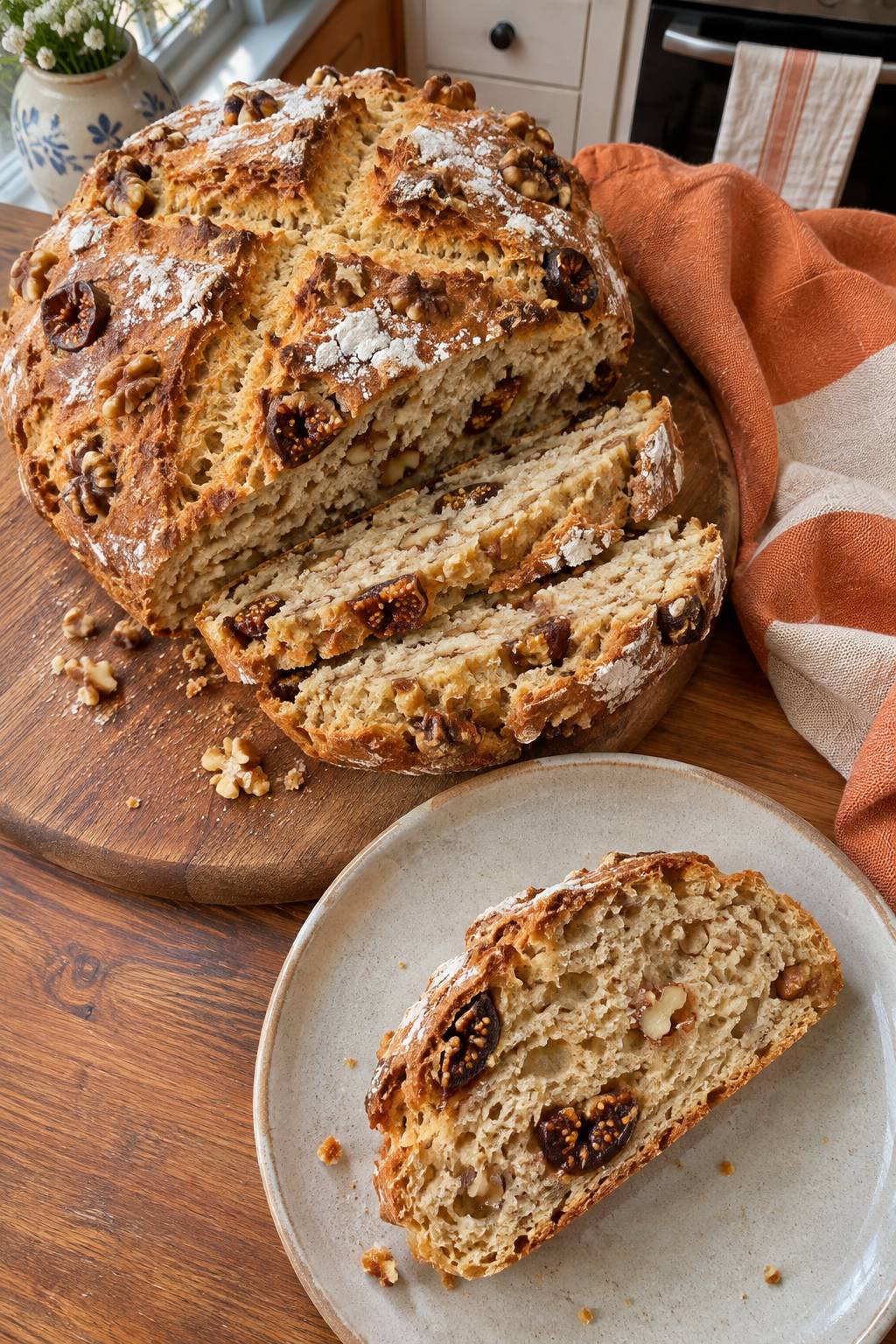
The loaf is round, cross-scored, and studded with toasted walnuts and chopped dried figs. Its flavor is mildly sweet and nutty, with a hearty edge from the whole wheat flour. It makes a natural partner for a slow-cooked pot roast, a pot of soup, or a braised dish on a cold evening.
Why Buttermilk and Baking Soda Work Together
Baking soda is the leavening here, and it needs an acid to react and lift the dough. Buttermilk supplies that acid, along with a gentle tang and the soft texture that suits a quick bread. Use cold buttermilk, and bake the dough soon after mixing so the leavening is still active when the loaf goes into the oven.
The blend of all-purpose and whole wheat flour gives the loaf enough structure while keeping it wholesome and slightly nutty. Spoon the all-purpose flour into your measuring cup and level it off rather than scooping straight from the bag. Packed flour can make the dough dry and tight.
Handling the Dough Gently
This dough should be handled as little as possible. Stir the buttermilk mixture into the dry ingredients only until the dough is soft and shaggy with no dry patches of flour. Overworking it builds toughness, which is the most common reason soda bread turns out heavy. When you turn the dough out, a few light kneads are enough to bring it together into a round.
Fold the walnuts and figs in gently so they distribute without tearing the dough. Dried figs are sticky, so kitchen shears are easier to work with than a knife. Dip the blades in flour first, and the pieces will separate instead of clumping together.
Toasting Walnuts and Scoring the Loaf
Toasting the walnuts deepens their flavor and gives them a richer taste than raw nuts. Watch them closely in the dry skillet and stir often, because they move from fragrant to scorched quickly. Let them cool before you chop them so the knife works cleanly.
The cross cut on top does more than look traditional. It gives the loaf a controlled place to open as it bakes, so the center rises evenly instead of splitting along a random seam. Use a sharp knife and cut firmly and confidently.
Judging Doneness and Resting the Loaf
The best signs of doneness are color and sound. The crust should be deep golden brown, and the loaf should sound hollow when you tap the bottom. An instant-read thermometer inserted into the center can confirm that the interior has fully cooked, but the tap test is a dependable check on its own.
Resist the urge to slice right away. Cutting into a hot loaf releases steam before the interior has set, which can leave the crumb gummy. Letting it rest on a wire rack gives the crumb time to firm up, so each slice holds together with the tender, slightly crumbly texture this bread is known for.
Frequently Asked Questions
Why does my soda bread come out dense?
Dense soda bread usually comes from overworked dough, leavening that has sat too long before baking, or flour packed into the measuring cup. Stir only until no dry flour remains, knead just a few times, and bake soon after mixing so the baking soda and buttermilk can still lift the loaf in the oven.
Why do I need to let the bread cool before slicing?
Cooling lets the interior finish setting after baking. If you cut into a hot loaf, the steam escapes too quickly and the crumb can turn gummy and sticky. Resting on a wire rack for the full recommended time gives you clean slices with the tender, slightly crumbly texture this bread is known for.
How do I keep the figs from clumping when chopping?
Dried figs are sticky, so cut them with kitchen shears and dip the blades in flour between cuts. The flour keeps the pieces separate. Remove the stems first, then quarter each fig so the pieces distribute evenly through the dough when you fold them in gently.
Rustic Walnut Fig Soda Bread
12
servings15
minutes45
minutes280
kcal1
hour30
minutesA round, cross-scored loaf leavened with baking soda and buttermilk and studded with toasted walnuts and chopped dried figs. It bakes to a deep golden crust with a tender, slightly crumbly crumb.
Ingredients
- Dry ingredients
3 cups all-purpose flour, spooned into the measuring cup and leveled
1 cup whole wheat flour
1 tsp baking soda
1 tsp fine sea salt
- Wet ingredients
1 3/4 cups cold buttermilk
1 tbsp honey
2 tbsp unsalted butter, melted and cooled slightly
- Add-ins
1 cup walnut halves, toasted and coarsely chopped
1 cup dried figs, stems removed and quartered
- For shaping and baking
1 tbsp all-purpose flour, for dusting
Parchment paper for the baking sheet
Directions
- Set an oven rack in the center position and preheat the oven to 400°F. Line a large baking sheet with parchment paper.
- Place the walnut halves in a dry skillet over medium heat. Toast, stirring often, until fragrant and a shade darker, about 5 minutes. Let cool, then coarsely chop.
- In a large bowl, whisk together the all-purpose flour, whole wheat flour, baking soda, and salt until evenly combined.
- In a measuring cup, whisk the buttermilk, honey, and melted butter until the honey dissolves.
- Pour the buttermilk mixture into the dry ingredients. Stir with a wooden spoon or fork until a soft, shaggy dough forms with no dry patches of flour. Gently fold in the walnuts and figs.
- Turn the dough onto a lightly floured surface and knead 4 or 5 times, just until it holds together. Shape it into a round about 7 inches across and 2 inches tall, then transfer it to the prepared baking sheet.
- Using a sharp knife, cut a 1/2-inch-deep cross across the top of the loaf. Dust the top lightly with the 1 tbsp flour.
- Bake for 40 minutes, until the crust is deep golden brown and the loaf sounds hollow when tapped on the bottom. An instant-read thermometer inserted into the center should read about 200°F.
- Transfer the loaf to a wire rack and let it cool for at least 30 minutes before slicing.
Notes
- Baking soda needs an acid, here the buttermilk, to react and lift the loaf. Bake the dough soon after mixing so the leavening is still active.
- Dried figs can be cut more easily with kitchen shears dipped in flour, which keeps the sticky pieces from clumping together.
- Cutting into the loaf while it is still hot can make the crumb gummy, so the 30-minute cooling time gives the interior a chance to set.