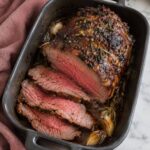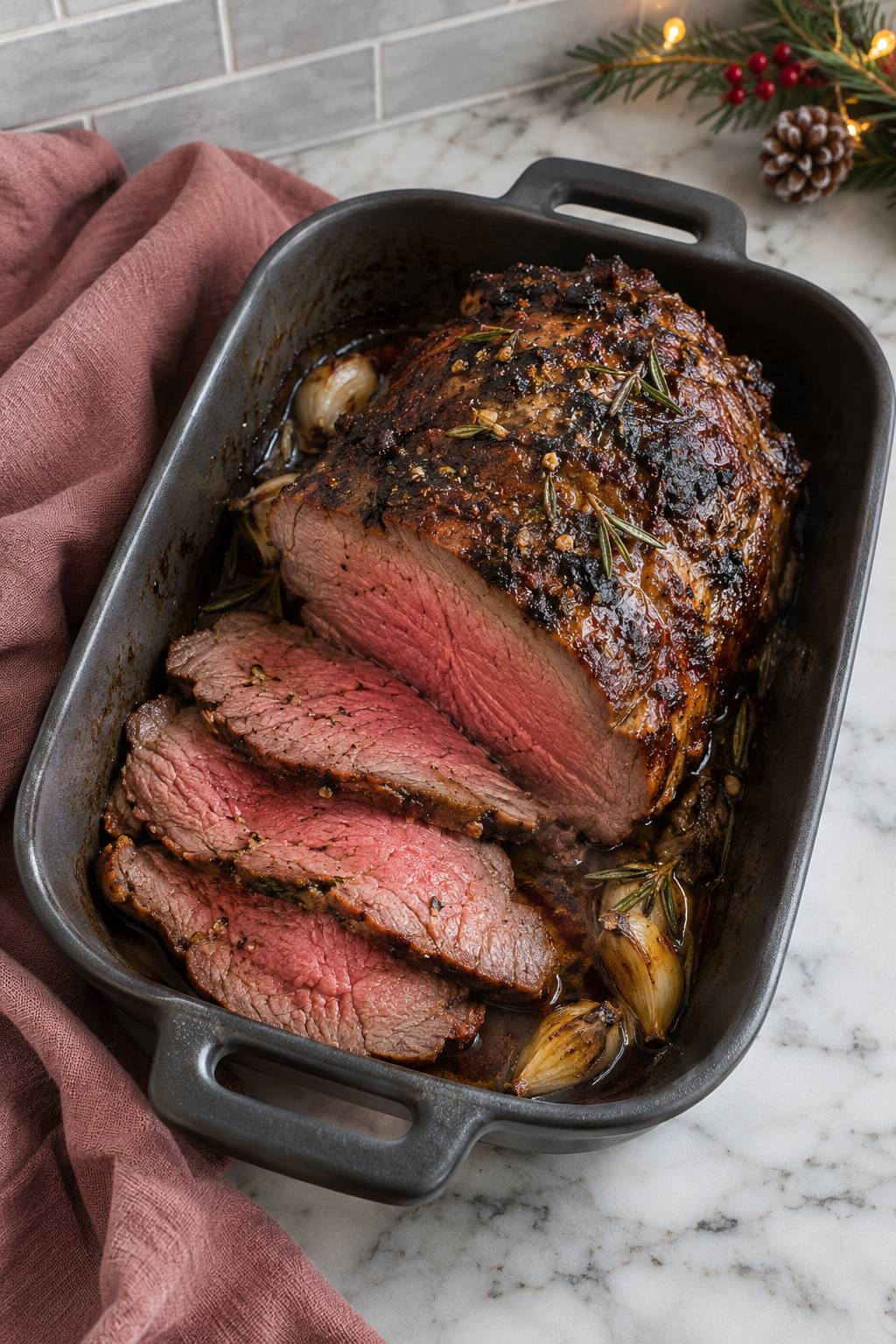
Christmas Roast Beef is all about the contrast between the deeply browned rosemary-garlic crust and the tender, thin slices underneath. Boneless top sirloin gives you a roast that’s easy to carve without working around a bone. The shallots and whole garlic cloves soften in the pan alongside the beef, and the savory jus ties everything together. You get plenty of flavor from the drippings and browned bits without making a separate gravy.
Brown the Beef Before Adding the Rosemary and Garlic
Pat the roast dry so surface moisture doesn’t get in the way of browning. Olive oil helps the fine sea salt and coarsely ground black pepper coat the surface evenly. The pepper gives the crust a noticeable bite, while the finely chopped rosemary and minced garlic spread easily in their olive oil mixture.
The key is to keep that rosemary-garlic mixture off the beef during the initial browning. Adding it once the outside has browned keeps the minced garlic from scorching. Spread it over the sides as well as the top so the slices pick up that savory crust along the edges.
Give the Shallots and Whole Garlic Room in the Pan
The garlic does different jobs depending on how you cut it. Minced garlic seasons the crust, while the peeled whole cloves soften into tender bites you can serve alongside the beef. Halving the small shallots lengthwise leaves you with pieces that are easy to lift out of the pan and arrange on the platter.
The broth belongs around the beef, not over it. Pouring it into the metal roasting pan around the roast leaves the rosemary-garlic coating where you put it and gives the shallots and whole cloves liquid to roast in. Low-sodium beef broth keeps the jus from leaning too salty as it simmers with the seasoned drippings.
Read the Grain Before You Season
It’s easier to see which way the muscle fibers run before you season the roast. Look for the lines running along the surface and make a mental note of their direction. Once the crust has browned, those lines can be harder to spot.
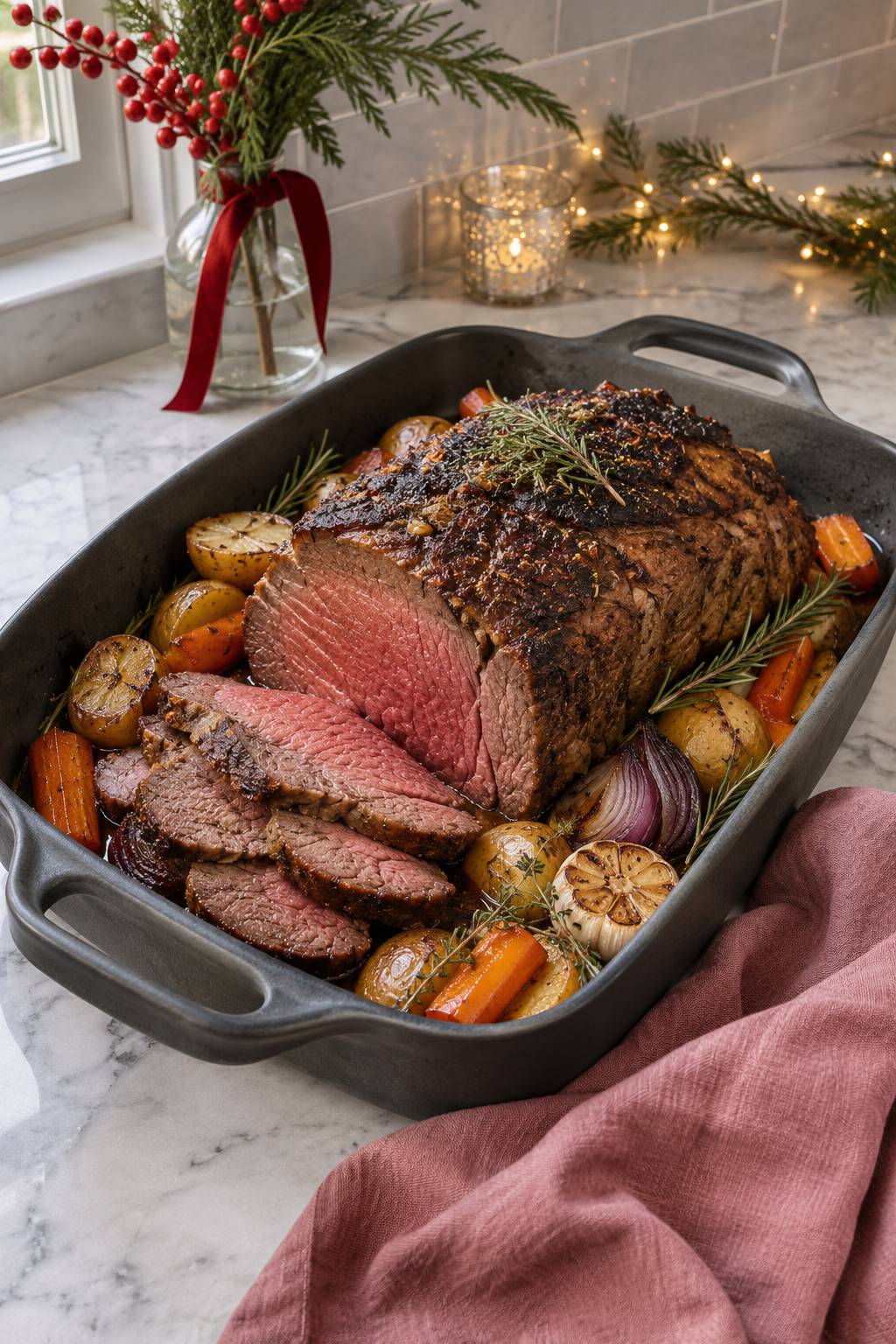
When you carve the rested roast, cut thin slices across those lines rather than following them. Cutting across the grain shortens the fibers so the beef is easier to chew. The goal is a slice that feels tender without losing the browned edge that gives it so much flavor.
Scrape the Roasting Pan for a More Flavorful Jus
Once the beef is resting and the shallots and whole garlic cloves are on the platter, skim excess fat from the drippings. The browned bits stuck to the pan are worth keeping: scrape them loose with the remaining broth so they go into the saucepan with the drippings. The finished jus is meant to be pourable, not thick like gravy. Spoon it over the carved beef and serve the rest at the table.
Frequently Asked Questions
How can I tell when the roast is done?
Insert an instant-read thermometer into the thickest part of the roast and use the doneness target on the recipe card. The shape of the roast affects how quickly it cooks, and the color of the sliced beef isn’t a reliable way to judge doneness.
What if the roasting pan looks nearly dry?
If the pan is nearly dry when you check the roast, add reserved broth as directed on the recipe card. Pour it around the beef rather than over the crust, and keep the rest of the reserved broth for loosening the browned bits for the jus.
What should I do with the juices on the cutting board?
Stir them into the jus after you carve the beef. Those juices are easy to overlook when you’re moving the slices to the platter, but they belong with the pan drippings. Add them before spooning the jus over the meat.
Christmas Roast Beef
8
servings15
minutes1
hour20
minutes320
kcal1
hour50
minutesA boneless beef top sirloin roast gets a deeply browned rosemary and garlic crust in the oven. Slice it thinly and serve with tender roasted shallots, whole garlic cloves, and pan jus.
Ingredients
1 boneless beef top sirloin roast (3 lb)
2 tbsp olive oil, divided
1 1/4 tsp fine sea salt
1 tsp coarsely ground black pepper
1 tbsp finely chopped fresh rosemary
3 garlic cloves, minced
6 garlic cloves, peeled and left whole
4 small shallots, peeled and halved lengthwise
1 1/2 cups low-sodium beef broth, divided
Directions
- Set a rack in the middle of the oven and preheat to 450°F. Pat the roast dry and rub it all over with 1 tbsp olive oil, the salt, and the pepper. Set it fat side up in a 9 x 13-inch metal roasting pan. Stir the remaining 1 tbsp olive oil together with the chopped rosemary and minced garlic.
- Roast for 15 minutes to brown the outside.
- Reduce the oven temperature to 325°F. Briefly pull out the pan and spread the rosemary-garlic mixture over the top and sides of the roast. Scatter the shallots and whole garlic cloves around the beef and pour 1 cup broth into the pan around it. Roast for about 60 minutes more, until an instant-read thermometer inserted into the thickest part registers 145°F. Start checking after 45 minutes, since the shape of the roast affects how quickly it cooks. If the pan is nearly dry when you check, add 1/4 cup of the reserved broth.
- Transfer the beef to a cutting board, tent it loosely with foil, and let it rest for 20 minutes. While it rests, transfer the shallots and whole garlic cloves to a serving platter. Skim excess fat from the drippings. Pour the remaining reserved broth into the roasting pan and scrape up the browned bits. Pour the liquid into a small saucepan and simmer over medium heat for 5 minutes.
- Slice the beef thinly across the grain and arrange it with the shallots and garlic. Stir any juices from the cutting board into the jus and spoon some over the slices. Serve the rest at the table.
Notes
- Look at the roast before seasoning to see which way the muscle fibers run. Slicing perpendicular to those fibers shortens them, making the beef easier to chew.
- Use the thermometer rather than the color of the sliced beef to judge doneness.