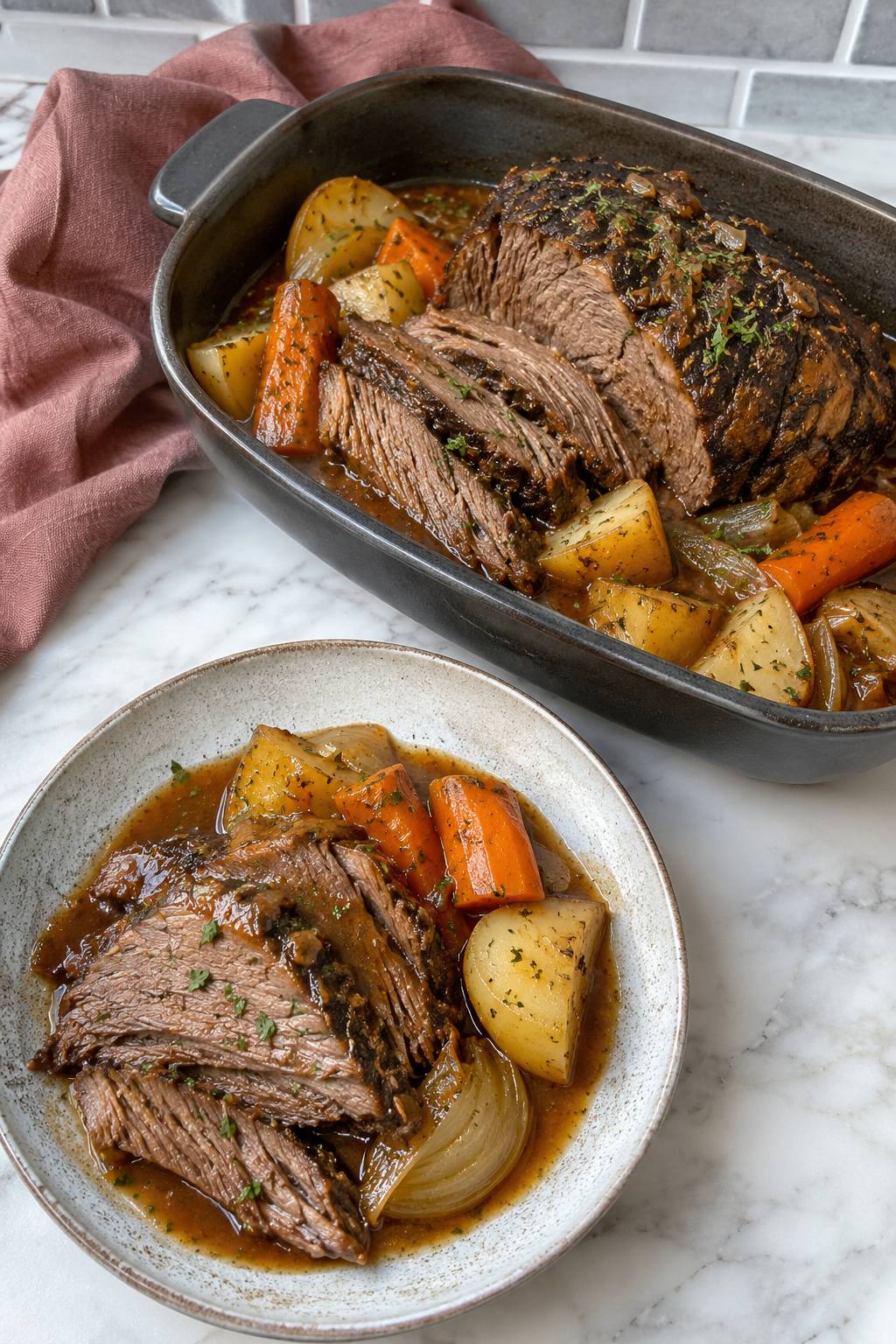
A good Sunday pot roast gives you thick slices of beef that yield to a fork, potatoes and carrots that still hold their shape, and a gravy light enough to spoon over everything. This American classic gets its depth from a deeply browned chuck roast and the savory bits it leaves in the Dutch oven. The vegetables have a different job from the beef: you want them tender all the way through, but still sturdy enough to lift from the pot.
What fork-tender chuck actually feels like
Boneless beef chuck is a good fit for a covered braise because it can go from firm to tender enough to pull apart with a fork. A fork that merely pierces the surface doesn’t tell you much. It should slide into the beef easily, and when you twist it, the meat should give rather than push back. That test is more useful than watching the clock.
After the roast rests, look for the direction the meat fibers run and slice across them. The slices can be thick without feeling stringy, and it’s fine if the softest pieces separate as you cut them.
A deep sear makes a more flavorful gravy
Blotting the roast dry before seasoning helps it brown rather than steam. Look for a deep brown crust on the broad faces and along the edges, not just scattered patches of color. The browned bits in the Dutch oven belong in the braise: when the beef broth goes in, scrape the bottom so those bits dissolve into the liquid.
Chopped yellow onion softens into the base, where garlic and tomato paste give it a savory backbone. Thyme, rosemary, and bay leaf add fragrance, while low-sodium broth gives you room to adjust the salt once the gravy is finished.
Why the vegetables join the braise later
The roast gets a head start so the vegetables don’t have to cook until the chuck gives way. Yukon Gold potatoes stay creamy inside and hold together well in big chunks. Cutting the carrots into similarly chunky pieces helps them keep their shape, too. When you tuck them around the beef, settle them into the braising liquid as much as you can so they pick up its flavor.
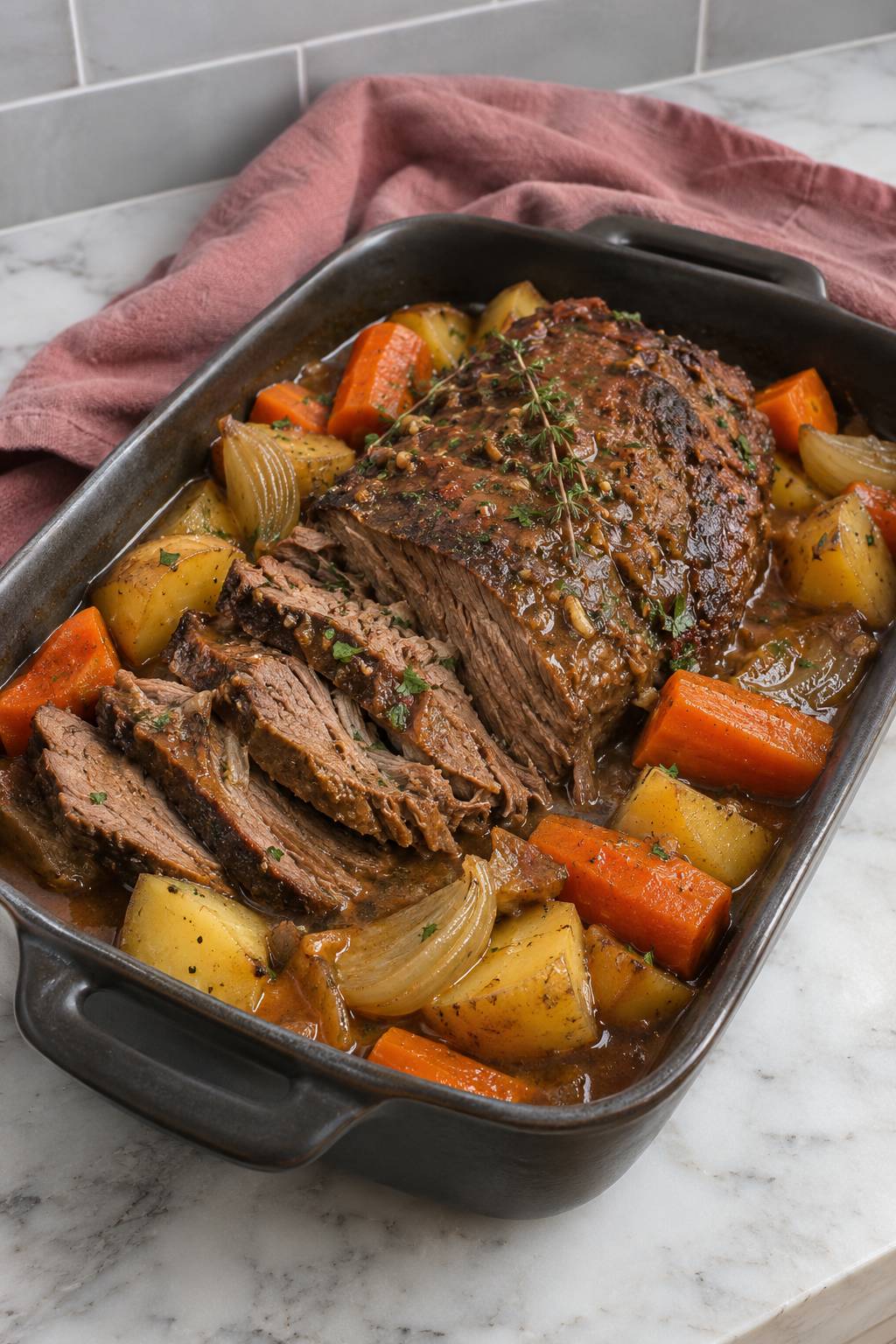
The thick onion wedges have a different role from the chopped onion in the base. They soften alongside the potatoes and carrots but stay substantial enough to serve with the roast.
Aim for a gravy that pours easily
The pan juices already carry the flavor of the beef and vegetables, so the gravy needs only light thickening. Removing the herb stems and bay leaf keeps them out of the finished gravy, and skimming excess fat makes the sauce less greasy. The gravy should flow easily from a spoon and settle around the meat and vegetables rather than sit in a mound. Taste it before adding salt, since the juices already contain seasoning from the roast and broth.
Frequently Asked Questions
What if the vegetables are tender but the beef is still firm?
Lift the vegetables out and set them aside, then return the beef to the oven with the Dutch oven covered. Test the roast again with a fork. This lets the chuck finish braising without leaving the potatoes and carrots in the pot until they fall apart.
How do I keep the cornstarch from clumping in the gravy?
Stir the cornstarch into cold water until the mixture is smooth before adding it to the pan juices. Whisk that mixture into the simmering liquid rather than sprinkling dry cornstarch into the pot, where it can form lumps.
Should I add the juices that collect on the plate after searing?
Yes. Pour those juices back into the Dutch oven when you return the roast. They belong with the broth and the browned bits you scraped from the bottom, since that liquid is what you’ll use to make the gravy.
Classic Sunday Pot Roast
6
servings25
minutes3
hours24
minutes600
kcal3
hours57
minutesA deeply browned beef chuck roast braises with onions, garlic, and herbs until fork-tender. Serve it in thick slices with golden potatoes, chunky carrots, and a light gravy made from the pan juices.
Ingredients
- Pot Roast
3 lb boneless beef chuck roast
1 1/4 tsp fine sea salt, plus more to taste
1 tsp ground black pepper
2 tbsp olive oil
2 medium yellow onions, one chopped and one cut into thick wedges
4 cloves garlic, minced
1 tbsp tomato paste
3 cups low-sodium beef broth
3 sprigs fresh thyme
1 sprig fresh rosemary
1 dried bay leaf
1 1/2 lb Yukon Gold potatoes, cut into 2-inch chunks
1 lb carrots, peeled and cut into 2-inch pieces
- Gravy and Garnish
1 tbsp cornstarch
2 tbsp cold water
2 tbsp chopped fresh flat-leaf parsley
Directions
- Set a rack in the lower third of the oven and preheat to 325°F. Pat the roast dry with paper towels and season it all over with the salt and pepper.
- Heat the olive oil in a 5- to 6-quart Dutch oven over medium-high heat. Sear the roast until deeply browned on both broad sides and along the edges, about 10 minutes total. Transfer the roast to a plate.
- Reduce the heat to medium. Add the chopped onion and cook for 5 minutes, stirring occasionally, until softened. Stir in the garlic and tomato paste and cook for 1 minute. Pour in the broth, scrape up the browned bits, and bring to a simmer, about 4 minutes.
- Return the roast and any juices from the plate to the pot. Tuck the thyme, rosemary, and bay leaf into the broth. Cover and braise in the oven for 2 hours.
- Nestle the potatoes, carrots, and onion wedges around the roast, settling them into the braising liquid as much as possible. Cover and braise for 1 hour more, until the vegetables are tender and a fork slides into the beef with little resistance. If the vegetables are done but the beef is still firm, transfer the vegetables to a plate and braise the beef, covered, for another 15 to 30 minutes as needed.
- Transfer the beef to a cutting board and the vegetables to a serving dish. Tent both loosely with foil and let the beef rest for 15 minutes. Make the gravy while the beef rests, allowing about 7 minutes. Discard the herb stems and bay leaf and skim excess fat from the pan juices. Stir the cornstarch and cold water together until smooth. Bring the juices to a simmer on the stovetop, about 2 minutes, then whisk in the slurry and simmer for 2 minutes, until lightly thickened. Taste and add salt if needed.
- Cut the beef into thick slices across the grain, letting the most tender pieces fall apart naturally. Serve with the potatoes, carrots, and onion wedges. Spoon the gravy over the top and sprinkle with parsley.
Notes
- Cut the potatoes and carrots into large chunks so they stay intact during the final hour of braising.
- Use fork tenderness rather than the clock to judge the roast. If the fork meets resistance when you twist it, the beef needs more time.