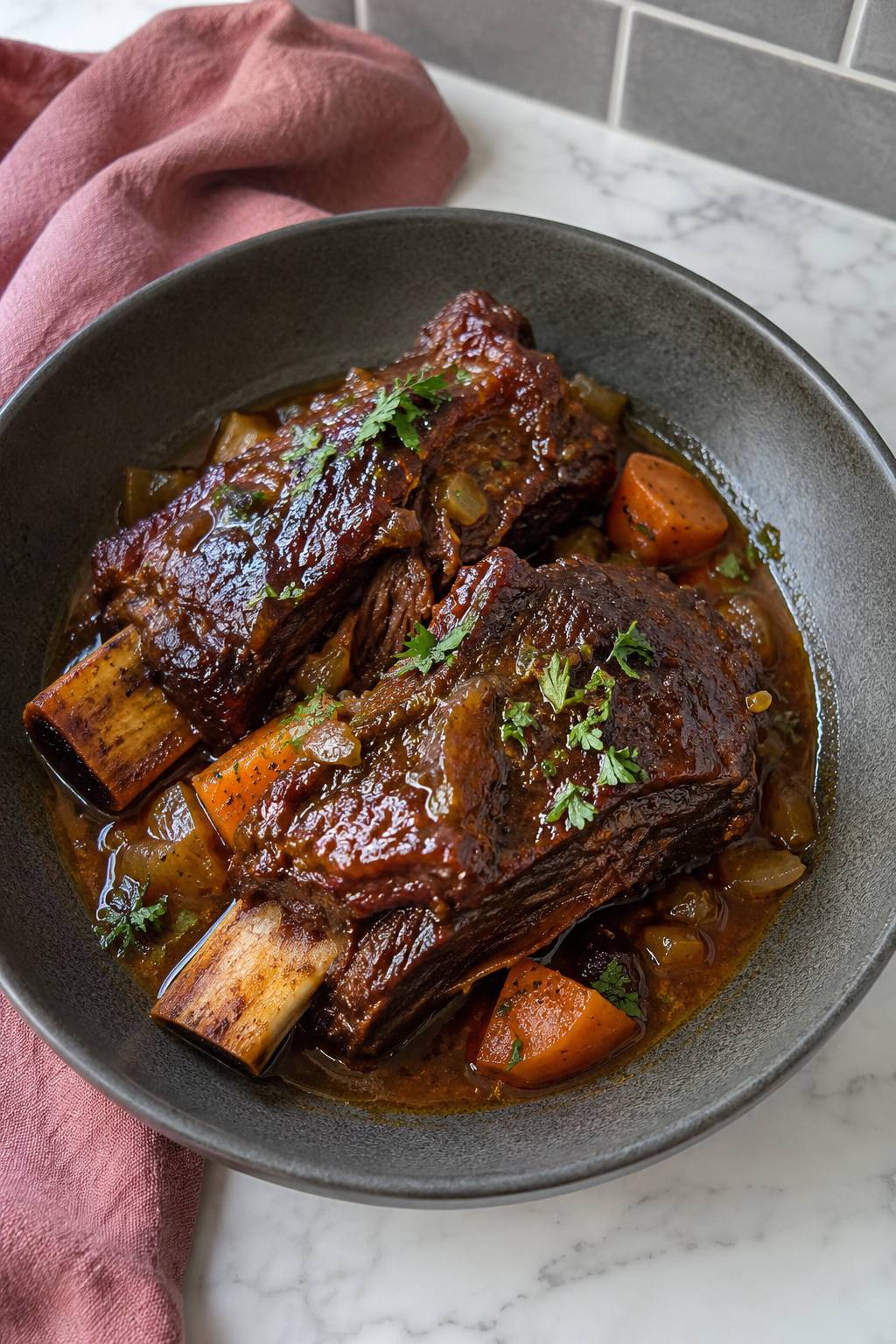
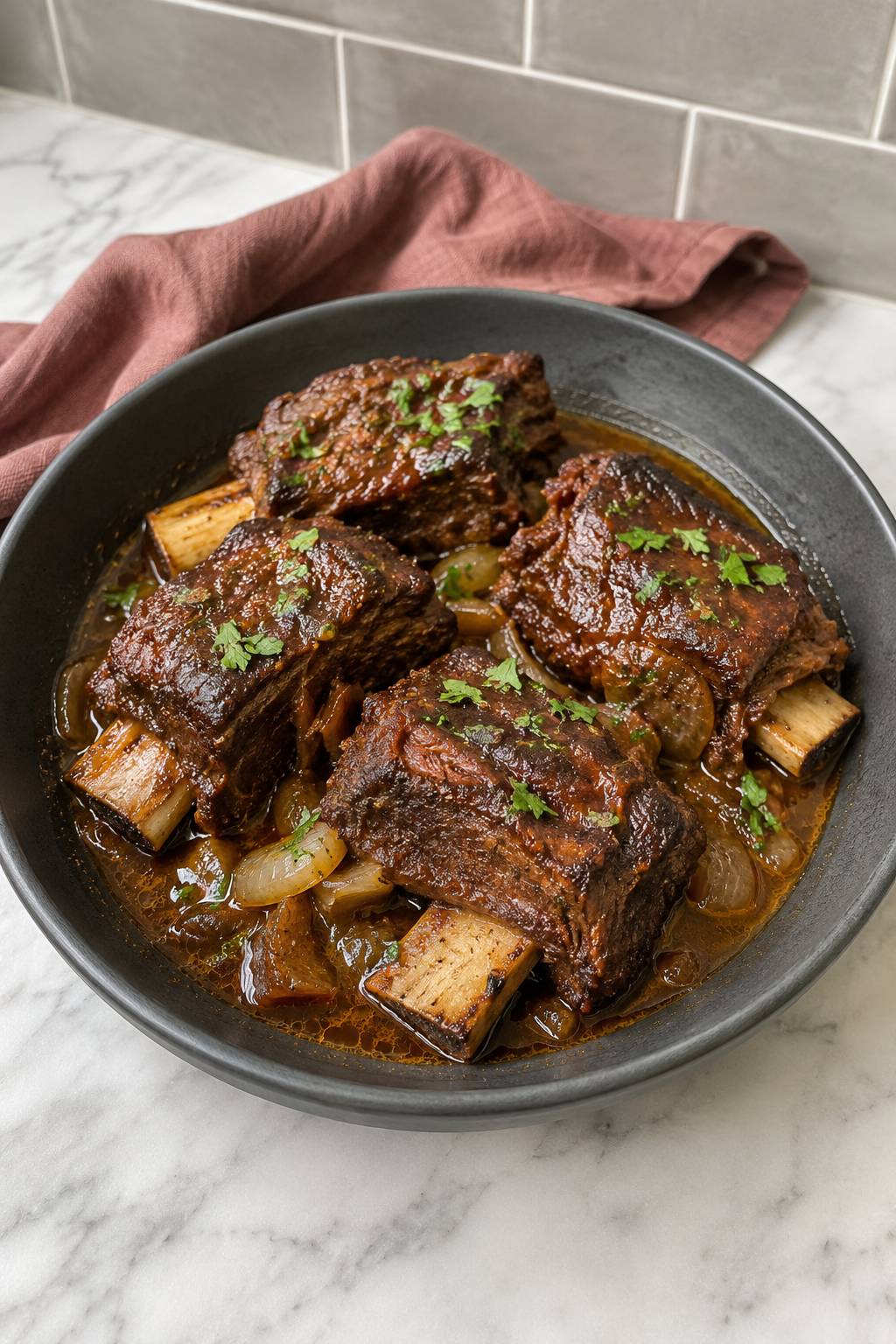
These Instant Pot beef short ribs are the kind of main course you want to eat from a shallow bowl. The beef is fork-tender, the carrots are tender but still chunky, and there’s glossy onion gravy to spoon over both. The gravy comes from the liquid the ribs cook in, so it carries the flavor of the browned beef along with onion, garlic, and thyme. A sprinkle of fresh parsley finishes the bowl.
Look for thick English-cut short ribs
At the meat counter, look for thick pieces of beef with a bone beneath the meat on each piece. That’s the English cut called for here. Flanken-cut ribs are sliced across the bones and look like thin strips with small sections of bone showing. They’re easy to spot once you know the difference, and they aren’t suited to the pressure-cooking directions on this recipe card. If the package just says “short ribs,” look at the shape of the pieces rather than relying on the label alone.
Give the ribs room to brown
Pat the ribs dry before seasoning them with kosher salt and black pepper. A wet surface and a crowded pot can leave the beef steaming instead of browning. Working in batches gives you room to turn the pieces so the meaty sides make contact with the bottom of the pot. Look for a browned surface rather than trying to cook the ribs through on Sauté. The pressure-cooking step is what makes the meat fork-tender.
Scrape up the browned bits before sealing the pot
The browned bits left behind by the ribs belong in the cooking liquid, not stuck to the bottom of the pot. Once you pour in the low-sodium beef broth, use a wooden spoon to scrape across the base until you don’t feel any stuck patches. Don’t just stir the broth around the onions: the spoon needs to make contact with the bottom. This brings the browned flavor into the gravy and helps prevent a burn warning during pressure cooking.
Skim the cooking liquid before thickening it
You’ll have an easier time spooning off excess fat while it’s still floating on the surface of the cooking liquid. Once the gravy thickens, that fat is harder to separate. For a smooth gravy, mix the cornstarch with cold water before adding it to the simmering liquid. Adding dry cornstarch straight to the pot can leave lumps. The texture to look for is a glossy gravy that coats the back of a spoon but still pours easily over the ribs.
Frequently Asked Questions
Do I vent the Instant Pot as soon as pressure cooking ends?
No. Let the pressure drop naturally as directed on the recipe card, then carefully vent what remains. Don’t open the lid until the pot has fully depressurized.
Why do the carrots go in after pressure cooking?
Simmering the carrots in the cooking liquid after you remove the ribs keeps the chunks intact and lets you check their texture as they cook. They’re ready when a fork slides in easily and the pieces still hold their shape.
What does the apple cider vinegar do in the gravy?
It adds a little tang to balance the richness of the beef and gravy. Stir it in after you press Cancel, as directed on the card. The cornstarch does the thickening; the vinegar is there for flavor.
Instant Pot Beef Short Ribs
4
servings15
minutes1
hour16
minutes590
kcal1
hour56
minutesBone-in beef short ribs are browned, then pressure-cooked with onions, garlic, and thyme until fork-tender. The cooking liquid becomes a glossy gravy with chunky carrots and a sprinkle of fresh parsley.
Ingredients
- Beef Short Ribs
3 lb bone-in beef short ribs, English-cut
1 1/2 tsp kosher salt
1/2 tsp ground black pepper
1 tbsp olive oil
1 medium yellow onion, coarsely chopped
3 garlic cloves, minced
2 tbsp tomato paste
1 1/2 cups low-sodium beef broth
3 sprigs fresh thyme
1 bay leaf
- Carrots and Gravy
3 medium carrots, peeled and cut into 1-inch chunks
1 1/2 tbsp cornstarch
2 tbsp cold water
2 tsp apple cider vinegar
2 tbsp chopped fresh parsley
Directions
- Brown the Ribs
- Pat the ribs dry and season them all over with the salt and pepper. Set a 6-quart Instant Pot to Sauté on High. Once hot, add the oil and brown the ribs in two batches for 6 minutes per batch, turning to brown the meaty sides. Transfer the ribs to a plate and spoon off all but about 1 tbsp of fat from the pot.
- Build the Braise
- Set Sauté to Normal. Add the onion and cook for 4 minutes, stirring occasionally. Stir in the garlic and tomato paste and cook for 1 minute. Pour in the broth and scrape the bottom with a wooden spoon until no browned bits remain stuck. Press Cancel, then return the ribs and any juices to the pot. Add the thyme and bay leaf.
- Pressure-Cook
- Lock the lid, set the valve to Sealing, and cook on High Pressure for 45 minutes. Allow about 10 minutes for the pot to come to pressure before the timer starts. When cooking ends, let the pressure release naturally for 15 minutes, then carefully vent the remaining pressure. Transfer the ribs to a plate and loosely cover to keep warm. Discard the thyme stems and bay leaf, then skim excess fat from the cooking liquid.
- Finish the Carrots and Gravy
- Add the carrots to the cooking liquid and use Sauté to bring it to a steady simmer. Simmer uncovered for 12 minutes, stirring occasionally, until the carrots are fork-tender. Stir the cornstarch and cold water together until smooth, then stir the slurry into the simmering liquid. Cook for 2 minutes, stirring gently, until the gravy coats the back of a spoon. Press Cancel and stir in the vinegar.
- Serve
- Divide the ribs and carrots among shallow bowls. Spoon the gravy and onions over the ribs and sprinkle with parsley.
Notes
- Choose thick English-cut short ribs, with one bone per piece. Thin flanken-cut ribs are not suited to this cooking time.
- Adding the carrots after pressure cooking keeps the chunks intact and makes it easier to check when they are tender.
- Skim the cooking liquid before thickening it, while the rendered fat is still easy to spoon off the surface.