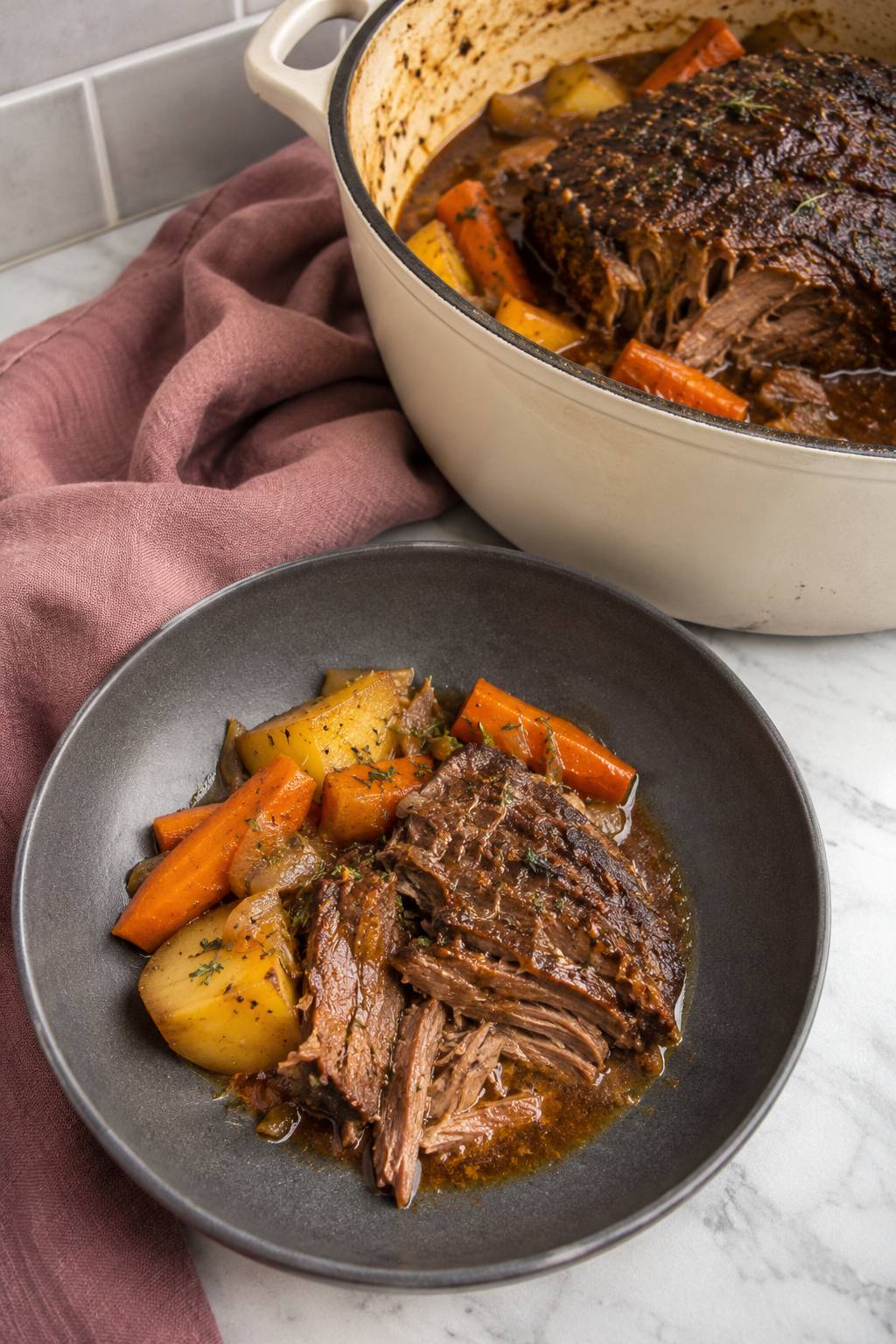
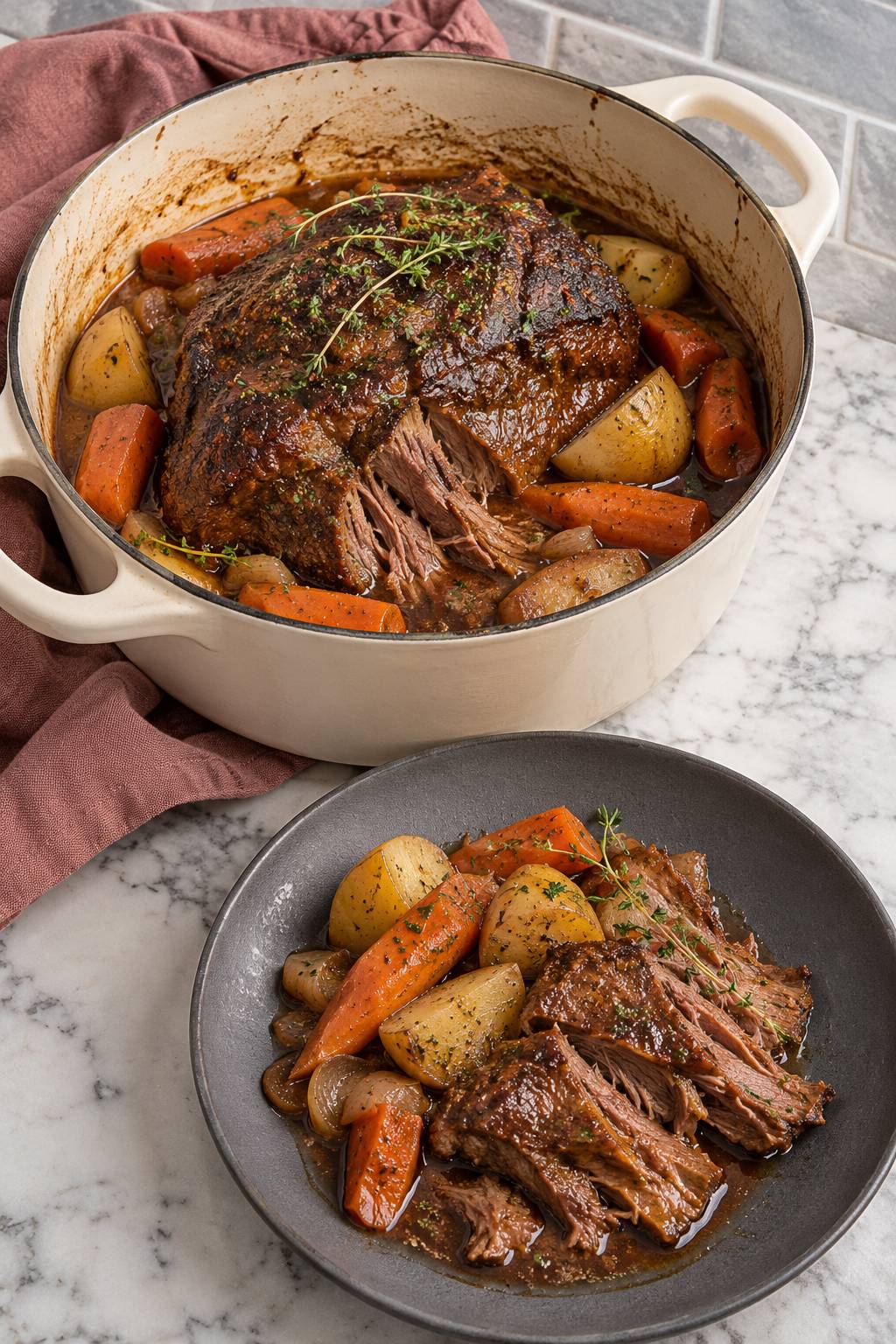
A good Dutch oven chuck roast should pull apart under your fork, but the pan juices deserve just as much attention as the beef. The browned bits from the sear give the broth a roasted depth, while yellow onion, garlic, and thyme round it out. Yukon Gold potatoes and carrots join the braise near the end, so they pick up that savory flavor and still hold their shape in the bowl.
Dry the Chuck Roast for a Better Crust
Boneless chuck is a good fit for a covered braise because it goes from firm to tender enough to pull into large pieces. Browning is a separate job: you’re building flavor on the outside, not trying to cook the beef through on the stovetop. Blot the roast dry before seasoning it with fine sea salt and black pepper. A wet surface steams instead of browning readily. Let the olive oil shimmer before the beef goes in, and resist the urge to lift it repeatedly to check underneath. Look for a deep brown crust on the broad faces, not just a change in color.
Turn the Browned Bits Into Pan Juices
The browned bits stuck to the Dutch oven are worth saving. Lower the heat for the thick-sliced yellow onion so it can soften without scorching those drippings. Once the minced garlic and tomato paste go in, keep them moving; they can catch on the bottom if left alone. The paste gives the broth a deeper savory flavor, and low-sodium beef broth keeps it from starting out too salty.
When the broth hits the pot, scrape the bottom so the browned bits dissolve into the liquid rather than staying stuck. Any juices on the roast’s plate belong in the pot, too. Fresh thyme and bay leaf flavor the broth without making it heavy.
Give the Beef a Head Start on the Vegetables
Chuck needs more time to become tender than potatoes and carrots do. If the vegetables go in with the beef at the start, they can turn soft enough to break apart before the roast is ready. Yukon Gold potatoes have a creamy center but hold their shape well in chunks. Keeping the carrots in substantial pieces helps them stay intact, too. Nestle the vegetables around the roast and turn them in the braising liquid so the surfaces above the liquid get coated as well. You’re looking for potatoes and carrots that yield when pierced but are still easy to lift from the pot.
Use a Fork to Judge the Beef
Don’t judge doneness by how easily a fork goes into the roast. Give it a twist: if the beef resists instead of separating, it needs more covered braising. Once the roast is tender, let it rest before pulling it apart. Large pieces are easier to serve alongside the vegetables than fine shreds, and shallow bowls catch the pan juices so you get some with every bite.
Frequently Asked Questions
What if the vegetables are tender before the roast?
Lift the potatoes and carrots out with a slotted spoon and keep them covered. Leave the beef in the Dutch oven and continue braising it, covered, until it separates easily when you twist a fork in it.
Should the broth be boiling before the pot goes into the oven?
No. Bring the broth to a gentle simmer before covering the Dutch oven. Look for small, occasional bubbles rather than constant bubbling across the surface. The covered oven braise is what brings the beef to fork tenderness.
What should I do if the pan juices look greasy?
After you move the roast to a cutting board, skim any excess fat from the surface with a spoon. Remove the thyme stems and bay leaf, then spoon the juices over the beef and vegetables.
Dutch Oven Chuck Roast
6
servings25
minutes3
hours50
minutes570
kcal4
hours25
minutesA deeply browned beef chuck roast braises with onions, garlic, and thyme until it pulls apart with a fork. Yukon Gold potatoes and carrots go in for the last hour and are served with the savory pan juices.
Ingredients
3 lb boneless beef chuck roast
1 1/2 tsp fine sea salt
1 tsp ground black pepper
2 tbsp olive oil
1 large yellow onion, cut into thick slices
4 garlic cloves, minced
2 tbsp tomato paste
2 1/2 cups low-sodium beef broth
4 sprigs fresh thyme
1 bay leaf
1 1/2 lb Yukon Gold potatoes, cut into 2-inch chunks
1 lb carrots, peeled and cut into 2-inch pieces
Directions
- Set a rack in the lower third of the oven and preheat to 325°F. Pat the roast dry with paper towels and season it all over with the salt and pepper.
- Heat the olive oil in a 6-quart Dutch oven over medium-high heat until shimmering. Sear the roast for about 10 minutes total, browning both broad sides well and briefly searing the edges. Transfer the roast to a plate.
- Reduce the heat to medium. Add the onion and cook for 5 minutes, stirring occasionally, until it starts to soften. Stir in the garlic and tomato paste and cook for 1 minute, stirring constantly.
- Pour in the beef broth and scrape up the browned bits from the bottom of the pot. Return the roast and any juices from the plate to the pot. Add the thyme and bay leaf and bring the broth to a gentle simmer, about 4 minutes.
- Cover the Dutch oven and transfer it to the oven. Braise for 2 hours 30 minutes.
- Nestle the potatoes and carrots around the roast, turning them to coat with the braising liquid. Cover and return to the oven for about 1 hour, until the vegetables are tender and the beef pulls apart easily with a fork.
- Transfer the roast to a cutting board and let it rest for 10 minutes. Discard the thyme stems and bay leaf, and skim excess fat from the pan juices if needed. Pull the beef into large pieces and serve in shallow bowls with the potatoes, carrots, and a generous spoonful of pan juices.
Notes
- If the beef still resists when you twist a fork in it, keep braising it, covered, in 15-minute increments. If the vegetables are already tender, lift them out with a slotted spoon first and keep them covered for serving.