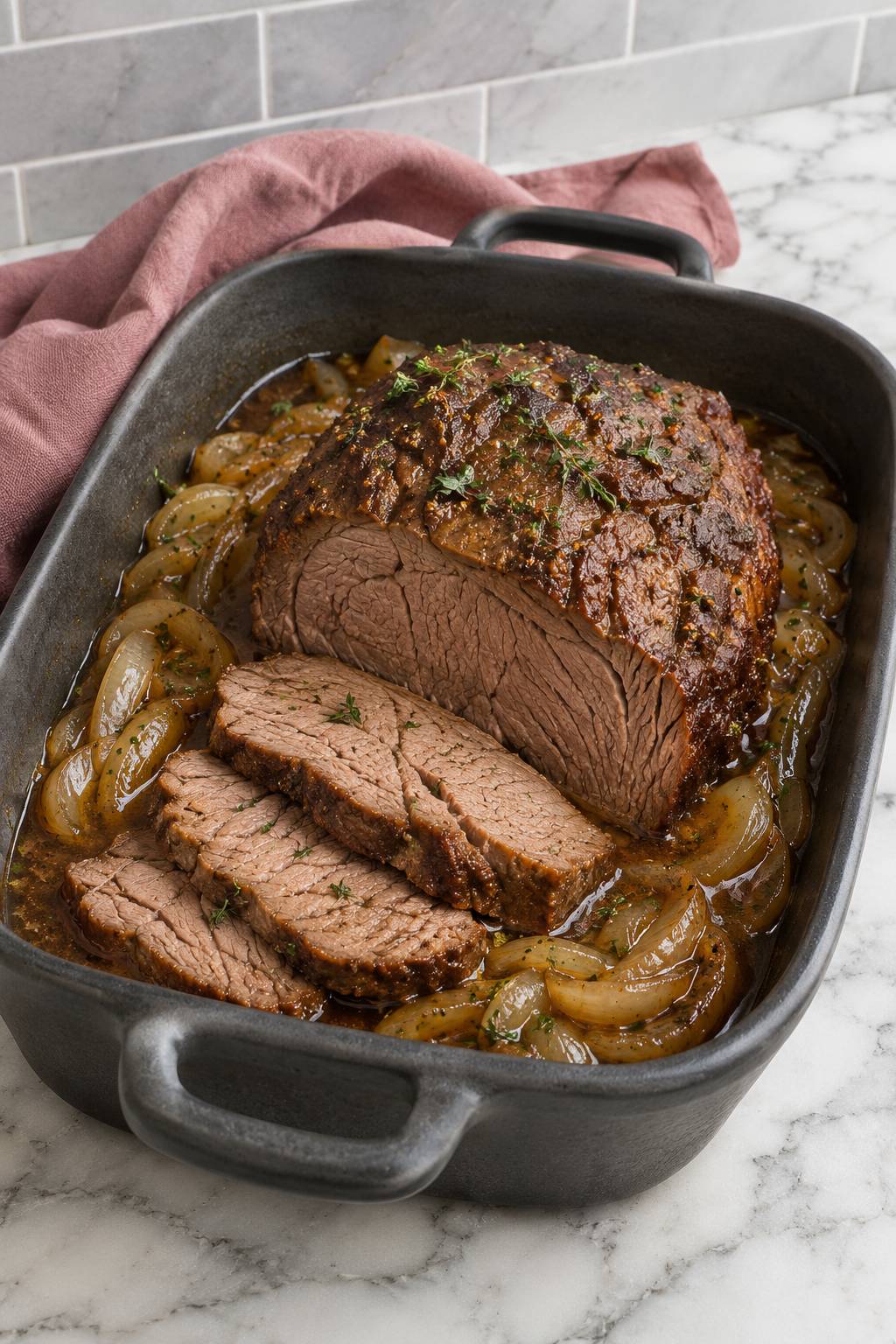
This slow cooker rump roast is for when you want a pot-roast dinner you can carve instead of shred. The beef should be tender enough for a fork to slide in easily, yet hold together on the cutting board. The onions soften into wedges you can lift onto the serving dish, and the cooking liquid becomes a glossy gravy that coats the thin slices of beef.
Build Flavor in the Skillet
Patting the roast dry with paper towels helps it brown rather than steam. Season it all over with kosher salt and black pepper, then look for a deep brown color as you turn it in the skillet. The browned patches on the beef matter, but so do the bits stuck to the pan. When you add the beef broth, scrape those bits loose so the flavor goes into the cooking liquid instead of staying in the skillet. Low-sodium broth lets the seasoning on the roast flavor the liquid without starting with a salty broth.
Keep the Onion Wedges Intact
Cut the yellow onions into thick wedges through the root end so each wedge has something holding its layers together. That small detail makes a difference when the onions are soft and you want to serve them alongside the beef rather than fish loose layers out of the liquid. A slotted spoon lets you lift the wedges gently while leaving the juices behind for gravy. Keep the thyme sprigs in the cooking liquid and remove them before serving; the fresh leaves scattered over the sliced beef give you a brighter thyme flavor.
Read the Grain Before You Carve
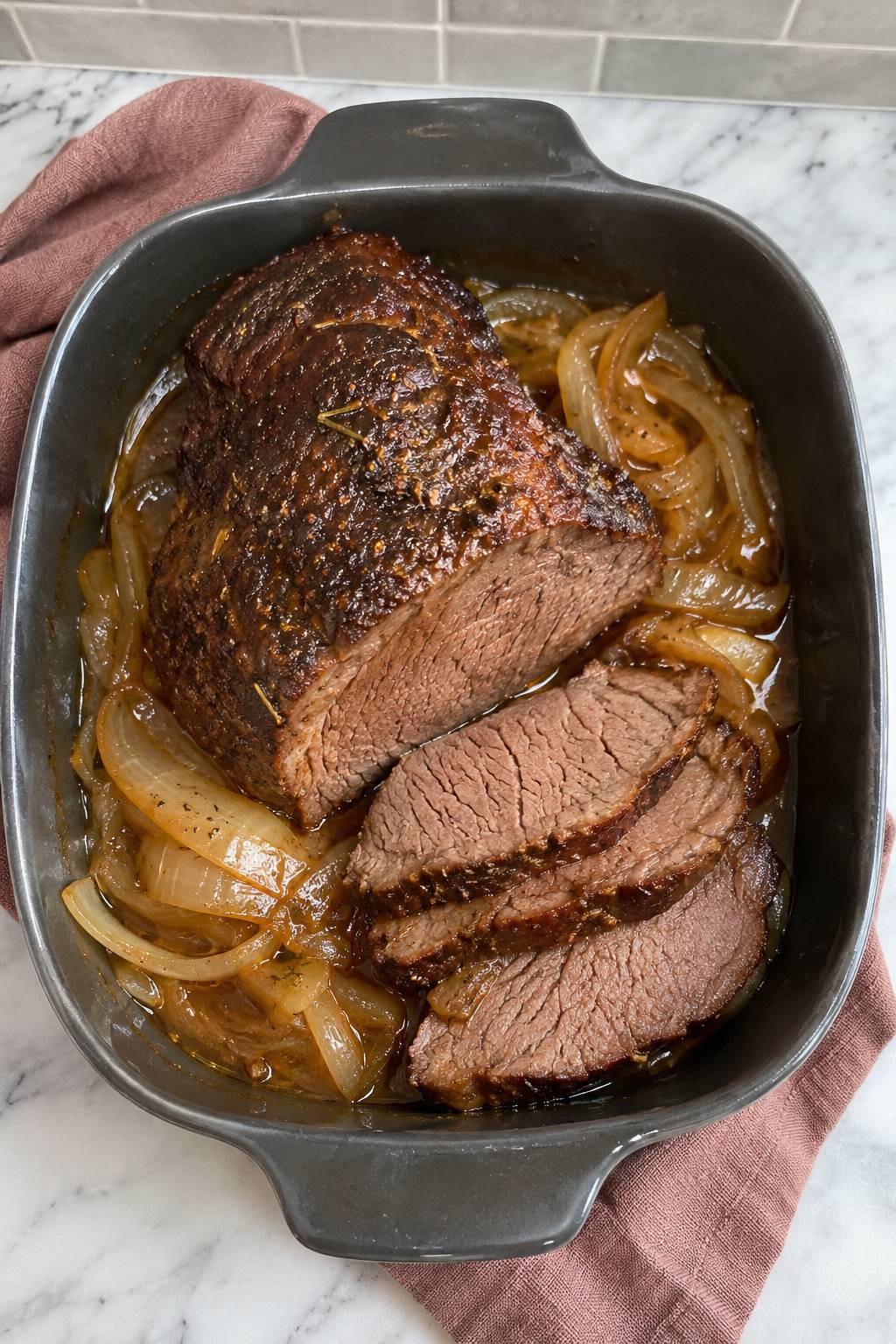
Rump roast is lean, so the way you slice it matters to how tender it feels when you eat it. After the roast rests under loosely tented foil, look at the cut of meat and find the lines made by the muscle fibers. Turn the roast so your knife cuts across those lines rather than following them. Keep the slices thin. Cutting across the grain leaves shorter fibers in each bite, so even beef that holds its shape on the platter is easier to chew.
Aim for a Gravy That Still Pours
Skim excess fat from the cooking liquid so the gravy has a glossy finish without a greasy slick. Once the cornstarch slurry goes in, look for the liquid to thicken just enough to coat the beef without hiding the shape of the slices. The gravy should still flow easily from a spoon. Spoon some over the sliced roast and bring the rest to the table so everyone can add more to the beef and onions.
Frequently Asked Questions
What if the rump roast still feels firm?
Cover the slow cooker again and continue cooking on LOW, following the recipe card’s guidance for when to check. Stop when a fork slides in without much resistance but the roast still holds together when you lift it.
Which way should the fat cap face?
If your rump roast has a fat cap, set it on top of the onion wedges with the fat facing up. If there’s no distinct fat cap, you don’t need to look for a particular side to face up.
How do you keep the gravy from getting lumpy?
Stir the cornstarch into cold water until the mixture is smooth, then whisk it into the simmering cooking liquid. Mixing it separately helps it disperse evenly; adding dry cornstarch straight to the hot liquid can leave clumps.
Slow Cooker Rump Roast
8
servings20
minutes7
hours15
minutes285
kcal7
hours45
minutesA seared beef rump roast cooks slowly with yellow onion wedges, garlic, and fresh thyme. Serve it sliced across the grain with the soft onions and glossy beef gravy.
Ingredients
- Roast
3 lb boneless beef rump roast
1 1/2 tsp kosher salt
1 tsp ground black pepper
2 tbsp olive oil
2 large yellow onions, cut into thick wedges through the root so the layers hold together
4 garlic cloves, chopped
1 1/2 cups low-sodium beef broth
4 sprigs fresh thyme, plus 1 tsp fresh thyme leaves for serving
- Gravy
1 tbsp cornstarch
2 tbsp cold water
Directions
- Roast
- Scatter the onion wedges and garlic in the slow cooker. Pat the roast dry with paper towels and season it all over with the salt and pepper.
- Heat the olive oil in a large skillet over medium-high heat. Sear the roast until deeply browned on all sides, about 8 minutes total. Set the roast on top of the onions, fat side up if it has a fat cap.
- Pour the broth into the skillet and let it bubble for 2 minutes, scraping up the browned bits. Pour the broth around the roast and tuck the thyme sprigs into the liquid.
- Cover and cook on LOW for 7 hours, until a fork slides in easily but the roast still holds together. Transfer the roast to a cutting board, tent it loosely with foil, and let it rest for 15 minutes. Discard the thyme sprigs and transfer the onion wedges to a warm serving dish with a slotted spoon.
- Gravy
- While the roast rests, skim any excess fat from the cooking liquid and pour 1 1/2 cups of the liquid into a small saucepan. Stir the cornstarch and cold water together until smooth. Bring the cooking liquid to a simmer over medium-high heat, whisk in the slurry, and simmer until lightly thickened, about 5 minutes total.
- Serve
- Slice the roast across the grain and arrange it with the onions. Spoon some gravy over the beef, scatter the fresh thyme leaves on top, and serve the remaining gravy at the table.
Notes
- If the roast is still firm after 7 hours, cover and cook on LOW in 30-minute increments, checking with a fork after each increment. Stop when the meat is tender but still firm enough to slice.
- Rump roast is lean. For more tender bites, look at the direction of the muscle fibers and cut thin slices perpendicular to them.