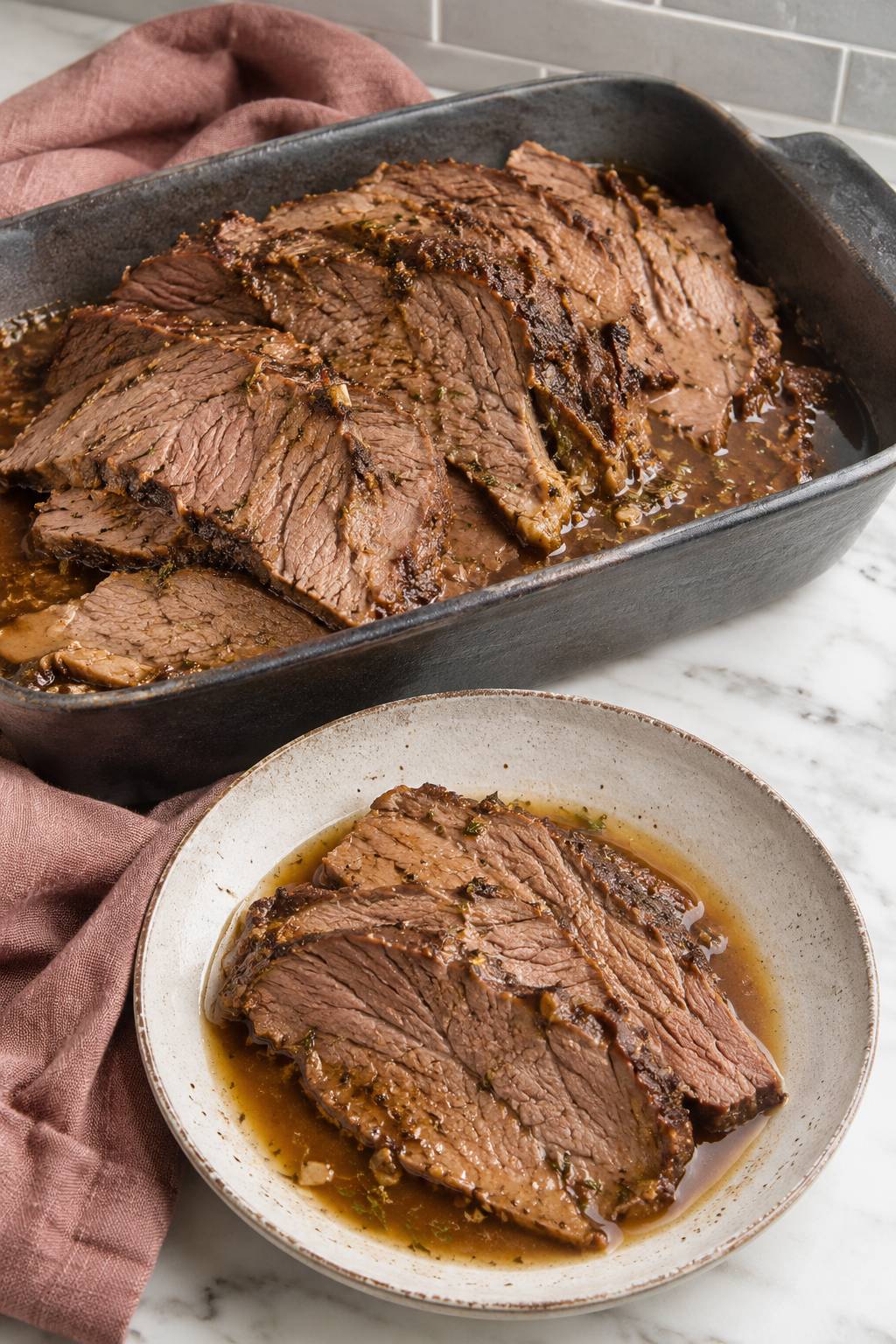
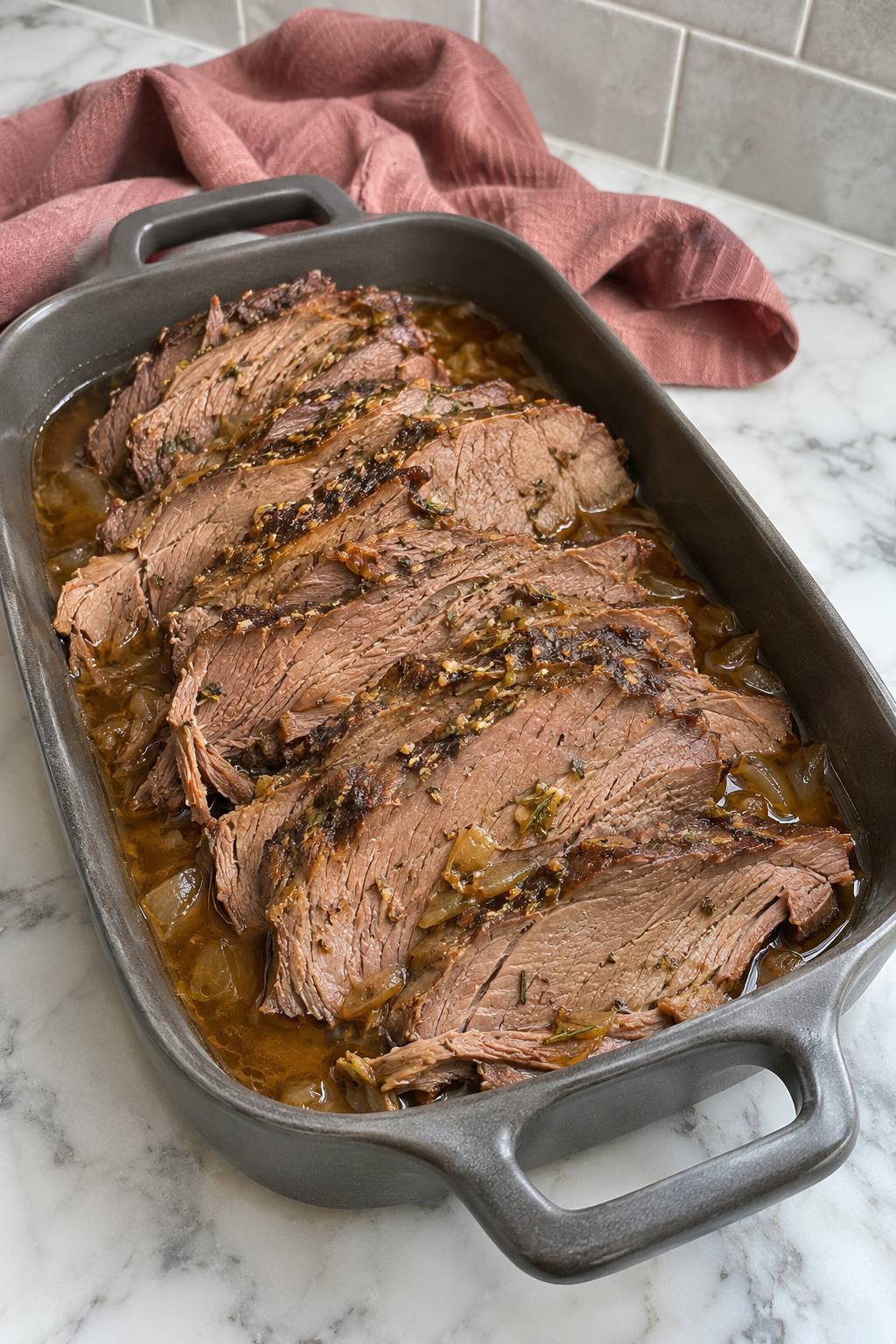
This slow cooker roast beef is meant to be sliced, not pulled apart. Bottom round gives you a roast that holds its shape on the cutting board, and browning it in a skillet brings a deeper beef flavor to the cooking juices. Those juices, fragrant with onion, garlic, thyme, and rosemary, are what you spoon over the thin slices at the table.
Give the Roast a Good Brown Crust
A dry surface helps you get the browning you want. If the roast is damp when it goes into the skillet, it can steam instead of browning readily. Pat it dry before seasoning it with kosher salt and black pepper, and pay attention to the sides as well as the broad faces. The goal is a well-browned exterior, not a roast that’s cooked through in the skillet.
Put the Browned Bits to Work
The browned bits stuck to the skillet belong in the cooking juices. Beef broth and balsamic vinegar loosen them so you can scrape them up with a wooden spoon. If you pour off the liquid without scraping, you leave some of that savory flavor behind. Low-sodium broth gives you more control over the saltiness because the roast is already seasoned.
Balsamic vinegar adds a tang that balances the beefy broth, while dried thyme and crushed rosemary give the juices an earthy, herbal note. The sliced yellow onion and minced garlic flavor the liquid from beneath the roast. You’re looking for savory juices loose enough to spoon, not a thick gravy.
Use a Fork to Check for Sliceable Tenderness
With bottom round, the useful cue is how a fork feels in the thickest part. It should slide in with little resistance, but the roast should still hold together. Testing near an edge can give you the impression that the whole roast is ready. On the other hand, waiting for it to fall apart means you’ve gone past the texture you want for neat slices.
Find the Grain Before It Gets Harder to See
Look for the lines of muscle fibers on the raw roast, when they’re easier to see than they are on the browned surface. Take note of which way they run so you know how to position the roast on the cutting board. When you carve, cut across those lines rather than following them. Thin slices cut this way have shorter fibers, so they’re easier to chew.
Frequently Asked Questions
What if the roast still feels firm when I check it?
If the fork meets noticeable resistance in the thickest part, put the lid back on and let the roast continue cooking on LOW. Use the recipe card’s guidance for when to check again. You want the fork to slip in easily without the roast breaking apart.
Why does the balsamic vinegar go into the skillet?
Adding it to the skillet with the broth lets you use that liquid to lift the flavorful bits left by the seared beef. The vinegar also gives the finished juices a little tang, so they taste bright as well as savory.
How do I keep the cooking juices from tasting greasy?
Skim any excess fat from the surface of the juices while the roast rests. Use a rimmed platter for the sliced beef so the warm juices you spoon over it collect around the slices instead of running off the plate.
Slow Cooker Roast Beef
6
servings15
minutes7
hours10
minutes380
kcal7
hours40
minutesBottom round roast is browned in a skillet, then slow-cooked with onion, garlic, and herbs until tender enough to slice. Serve it with the savory beef juices spooned over the top.
Ingredients
1 (3 lb) boneless beef bottom round roast
1 1/2 tsp kosher salt
1 tsp ground black pepper
1 tbsp olive oil
1 medium yellow onion, thinly sliced
4 cloves garlic, minced
1 1/2 cups low-sodium beef broth
1 tbsp balsamic vinegar
1 tsp dried thyme
1/2 tsp dried rosemary, crushed
Directions
- Pat the roast dry and season it all over with the salt and pepper. Spread the sliced onion and garlic in the bottom of a slow cooker.
- Heat the olive oil in a large skillet over medium-high heat. Sear the roast on all sides until well browned, about 8 minutes total. Set the roast on top of the onions.
- Pour the broth and balsamic vinegar into the skillet. Simmer for 2 minutes, scraping up the browned bits with a wooden spoon. Stir in the thyme and rosemary, then pour the liquid around the roast.
- Cover and cook on LOW for about 7 hours, until a fork slides into the thickest part with little resistance and the roast still holds its shape. If it is still firm at 7 hours, cover and cook for another 30 minutes before checking again.
- Transfer the roast to a cutting board and let it rest for 15 minutes. Skim any excess fat from the cooking juices. Slice the beef thinly across the grain, arrange it on a rimmed platter, and spoon the warm juices over the slices.
Notes
- Check which way the grain runs before searing, when the muscle fibers are easier to see. Slicing across them shortens the fibers and makes the beef easier to chew.